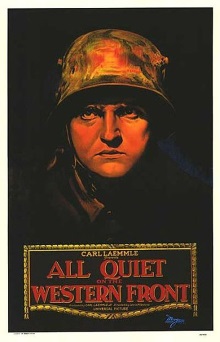
All Quiet on the Western Front was the film about the First World War that was recommended by professor Philip Zelikow of the history course I took on Coursera recently. Of course, with its wonderfully evocative title, this film is famous enough that it shouldn’t need an introduction. As Zelikow noted in his lectures, this film benefited from being made only a short time after the war and so could enlist large numbers of real veterans to act as extras and advisers, giving it a unique touch of authenticity.
Embarrassingly, I’ve never read the novel despite having studied in France. In my defense, I simply never felt much of a need for it since I’d already absorbed so much of it through cultural osmosis. It is pretty odd that despite it being one of the bestselling books ever in history, this is the first feature film adaptation of the material. Though it was made with the support of French studios, this also feels very much like an American production as an English-language film with familiar Hollywood names providing most of the voices.
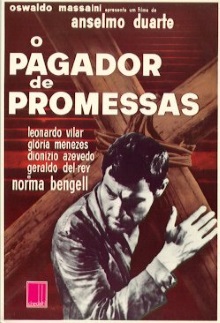
This is a rare example of a film which was independently added to our joint watch list both by myself and by my wife from different sources. It took a while for me to realize this as its English title sometimes appears as Keeper of Promises and sometimes as The Given Word. You could take this as a sign that it’s an exceptionally good film and you wouldn’t be wrong even though I’ve never heard of its director Anselmo Duarte before this.
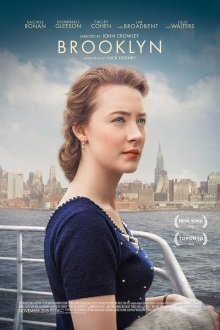
Brooklyn is a film that was added to my watch list as one of the notable releases of last year but I honestly wasn’t expecting too much from it. One Broken Forum poster called it pleasant but somewhat pointless. Director John Crowley appears to be known more for theater work than for his films and though Saoirse Ronan has been in a few high profile releases, she’s not an acting heavyweight. In the event, my initial impressions were largely proven correct and my biggest surprise is how much my wife liked it.
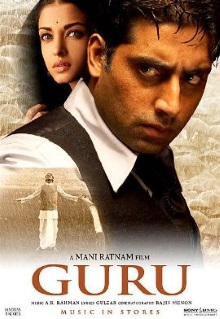
Guru came to my attention when it was mentioned in The Economist and it was featured in a Marginal Revolutionpost by Alex Tabarrok, who called it the most important free market movie ever. The thing about this film that must be understood is that although it uses invented names throughout, including fictional names for the companies involved, it is really a very loose biography of Dhirubhai Ambani, one of India’s most famous tycoons, who founded the Reliance group of companies. This helps explain why this film is so fascinating to economists.
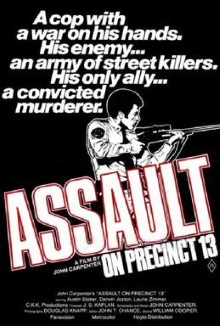
Assault on Precinct 13 is a film that pops up from time to time in discussions of influential action movies in places like Broken Forum. This was only the second film made by John Carpenter and helped cement his reputation in Hollywood for being a director capable of making decent films on a very tight budget. I think it’s also remarkable that it stars a black man as the hero while being very much not a blaxploitation flick. Played by Austin Stoker, the character is a police officer who happens to be black, but his blackness isn’t emphasized by the film.
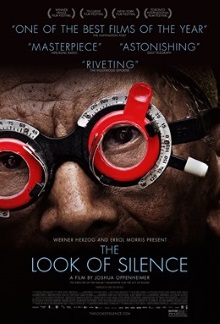
This is a follow up to The Act of Killing, one of the most hard hitting documentaries I’ve ever seen. Director Joshua Oppenheimer is joined this time by a middle-aged Indonesian collaborator who appears onscreen but will not reveal his name for the safety of himself and his family. If you stay around to read the credits at the end of the film, you’ll also notice that plenty of other contributors including researchers and even cameramen have similarly chosen to be anonymous, an indication of how dangerous these revelations still are even decades after the massacres.