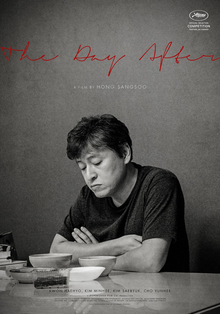
Since I’ve been talking about minimalism in films recently, the works of director Hong Sang-soo so I haven’t previously described them as such. This one is even more minimalist with four characters and pretty much nothing in the way of background extras. This one embodies some of the director’s favorite themes about patterns and events recurring with small changes and the performances are strong as always. But the scenario here is so forced and simplistic that it borders on the farcical and so empty of establishing details that it’s not believable at all. I would consider this a weak film even if it does have artistic aspirations.
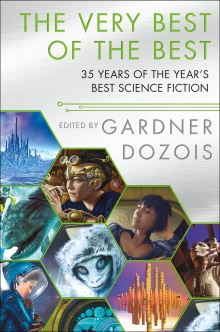
After reading the last one of the late Gardner Dozois’ science-fiction short story anthologies, it’s time to move on to this best of the best series as I’d missed many of the annual ones and I’m not likely to go back for them. The subtitle is a misnomer however as this is apparently the third volume of the series and hence it covers only the years 2003 to 2017 and not actually the full 35 years of his career. It’s been so long that I can’t remember if I actually already own the first volume published in 2005 but I do recognize most of the short stories. I definitely haven’t read the second volume published in 2007 so I suppose that’s one book to look forward to.
It blew me away how someone born and raised in China could make so American a film as The Rider and of course as everyone now knows that Chloé Zhao repeated the feat with this even more highly acclaimed title. I didn’t like this one as much as first as the camera seems to keep the main character at a distance much of the time and it sometimes seemed to be more about the lifestyle of the nomads in general than any one person in particular. But it does eventually settle on a common thread shared by all these different people and though there may be some debate about how valid this interpretation of their choices may be, it does arrive at a very emotionally affecting ending.
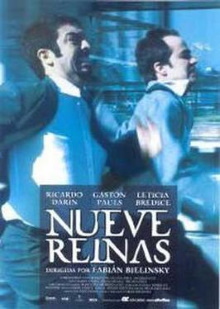
This is an Argentine film that is apparently very well known but I haven’t heard of it before I read it being talked about by Tyler Cowen in the context of films that best represent the country. At first I was skeptical as it seemed like a slick movie about conmen which could have taken place anywhere. I eventually realized that it is meant to represent the entirety of Argentine society from the elites at the top to the street-level hustlers who are the main characters here and that is why it is a such brilliant film.
I added this to my to play list a long time ago because it’s a noteworthy innovation on the RTS genre and originality should always be rewarded. It’s surprisingly rare in video games for someone to attempt to make something really different as opposed to revised versions of familiar games. This title introduces at least one new way of thinking about strategic games and several ways to streamline repetitive actions. Unfortunately this still is an RTS game which as you should all know by now isn’t my favorite genre and playing it is a pretty dry and time-consuming experience.
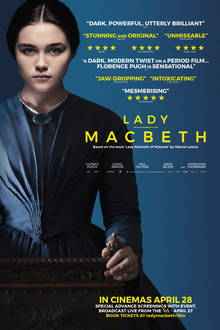
This is another low budget, minimalist film, an adaptation of a Russian novella transposed onto 19th-century England. With its lack of a musical score and limited set pieces, it feels very much like a play and it makes for an engrossing character study of its villainous protagonist. This isn’t one my of favorites however as the character’s internal thoughts are deliberately kept as a mystery to the audience and it doesn’t really have much of a theme that personally resonates beyond the horror of her crimes.
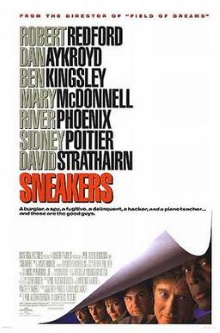
This technology-focused variation on the heist genre isn’t the most well reviewed film so it’s not one for the ages. Nevertheless it is something of a cult classic featuring a stellar cast and a reasonably plausible take on security penetration. Despite the serious stakes involved and plenty of outright murder, the film mostly has a light tone and indeed the cast and crew, including director Phil Alden Robinson, seemed to have had a lot of fun making it. That kind of carries over and makes this a highly entertaining caper.