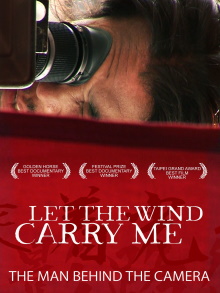
Here is another documentary about the Taiwanese filmmaking scene with the focus this time being on cinematographer Mark Lee Ping-bing. Cinematographers are of course never as well known as directors but this is the person who shot among other works In the Mood for Love with Wong War Kai, The Sun Also Rises with Jiang Wen and many of Hou Hsiao-Hsien’s best known works, which makes him a rather big deal. Unfortunately this is only a passable documentary as it is light on technical detail and a little too intent on showcasing Lee’s relationship with his mother.
Ignoring the very recent developments on the covid-19 front which are too new and speculative to include here, not much of note this month. So I’m including some cool technology to fill in the blank so to speak.
One really interesting paper however is the discovery about a novel phase of water they are calling superionic ice. This is of course in addition to the phases of liquid, solid and gas that we are more familiar with. Also nicknamed strange black ice, the team created it by subjected water to intense pressure in between two diamonds and then firing high-intensity x-rays at it. It naturally has very different mechanical properties than what we expect out of water and reminds us that there is so much more that we have yet to know even out of familiar things. Superionic ice is doubly important because it is thought to exist in nature, deep inside our planet for example, and might play a role in maintaining the Earth’s magnetic fields.
Next is a fun paper about head tilting behavior in dogs. I’m sure everyone has seen dogs do this and notice how it seems like they’re being curious or puzzled. Surprisingly no one has tried to explain this behavior before now and this team guesses that dogs do this when they are paying particular attention to something and learning something new. In particular through tests they isolated a group of dogs they identified as being particularly good at learning things and determine these genius dogs were especially prone to tilt their heads when introduced to new toys and taught their names. This all seems very speculative to me but it is a start.
Then we have this rather scary article about the so-called vulture bees, bees that rather than feed on nectar, eat meat instead. The existence of this species of bee has been known of for a while and others have noticed them look for rotting carcasses and leave a pheromone trail to summon nest mates to gorge on the flesh en masse. But now scientists have also confirmed that they possess radically different microbiomes to help them digest meat and even protect them from pathogens, similar to the bacteria found in actual vultures and hyenas.
Plenty of phone screen protectors advertise about their being made of diamond glass but they’re not really diamonds. A team however has been published about their success at creating a glass material that is as close to diamond as you can get and what’s even cooler is that they used the well-known buckyball structure as their starting point. The result is a carbon structure with three-dimensional bonds that they claim is the hardest known glass so far and has the highest thermal conductivity as well. The applications in the electronics industry is of course endless, provided that they can make this at scale.
Finally a technology that I wouldn’t mind having: a fabric made of engineered silk that can keep the skin much cooler than natural silk or cotton while under direct sunlight. It’s a little sparse on the technical details but this was apparently made by embedding silk fibers with aluminum oxide nanoparticiples with the result being that it can reflect ultraviolet light so well that under direct sunlight it is actually cooler than ambient air temperature. Compared to normal cotton, the claim is that it is cooler by as much as 12.5°C which sounds like the stuff of science-fiction.
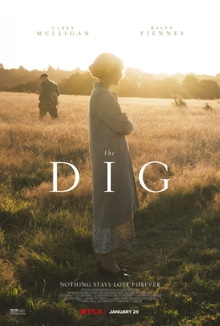
Here is another film that is based on a real event: the excavation of what is now known as the Sutton Hoo site in England, one of the most famous and important archaeological sites in the country. It’s a somewhat light film and relies on what is most likely a fictional romantic subplot to give it more of an emotional punch. Still the cinematography is gorgeous and I really love the very idea of a film that is about real archaeology instead of the comic book adventure version that we see most of the time. Solid performances all around and I still can’t get around how different Carey Mulligan looks in this compared to Promising Young Woman.
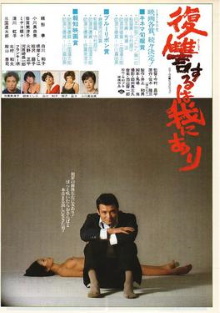
One of my favorite sources of interesting films to watch these days are recommendations by the economist Scott Sumner on his blog and here is one of his picks. It’s a little hard to see the point of this at first as it’s about a guy who just commits murders seemingly at random. But immediately one suspects that this is based on a real event, so haphazard and pointless are his crimes, and this is indeed the case. Sumner even comments that these look like real murders and not movie ones. By the end, I’m convinced that this is an underappreciated masterpiece and one of the darkest films about Japanese society I have ever seen.
I play nearly every type of game there is but one popular genre I have never played is the JRPG. That is probably because I do all my gaming on PC and have never owned a console. I thought I ought to play one of them someday and since I don’t want to go back to one of the old classics, I thought I’d try this one that is one Steam. The first game was a full on collaboration between the developer Level-5 and Studio Ghibli. This one isn’t but still features Yoshiyuki Momose formerly of Studio Ghibli as character designer and music by Joe Hisaishi so I thought it would make for a decently modern introduction to the genre.
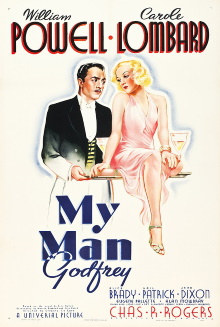
Here is another screwball comedy from the classic Hollywood era starring two of the biggest stars of the era, William Powell and Carole Lombard. The director here, Gregory La Cava, isn’t as well known but he did lead a career as a pre-Disney animator before he started making films, and that might explain the rather creative animated opening title card used in this film. This is only one of the many comedies of this era but I think it is an exceptionally good one, well suited to distract audiences from the then still ongoing Great Depression.
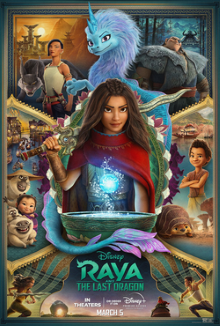
I had no great hopes for this but it did get decent reviews and it is the first Disney animated feature to be inspired by Southeast Asian culture so it seems almost obligatory to watch it. Unfortunately it pretty much falls in line with my expectations: it’s technologically impressive and the art design is fantastic. But it is an American film through and through with only a very superficial veneer of Southeast Asian aesthetics pasted on. In being very much a kids’ only show of little interest to adults, it also feels like it’s Disney and not Pixar, which is kind of interesting given their ownership structure.