Another good mix of articles for this month, and for the first time, one is a video instead of an article.
Two of these articles about antibiotics and one of them is from a home-grown source. This article discusses how a Malaysian PhD student in Australia is a key contributor to the development of a nano-engineered protein molecule that is meant to rip apart bacteria. The molecule is made of peptide polymers is supposed to be able to destroy the cell walls of bacteria without harming healthy tissue, which would make it a valuable tool against antibiotic-resistant bacteria.
This video from Harvard Medical School nicely lets you visualize exactly how quickly bacteria can evolve resistance to antibiotics. Even after they up the dosage of the antibiotics to insane levels, the bacteria still manages to find a way to thrive.
Next up is a study that tries to estimate the health effects of the annual haze in Southeast Asia caused by fires in Indonesia. The study covers only the health effects on adults and limits itself to damage caused fine particulate matter, widely known as PM2.5. Even so its averaged result is there will be approximately a hundred thousand premature deaths due to these fires, of which around ninety percent will be in Indonesia itself. Studies like this are based on statistical analysis of models so they’re always dicey. But they’re still useful as a starting point to quantify the effects and therefore the economic damage caused by the fires, giving governments better ammunition to counter the positive economic effects of allowing these land clearing fires in the first place.
Finally, because I can never get enough of cool findings about dog cognition, here is an article that talks about how dogs can capable of understanding both vocabulary and intonation in human speech. The researchers used an fMRI to observe the brains of dogs as they listened to human speech and they found that similar areas of their brains light up as in humans, showing that they are capable of recognizing individual words. They are also similar to humans that a separate part of their brains process the intonation of the speech, allowing them to gain an understanding that encompasses both the meaning of the spoken words and the intonation with which they were spoken.
Assault on Precinct 13 is a film that pops up from time to time in discussions of influential action movies in places like Broken Forum. This was only the second film made by John Carpenter and helped cement his reputation in Hollywood for being a director capable of making decent films on a very tight budget. I think it’s also remarkable that it stars a black man as the hero while being very much not a blaxploitation flick. Played by Austin Stoker, the character is a police officer who happens to be black, but his blackness isn’t emphasized by the film.
I had Elite Dangerous on my Steam wishlist for ages but it never dropped in price enough and many people complained that it’s pretty but rather boring. In the meantime, this little gem is both cheap and widely praised, including by Broken Forum’s space game aficionado, I decided to give it a whirl. It was basically made by only two guys working out of a garage.
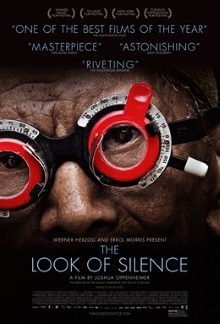
This is a follow up to The Act of Killing, one of the most hard hitting documentaries I’ve ever seen. Director Joshua Oppenheimer is joined this time by a middle-aged Indonesian collaborator who appears onscreen but will not reveal his name for the safety of himself and his family. If you stay around to read the credits at the end of the film, you’ll also notice that plenty of other contributors including researchers and even cameramen have similarly chosen to be anonymous, an indication of how dangerous these revelations still are even decades after the massacres.
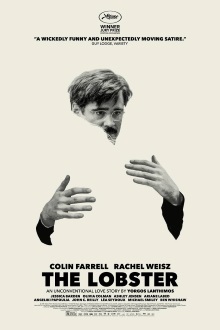
The Lobster, by Greek director Yorgos Lanthimos, makes it onto my watch list not because it was highly praised or because it won many awards, but because most of the people who have watched it describes it as one of the weirdest films they’ve seen. One of the most surprising things about this is that for such a small and quirky film, it has some serious star power with the most famous names being Collin Farrell, Rachel Weisz and Léa Seydoux.
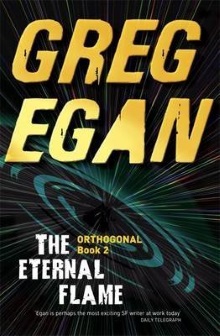
It’s been over a year since I read the first book of Greg Egan’s Orthogonal trilogy and I make no apologies for that. I can enjoy pretty much every single one of this author’s book but they require significant mental work and consequent preparation to fully appreciate. Reading The Eternal Flame requires having read the first book as Egan wastes no time in explaining how the physics of this universe work or the biological details of the alien species who are the protagonists of the story. Consequently I also assume this prior knowledge in this post.
In line with our efforts to round out my film education by watching more films from China, this is the first film by Zhang Yimou to be covered in this blog. Appropriately enough this is also both Zhang’s directorial debut and the acting debut of Gong Li. I’ve never watched this before but my wife has many times, though she is happy to watch it again. I’ve simply never watched any of Zhang’s early films that made him famous.