Nobel Prizes 2016

Here’s my annual round-up of the Nobel Prizes awarded for the sciences just because I feel that there isn’t enough coverage of them.

Let’s start with what is probably the coolest of technologies being acknowledged. Nanotechnology is one of those fields that is always talked about but no one can quite point to an actual existing nano-machine. Every application of it so far are merely nano-scale structures which have interesting properties but aren’t machines. This year’s prize in Chemistry goes to the researchers who are starting to make this possible. Jean-Pierre Sauvage created the first simple basis for a nano-structure made up of multiple molecules by realizing that a copper ion could be used to weld molecules together. Fraser Stoddard went one step further and made molecules that could move along an axle and control that movement. Finally Ben Feringa found a way to have the molecules rotate around the axle in a chosen direction, thus creating the first simple molecular motor. No actual nano-robots have yet been made but these three scientists have effectively created the tools and parts that should one day make them possible.

Next, the prize for medicine goes to Yoshinori Ohsumi for his work on understanding the mechanism of autophagy. This is the process whereby parts of a cell is sequestered and digested by the cell itself, allowing for non-essential or damaged parts of a cell to be recycled. Beginning with yeast culture, he narrowed down the genes responsible for the mechanism and moved on to mammalian analogues of those genes. It turns out that the mechanism is far more important than previously thought and sheds light into all manner of diseases and possible avenues to treat them.

As usual the physics prize, awarded to David Thouless, Duncan Haldane and Michael Kosterlitz, is the most esoteric and difficult to explain of them all. All three scientists did work on the exotic phase transitions of matter. We’re familiar with phases like solids, liquids and gases but under extreme conditions, more exotic phases can exist. Thouless and Kosterlitz studied such transitions on flat topologies while Haldane studied them on topologies so thin and narrow that they are essentially one-dimensional strings. They showed that matter under such conditions possess unusual properties, such as the quantum Hall effect. The hope is that such research will eventually lead to new types of electronics and superconductors.

Finally the economics prize goes to Oliver Hart and Bengt Holmström for their work in contract theory. This is a broad field as it can be applied to many types of agreements between parties the most obvious being how to properly design an employment contract that provides the proper incentives to workers. Other types of contracts include insurance policies, incomplete contracts in which not all of the terms can be completely specified in advance, and financial contracts between a manager and investors.
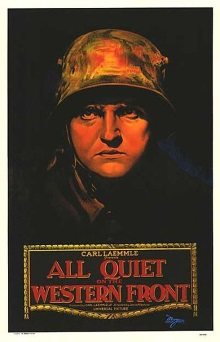
All Quiet on the Western Front (1930)

all_quiet_on_the_western_front_1930_film_poster

All Quiet on the Western Front was the film about the First World War that was recommended by professor Philip Zelikow of the history course I took on Coursera recently. Of course, with its wonderfully evocative title, this film is famous enough that it shouldn’t need an introduction. As Zelikow noted in his lectures, this film benefited from being made only a short time after the war and so could enlist large numbers of real veterans to act as extras and advisers, giving it a unique touch of authenticity.

Continue reading All Quiet on the Western Front (1930)

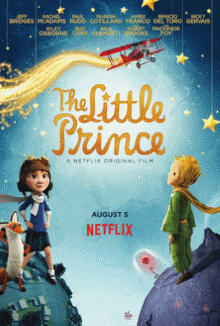
The Little Prince (2015)

the_little_prince_2015_film_poster

Embarrassingly, I’ve never read the novel despite having studied in France. In my defense, I simply never felt much of a need for it since I’d already absorbed so much of it through cultural osmosis. It is pretty odd that despite it being one of the bestselling books ever in history, this is the first feature film adaptation of the material. Though it was made with the support of French studios, this also feels very much like an American production as an English-language film with familiar Hollywood names providing most of the voices.

Continue reading The Little Prince (2015)

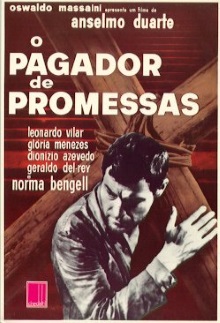
O Pagador de Promessas (1962)

pagador-de-promessas-poster01

This is a rare example of a film which was independently added to our joint watch list both by myself and by my wife from different sources. It took a while for me to realize this as its English title sometimes appears as Keeper of Promises and sometimes as The Given Word. You could take this as a sign that it’s an exceptionally good film and you wouldn’t be wrong even though I’ve never heard of its director Anselmo Duarte before this.

Continue reading O Pagador de Promessas (1962)

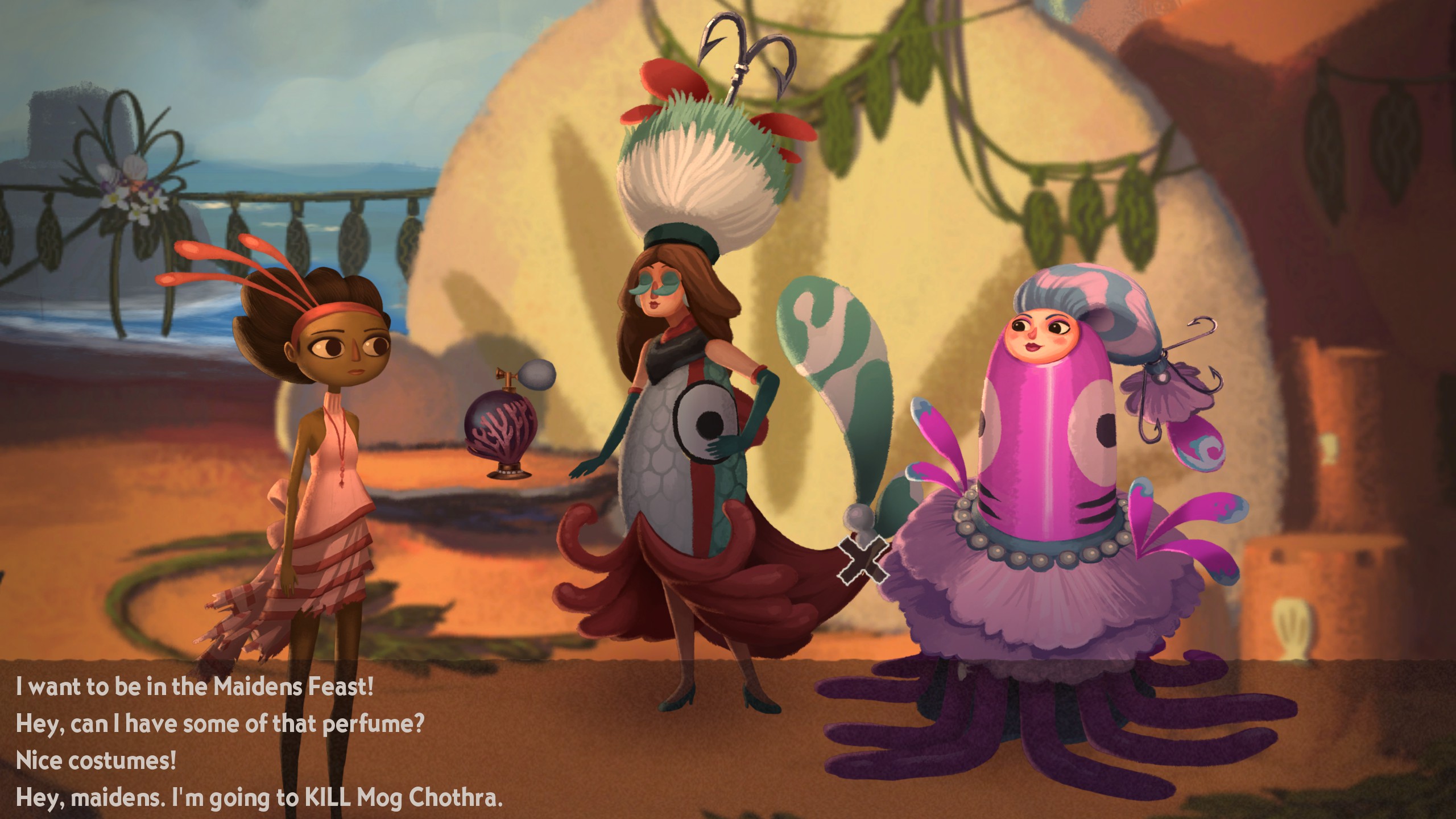
Broken Age

20161001145817_1_reduced

Broken Age is easily the most high profile adventure game in years due to its massive KickStarter game and Tim Schafer’s name. I don’t consider myself a fan of the genre and I’ve never even played the famous Grim Fandango, but I have to admit that getting people like Elijah Wood and Wil Wheaton to do your voicework can still get my attention. Seems to me however that it’s just a way to make your game a lot more expensive than it needs to be.

Continue reading Broken Age

Brooklyn (2015)

images

Brooklyn is a film that was added to my watch list as one of the notable releases of last year but I honestly wasn’t expecting too much from it. One Broken Forum poster called it pleasant but somewhat pointless. Director John Crowley appears to be known more for theater work than for his films and though Saoirse Ronan has been in a few high profile releases, she’s not an acting heavyweight. In the event, my initial impressions were largely proven correct and my biggest surprise is how much my wife liked it.

Continue reading Brooklyn (2015)

Guru (2007)

guruposter

Guru came to my attention when it was mentioned in The Economist and it was featured in a Marginal Revolution post by Alex Tabarrok, who called it the most important free market movie ever. The thing about this film that must be understood is that although it uses invented names throughout, including fictional names for the companies involved, it is really a very loose biography of Dhirubhai Ambani, one of India’s most famous tycoons, who founded the Reliance group of companies. This helps explain why this film is so fascinating to economists.

Continue reading Guru (2007)

The unexamined life is a life not worth living