The story behind this project is almost as incredible as the film itself with director Domee Shi being asked to pitch ideas after the success of her short film Bao. The result is a resounding success of a debut feature that boldly grapples with the anxieties of a teenage girl growing up better than almost anything else I can think of. Some critics have noted how this is targeted at such a specific audience that it lacks universal appeal. As always, for me it is because of its specificity in being set in a particular place, cultural milieu, and even era with the characteristic Tamagotchi-like toy that it feels so authentic as it recognizably draws on the director’s own life experiences.
Continue reading Turning Red (2022)Reflections in a Golden Eye (1967)
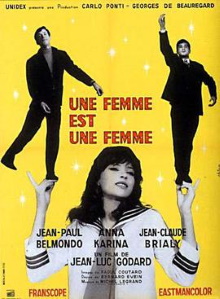
Without intending to, it seems like we’ve watched two older films about psychologically dysfunctional characters back to back this week. I’ve liked pretty every John Huston film I’ve seen so far but this one is by far the most subversive, most subtle one of the lot. In fact, given that it was roundly panned by critics at the time, I believe that audiences of the time either did not understand the film or were unprepared to accept what it had to say. It essentially accuses the US military of churning out personnel who are sexually repressed and therefore all somewhat crazy, making it an incredibly bold and ahead of its time film.
Continue reading Reflections in a Golden Eye (1967)Diary of a Chambermaid (1964)
This is one of Luis Buñuel’s least surrealist films and it’s straightforward to understand every one of the side-plots going on, yet it leaves me confused as to what is the point of it all. I believe that it’s necessary to view this from the perspective of the time it is set in, with France embroiled by the Dreyfus Affair and antisemitism on the rise. That it condemns the perversions of the bourgeoisie is obvious too but then it doesn’t exactly portray the servant class in a kindly light either. I suppose that too is one of the contradictions of the original novel this was based on.
Continue reading Diary of a Chambermaid (1964)Recent Interesting Science Articles (October 2022)
In addition to the Nobel Prize announcements this month and the reactions and commentary that always follows, there’s been plenty of cool news science, enough that I’ve had to pick and curate.
- We might as well start with the image that has captured everyone’s imaginations this month. It’s an update to the iconic Pillars of Creation image originally taken by the Hubble Space Telescope in 1995. The new image was taken by the James Webb Space Telescope using its Near-Infrared Camera to view that region of space about 6,500 light-years away. The breathtaking visual captures proto-stars being formed amidst clouds of dust and gas, the powerful gravitic forces involved propelling the clouds of materials around to form these distinctive shapes.
- As amazing as that image was, the one article that captured my imagination this month is this one about implanting corticoid organelles into rats’ brains. I’ve covered the subject of these organelles before, but briefly these are small agglomerations of human nerve cells, cultivated from pluripotent stem cells. The idea is to study simplified versions of complex organs, this one being a simplified model of the brain. This particular experiment involved implanting the organelles into the part of the rat’s brains responsible for the sense of touch. After the human and rat nerve cells had connected up properly, they tested if the organelles could properly respond to sensory input, blowing air on the rats’ whiskers, and if it could direct the rat’s behavior. Both proved true and though the ethical issues with such work are worrying, it makes the important point that such artificial, simplified brains can in principle be made to integrate with live animals.
- Another great article is this one about how pandemics that happened far in the past continue to affect us today. Analyzing the DNA extracted from victims of the Black Death in the 14th century plus those who died many decades after the plague, the team pinpointed a variant of one particular gene that seems to confer some protection and showed how it became more pervasive in those who survived the plague. Experiments with cultured cells further showed that the variant version have macrophages better able to kill the bacterium that causes the plague. Yet there is a downside as this variant is also linked to a greater susceptibility to autoimmune disorders which essentially means that the immune system has been tuned to be overactive against all kinds of threats.
- I don’t like to put too much weight on socioeconomics studies so consider this as just one data point among many. This paper studying how participation in markets affect moral behavior uses data from experiments done in some villages in Greenland. After controlling for other factors, it finds that increased market participation leads to more universalism in moral decision-making, meaning that the villagers saw themselves as part of a wider community instead of valorizing their own co-villagers above outsiders. It’s the kind of finding that is intuitive and perhaps a little too good to be true but I certainly would like it to be.
- Next is another paper that is sure to be politicized. It summarizes the current state of knowledge regarding vegan and vegetarian diets to argue that strict adherence to a purely vegan diet results in too many nutrient deficiencies. In any case, our ancestors consumed plenty of meat, eggs and seafood so our bodies are adapted to it. The paper recommends a diet of mostly unprocessed plant-based foods balanced with modest amounts of wholesome animal foods.
- Finally here is a long article from Google about using AI techniques to discover novel algorithms. It uses the example of matrix multiplication that most people who have some mathematics education should know how to do. In 1969 the German mathematician Volker Strassen showed a way to do the calculation more efficiently at least on 2 x 2 matrices yet until now no one knows how to extend this to larger matrices or if even better algorithms are possible. The article talks about Google using a system they call AlphaTensor to gamify the process of searching for better algorithms and actually succeeds in finding novel solutions though it take a far mathematician than myself to understand how to use the new algorithm. Since matrix multiplication is used in many, many fields of computing even the slightest optimization makes a huge difference. But this also raises the old fear that AI-led discoveries will soon lead us into territory that human minds will struggle to understand.
The Pornographers (1966)
The English title of this film by Shōhei Imamura is somewhat misleading. Its full Japanese title An introduction to anthropology through pornographers is far better at describing what it is about, a view of the human condition through the eyes of its main character. We’ve already seen Imamura’s fascination with the dark side of human nature in Vengeance is Mine. This one is similar though of course the focus this time around is around sexuality and its perversions. Without ever being truly graphic, this film nevertheless challenges and breaks just about every moral boundary to an extent that is shocking even today. I like this one a little less as I’m not confident that I understood everything but the statement that the director seems to be making through it is really something else.
Continue reading The Pornographers (1966)Annette (2021)
Looking at the title an some of the images from the film that feature a creepy doll, it’s easy to assume that this is a horror movie of some kind. Yet things aren’t so straightforward as this is a musical using music entirely by the Sparks brothers and is directed by Leos Carax, whose last film Holy Motors I found almost completely incomprehensible. Some bizarreness aside, the main plot, once it gets going, is actually quite straightforward and emotionally affecting. The involvement of the Sparks brothers makes it unique and sometimes makes it feel more like performance art than a film.
Continue reading Annette (2021)Nobel Prizes 2022
Every year I write a summary of the Nobel Prize winners in the sciences and in economics. Sometimes however the achievements in the sciences may be so esoteric that I struggle to understand what the prize is for. That isn’t the case this year are the winners are either very famous discoveries or quite straightforward to make sense of.
We start with the prize for physics for discoveries that most of us have already heard about one way or another but are so badly explained even in respectable publications. This refers to the phenomenon of quantum entanglement in which particles can be entangled with one another such that what happens to one particle can determine what happens to another no matter how far they are apart. Albert Einstein was notoriously skeptical that this could seemingly violate the speed of light limit.
Building on the ideas of John Stewart Bell to tell the difference between whether the strange entanglement effect truly exists or if there are hidden variables that determine what happens, John Clauser built a practical experiment that showed that such hidden variables probably don’t exist. A loophole remained however which was closed by the second laureate Alain Aspect by switching the measurement settings of the experiment after the entangle pair had left the source to prove that the setting could not affect the result.
Finally the third laureate Anton Zeilinger exhibited the phenomenon of quantum teleportation which involves moving the quantum state of a particle to another at a distance. This is the basis of quantum computing and quantum cryptography.
The prize for physiology or medicine goes to Svante Pääbo who essentially founded the field of paleogenomics. This is the study of the genomes of ancient, perhaps extinct, biological species. Extracting and sequencing ancient DNA has been known to just about everyone since Jurassic Park but the reality is more difficult as DNA degrades over time and samples tend to be contaminated by bacteria and contemporary organisms. So Pääbo began by studying the mitochondrial DNA of Neanderthals as they are small and thousands of copies are present in each cell.
As technology and his own techniques improves, he also sequenced the nuclear DNA of Neanderthals, allowing comparative analyses with the DNA of modern humans. He was later also able to identify a completely new species Homo denisova from DNA evidence alone. He showed that this species interbred with Homo sapiens and helped establish ancient migration patterns.
I think the research that went into the prize for chemistry is the least well known of the lot to the general public but it’s not really hard to understand either. Barry Sharpless, for whom this is the second Nobel Prize, and Morten Meldal conceived and created a mechanism to implement what is now called click chemistry. In chemistry, you often want to snap different groups of molecules together and you want a joining process that works regardless of the chemical properties of each group. These two laureates, working independently, came up with the process called the copper catalysed azide-alkyne cycloaddition that used copper ions to speed up the previously known process of using two groups of chemicals azides and alkynes to snap together like buckles and reduce unwanted byproducts.
However copper ions are toxic to living things, making this process unsuitable for purposes like making pharmaceuticals. The third laureate Carolyn Bertozzi therefore invented a new way to make the process work without copper ions. Her idea was to put the alkyne half of the buckle under strain to make it more reactive. She used it to attach fluorescent marker molecules to carbohydrate polymers on the surface of cells, allowing them to be more easily tracked as they move about the body. Her version of the process is called bioorthogonal reactions.
Finally the prize in the economic sciences goes to Ben Bernanke, Douglas Diamond and Philip Dybvig for their studies of financial crises and the banking system’s role in them. Diamond and Dybvig showed that banks are intermediaries between savers and borrowers, which sounds simple enough but by pooling many deposits, banks are able to offer long-term loans to borrowers to support investments while also assuring depositors that they can access their funds at need. This however only works if the banks are trusted to be sound and the system is at risk of a bank run if depositors try to withdraw their money en masse.
Bernanke is of course well-known as the chairman of the Federal Reserve during the financial crises of 2007-2008 but it is his work in studying the Great Depression that was cited for the prize. He showed that the banks were not just a victim of the crisis, but when banks failed, the loss of information about borrowers contributed to prolonging the crisis. As The Economist noted, these insights seem like fairly obvious ones but I suppose the formal, academic treatment of the subject is valuable.