This has been a lighter month in terms of cool science news with only two articles but both are really cool ones.
The first one discusses how rice seeds are are able to sense rainfall. Experiments proved that dormant seeds are stimulated to germinate when they detect the vibrations of raindrops hitting a puddle or the ground. Mechanically, this is achieved by the vibrations dislodging gravity-sensing organelles called statoliths in some of their cells, sending a signal to the seeds to sprout. The biological advantages of this mechanism is obvious and could be exploited to get seeds to grow faster under the right conditions. We’ve always known that plants are not passive living organisms as they have senses that respond to the environment around them, but it’s always amazing to learn just how responsive they are.
These days I’m always happy to report any news that isn’t in the life sciences and this archaelogical discovery certain qualifies, even if it arrives suspiciously close to this year’s release of The Odyssey film. Researchers have found a papyrus fragment of Homer’s Iliad in the gut of an ancient Egyptian mummy. The mummy in question was buried in a Roman-era tomb around 1,600 years ago. Though papyri have often been found incorporated as part of the mummification process, this is the first time that it involved a Greek literary text.
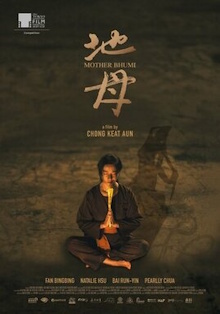
I’ve watched two of Chong Keat Aun’s films so far and loved both. This was enough to make me consider me the best Malaysian director at the moment. Unfortunately despite Mother Bhumi being a higher profile work starring international star Fan Bingbing, it counts as striking out for me. His technical skills have improved I’d admit and it’s astonishing how he is able to wring such authentic acting out of an actor who is definitely not Malaysian. But the message he conveys here is both off-putting as it sidesteps serious political issues and worrying as the director gives you the impression that he truly does believe in black magic.
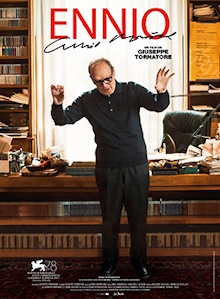
This biographical documentary of the life and work of Ennio Morricone was released a year after the legendary composer’s death. I don’t know when exactly the interviews with him were filmed and I’d imagine they must have taken place over an extended period. But I can’t help but feel that Giuseppe Tornatore finished this just in time and fortunately so because this is one of best documentaries I’ve ever seen. Its scope extends well beyond Morricone’s best known film scores, it features interviews with many famous directors and fellow musicians and it raises fascinating questions about the artistic merits of music composed for films. It could be argued that this treatment is overly hagiographic but if anyone deserves so much praise, it’s surely Morricone.
I always love weird, inventive games and that this one is in the underserved investigative genre makes it a must try for me. The issue with the genre is that cases are usually handcrafted and the process of solving them plays out like a linear adventure game with a small cast of characters. What makes Shadows of Doubt stand out is that it’s all procedurally generated. The city, the hundreds of people who live in it and of course the cases. The downside is that the procedural generation isn’t perfect, resulting in all kinds of issues, and there is a lot of jankiness in the mechanics. It’s one of a kind and great at what it does but you do have to put up with a lot of frustration.
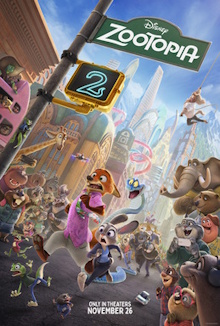
The first Zootopia was a pleasant surprise but that this sequel was a far bigger success was even more surprising being the top grossing film in the US for 2025. To me this is almost the same film with the same core message, except bigger, more frenetically paced and almost painfully vibrant. The attempt to create a new source of conflict between the two leads is cringeworthy and the last minute betrayal is clunky. I don’t doubt that this is a spectacular experience for kids but it’s too shallow to be satisfying for me.
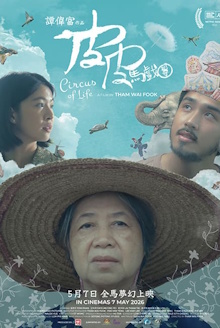
My wife insisted on watching this in the cinemas, believing that we ought to give local directors a chance. This is the directorial debut of Tham Wai Fook, who is arguably a friend of a friend, and he has apparently been wanting to turn his script into a film for over a decade. This is a clearly a passion project based on elements that are at least partially autobiographical, such as his strange obsession with circuses. Unfortunately just because someone feels strongly for something doesn’t mean that they’re capable of turning it into good art. This film is too long, too unfocused and too self-indulgent. It was so actively bad that I had difficulty watching it to the end.
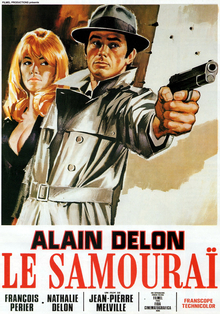
We’ve seen so much of the work of Jean-Pierre Melville and Alain Delon that it would have been criminal to miss this one. Even those of a certain age who haven’t seen Le Samouraï will certainly be famliar with Delon’s iconic look here with his hat and trenchcoat. It’s a gorgeous, slick film of competence on all sides put on display. The title is pure cultural appropriation however meant only to evoke a particular mood. Similarly the plot is more style than substance and the ending is the usual unsatisfying death, Melville-style. I wouldn’t call this a particularly deep film but it sure is cool.