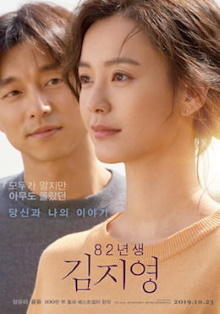
This film was based on a book that was hugely successful in South Korea and was itself a major cultural phenomenon. Watching this, it’s obvious that it must have must touched a nerve among South Korean women who recognized themselves in the story of its protagonist. I think it tries to do a little too much. The range of topics that can be comfortably covered in a novel is necessarily wider than what we can accommodate in a film. Nonetheless it is a bold and timely rallying call for the country and a wonderful sign that its traditionally patriarchal society is changing.
I’d always known that this film was a huge cultural phenomenon and remember being puzzled by it as I couldn’t make head or tails of the videogame adaptation back in the day. Now that I’ve finally watched it I can understand why it’s a cult hit, as it features performances by such musical greats as Ray Charles, Aretha Franklin and James Brown. But overall, it’s just too ridiculous and too long of a film for me to like it very much.
The Satanic Temple, a religious group that purports to worship Satan, made international news with their bold statue of Baphomet some years back and this documentary is about the organization itself. As it turns out, the members do not actually worship Satan and do not even believe in the existence of Satan but they do make use of the imagery and Christian mythology to effectively troll Christians and to defend challenges against the separation of state and religion in the United States.
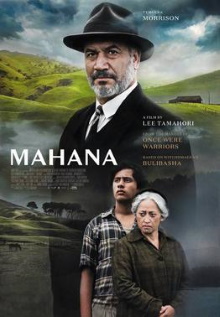
Director Lee Tamahori made his name with the fantastic Once Were Warriors about Maoris in his native New Zealand and now after a long career spent in Hollywood he’s returned to the subject. It even stars the same actor Temuera Morrison, now of course much aged, playing the role of the patriarch of a large Maori family in the 1950s. This one leans a little too heavily on the sentimental side for me but is nevertheless a strong period drama about a setting that is still underexplored.
I was a big fan of the Deadwood series but it was cancelled after three seasons without reaching any kind of resolution. This movie was made to finally give it a proper ending but it comes very, very late, and the various performers have all aged out of their roles. In fact, a few of them died in the nearly 15 intervening years. Unfortunately while the intent to finally provide closure to fans is laudable, this is simply not a good film and basically amounts to a rehash of the final season.
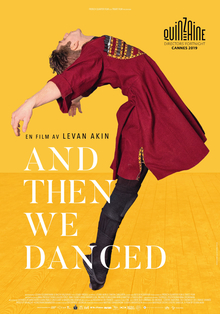
It’s always a real pleasure to watch cinema of a country to which we’ve had no prior exposure as it involves dipping into an entirely new culture and people. This one is not quite a purely Georgian film as its director Levan Akin and the production company are Swedish. Still the performers are all Georgian and it’s set entirely in the country so it counts. Of course it helps as well that this is a strong film that deserves the widespread acclaim it has received from critics.
This may be a David Lynch film but it’s also noted as being the film that is the most unlike his established style, so much so that people kept asking what prompted him to make it. Indeed with its opening score by Angelo Badalamenti and an aerial shot that immediately brings to mind Twin Peaks, it feels like classic Lynch but then the story proper starts with its determinedly positive message, it’s such a sharp turnaround that it’s almost enough to give you whiplash.