A bit late this past month as I’ve had to spend more time than expected dealing with personal stuff. Only four articles in total here:
The hottest piece of news is this article from the UK-version of Wired talking about how a team at NASA has experimentally validated a revolutionary space propulsion drive. The drive supposedly works by bouncing microwaves around inside a closed cavity and somehow generates thrust without any propellant. If true, this would seem to be a violation of fundamental physics. Personally, I side with the skeptics. It seems likelier than this is due to some error in measurement or in the way the experiment has been set up than that such a device could work.
The next article is from The Verge and covers how MIT researchers were able to reconstruct sounds from the tiny vibrations in a bag of potato chips. This is achieved simply by pointing a video camera at the bag while the sound is being played and analyzing the results. Apparently the method also works by looking at the leaves of plants and ripples in a glass of water.
This next one isn’t a science article by an extensive survey of prostitution by The Economist. The survey mainly serves to reinforce the truth of stereotypes about the industry, but one surprising result is that sex workers with more education earn more on an hourly basis, in line with jobs in other industries.
Finally this last article from the MIT Technology Review discusses a new kind of computer chip designed by IBM that mimics biological neural systems. This represents a break from the chips in use today which works linearly. Also striking is how these new chips consume very little electricity and how the neural structure encompass both memory and processor instead of separating the two.
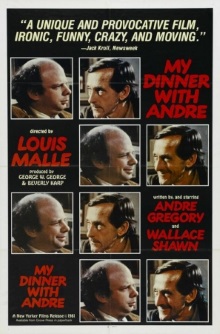
In the three decades since its release, My Dinner with Andre has gained a reputation as a poster child of boring and pretentious art films. As its title indicates, it consists of nothing more than two people sitting down for dinner and having a conversation for two hours. Andre Gregory and Shawn Wallace play characters who appear to be thinly veiled versions of themselves. Having not seen each other for a number of years, Shawn is surprised to receive a dinner invitation from Andre and reluctantly agrees. Andre then proceeds to regale him with stories of the adventures he has had over the past five years.
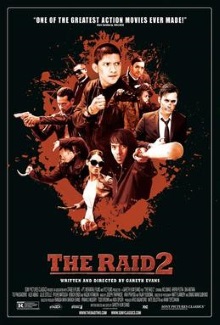
The first The Raid was a genuine eye-opener that gave new meaning to the word “visceral”. Cinema-goers who have been inured to sanitized Hollywood fighting were reminded that physical violence causes actual pain and damage. You couldn’t help but wince at the snapped bones, crushed cartilage and mutilated tissue that are the inevitable result of people seriously trying to kill one another. It turned the limitation of its low budget to its advantage, setting the entire film within the confines of a single apartment complex and focusing on the fighting with laser-like intensity.
Ridley Scott is of course a celebrated Hollywood director, even if he is actually British, especially notable to me for such films as Alien, Blade Runner and Black Hawk Down. Unfortunately his recent output is of more questionable merit. Like many people, I was enthusiastic when Prometheus was first announced, but ultimately didn’t bother to watch it because its reviews were so uniformly bad.
Despite the extra care and seriousness with which I’ve taken to watching films recently, my knowledge of cinema remains sadly inadequate. There remain an endless number of classics of world cinema that I really should watch but have never done so. I must include in this the entirety of the work of Ingmar Bergman, a film-maker whom I have always found to be too intimidating and perhaps inscrutable to approach.
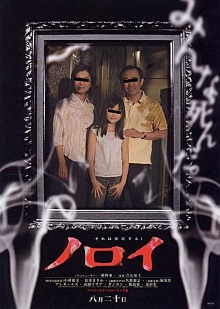
Japanese horror films have a reputation for being both creative and being actually scary. Most American horror films by contrast aspire to little more than gore and jump-scares. This one was recommended by a regular on Broken Forum and because it has been a while since I have watched an entry in the J-Horror genre, I decided to give this one a whirl.
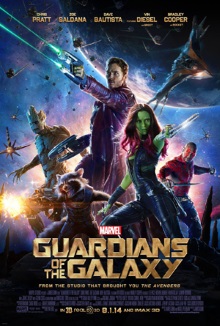
Like most comic book fans, I was impressed by Marvel’s courage they announced a film based on this obscure property but skeptical that it would turn out decently. Then I was all hyped up when I saw how responses to it on Broken Forum were overwhelmingly positive. But now that I’ve seen for it for myself, I’ve ended up being only lukewarm about it.