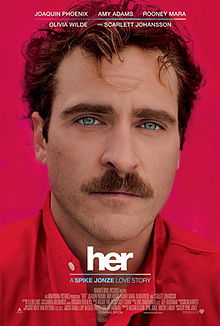
There were two great science-fiction films in 2013. One was Gravity. Her is the other. Of the two, Gravity is immediately spectacular and impressive, wowing audiences with visuals the likes of which we’ve never seen before. But it will be Her that sticks in your mind and that you will talk about with your friends long after the credits have stopped rolling. With some luck, it could also be a film that reshapes how AI is perceived in the public mind for decades to come.
Some quick notes on my recent trip to climb Mt. Rinjani in Lombok, Indonesia.
My wife reached the actual summit. I didn’t. Our guide said that I was about 30 minutes away but judging from my slow progress it should be more like an hour. I was too exhausted, didn’t sleep at all the previous night and of course going up further would just mean more distance to go down, so I gave up. It wasn’t personally important for me to reach the summit anyway.
This one was put on my watchlist for winning the Oscar for Best Documentary last year. It is also an unusual documentary in that spoilers will severely diminish the pleasure of watching it. This forces me to proceed more cautiously than usual in writing about it.
I’m getting an early start on the May instalment of this regular feature due to not being around next week. Here are six science articles from the past month that deserves your attention:
The most exciting of these is news about how scientists have been able to seemingly reverse aging in older mice by the relatively simple expedient of infusing them with the blood of younger ones. This article from The Boston Globe has more, but really it’s been published everywhere. The results seems to be similar over a number of different studies and the procedure is known to improve muscles, the heart and the brain. Naturally the joke going around is that vampirism has turned out to really be the key to immortality.
This next article from The Guardian talks about a project that created synthetic DNA letters, effectively similar to creating a new X-Y base pair to add to the normal G-C and T-A base pairs. The scientists inserted this new base pair into E coli bacteria and then bred them. This was done to prove that synthetic DNA, once introduced into a species, could then stably be passed down to future generations.
Why do Westerners tend to be individualists while Asians tend to be collectivists? For understandable reasons this is a difficult question to answer as it is far too easy to content oneself with just-so scenarios and answers that fit one’s biases. This article from the South China Morning Post presents yet another theory: rice-growers tend to be collectivists because growing rice requires heavy labour and hence the assistance of neighbours. Wheat-growing on the other requires less cooperation with others. Intriguingly China itself is used as a test-case because while southern China grows rice, northern China grows wheat and indeed surveys by the researchers demonstrate that southern Chinese tend to be more collectivist while northern Chinese tend to be more individualistic.
Whether or not genes determine intelligence is one of the most controversial questions in biology. But if they do, would it be possibly to identify the set of genes that do so? This article from The Economist covers the discovery of how a particular version of a gene, called KL-VS may be responsible for about 3% of the variation of IQ in the general population. The gene apparently codes for increased levels of a protein known as klotho. Experiments on mice show that mice that are genetically engineered to produce more of this protein perform much better in intelligence tests than on unmodified mice, suggesting that a drug that acts to elevate klotho levels might boost general intelligence.
The next one is just for fun, about the discovery of the fossilized bones of what is now thought to be the largest dinosaur ever to walk the Earth. This article from BBC News tells the story of the discovery in Argentina. This new and as yet unnamed species of dinosaur must have weighed over 77 tonnes and stood 20 metres high, with an overall length of 40 metres from the nose to the tip of the tail. Cue jokes about Argentina being the final resting place of Godzilla.
Finally here we have at least one article that isn’t about biology. Instead this one is about experimental success in reliably transmitting quantum information. This article from the New York Times talks more about the process. Although the term quantum teleportation is used, the speed of light is not violated as the process still requires the measurement information to be transmitted classically. But this measurement information is then used to decode the original information encoded in one of the two entangled electrons so that the information itself needs never be transmitted, resulting in theoretically uncrackable data transmissions.
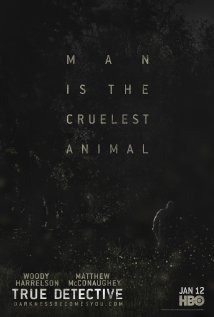
With the prevalence of cop shows on television, it takes something special to get us to watch one. This one was chosen upon the recommendation of our cinephile friend and because due to its first-class Hollywood acting talent, it’s clearly something outside of the norm. What we especially liked about it was it purported to tell a completely self-contained story in eight episodes. No need to commit to watching future seasons to find out what happened. No need to worry if quality will be maintained beyond the first season.
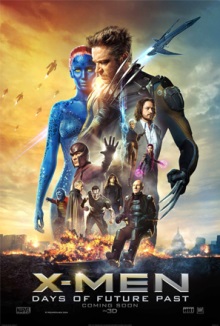
As a big fan of the Marvel Cinematic Universe, I’m one of those who would love to see all of the Marvel properties revert back to Marvel because they have proven themselves to be such better stewards of them. The most egregious offenders are of course Spiderman and the Fantastic Four, but given the existence of such turds as X-Men: The Last Stand and X-Men Origins: Wolverine, this includes the Marvel stable of mutant characters as well.
I’ve never seen Life is Beautiful but I have heard about it. Unfortunately while dropping by the in-laws’ house recently, I couldn’t help but catch glimpses of a Chinese television show whose entire point seems to be to provide summarized digests of chosen films. This meant that the film was effectively spoiled for me before I ever watched it.