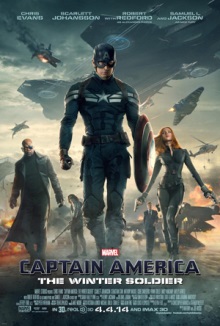
The Winter Soldier (I’m not going to use the unwieldy full title) marks the ninth instalment of the ongoing Marvel Cinematic Universe. It’s hard to believe that Marvel’s streak of hits has continued for so long but it has, and with this film, it continues to do so. I’m not a big fan of The First Avenger. I liked how it subverted the point of having a superhero but felt that its action scenes were underwhelming and its story too simplistic.
Despite my recent focus on films, I haven’t exactly forgotten this ongoing series and there are quite a few of these articles for the previous month:
The obvious starting point is the biggest scientific news of the month and perhaps the biggest cosmological finding of the decade. There are countless articles about it but here’s one from National Geographic for emphasizing what the results imply for the existence of a multiverse. This follows observations made at the BICEP2 facility in Antartica of curling patterns in the distribution of temperature and matter, which stands in for gravitational waves. These findings not only support the rapid inflation theory of how the currently observable universe was formed but suggests that ours is only one of many universes that may exist.
This next article from the Los Angeles Times reads like something right out of a bad sci-fi thriller. It’s about how a 30,000-year-old virus was found and revived from the Siberian tundra. This sample represents a particularly large virus that infects only amoeba but the obvious horror movie scenario is that some commercial drilling operation might unearth an ancient virus that would be dangerous to humans.
In another piece of cool cosmological news, Crain’s Detroit Business has an article about how scientists have managed to measure the spin of a distant, supermassive black hole. The object in question is at the centre of a quasar about 6 billion light years away from Earth. The scientists were able to take advantage of gravitational lensing effects to accurately measure the distant light and found the black hole to be rotating at about half the speed of light.
This next bit has also appeared in various places but this version is from the Utah People’s Post. It talks about how elephants have been found to be able to recognize different languages spoken by humans, as well as the age and gender of the speaker. The research was performed in Kenya and used different tribal peoples, some of whom actively hunted and killed elephants and some of whom ignored them. They found that the elephants were able to recognize the languages spoken by the Masai tribe which usually kills elephants and react accordingly by fleeing or bunching together to protect each other. They were also able to moderate their responses if the speaker was a child or a female, indicating a low threat.
Male-female inequality isn’t anything new but I’ve been paying more attention to this recently since it’s become a hot issue within the gaming community. This article from ThinkProgress show how investors respond better to sales pitches made by men compared to those made by women, even when the content of the pitches is exactly the same. Oddly, they even found that investors responded better to good looking men, but attractiveness in women didn’t seem to make a difference.
The next one is a news release rather than a real alert and it’s from EurekAlert! It’s about how computers are better able to tell when someone is faking being in pain than people. Humans fake being in pain for many reasons of course, including when it comes to demanding insurance compensation. The computer system works by looking at the faces of the people involved and trying to work out whether or not the grimaces are generated by voluntary or involuntary facial movements. Apparently the system was able to achieve accuracy rates of 85 percent while even trained humans were only to achieve rates of 55 percent, that is only slightly better than chance.
And finally for another right out of sci-fi story, this article from NewScientist covers an experimental treatment for victims of severe physical trauma. It’s only meant as a last resort specifically for people who are immediately in danger of dying from gunshot or knife wounds and the doctors believe that they will die before the wounds can be treated. The idea is to drain out all of the victim’s blood and replace it with a cold saline solution. This very rapidly cools down the body and stops almost all cellular activity. This also means that the victims become clinically dead. This gives the doctors about two hours during which they try to fix as much of the physical damage as possible before replacing the saline solution with blood again and restarting the heart. Naturally, if this works, it will lead to questions about just how long we can keep a person in suspended animation in this way.
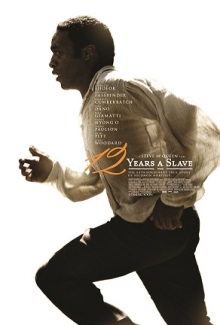
Having won the Academy Award for Best Picture of 2013, 12 Years a Slave surely needs no introduction. It also won Best Supporting Actress and Best Adapted Screenplay. As flawed as the Oscars are, I think it is also illuminating that despite being nominated, it neither won Best Director nor Best Actor, categories which you would normally expect a film like this to sweep up.
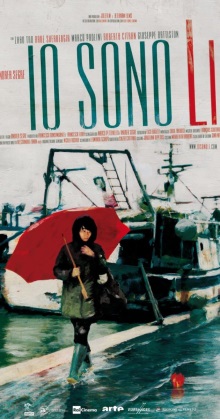
This film was one of wife’s picks to add to our regularly maintained “to watch” list. It’s ostensibly an Italian film, with an Italian director, filmed in the province of Venice and making use of a largely Italian crew. Yet it has a Chinese lead and many supporting roles with Chinese actors and actresses. The dialogue is pretty much half Italian and half Mandarin Chinese.
Shane Carruth’s debut film Primer achieved Internet notoriety by spawning a variety of charts and diagrams to describe the events of the film. They were of such complexity as to surpass those created for Christopher Nolan’s Inception. Even with the aid of these charts, most viewers still walked away without really understanding what happened in the movie. Upstream Color is the same director’s second feature and like its predecessor, it is not an easy film to understand.
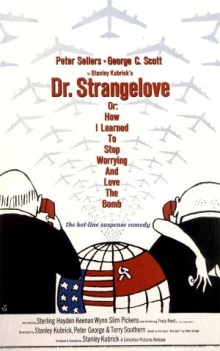
Some films have become so strongly entrenched in popular culture that you almost don’t have to watch them to know all about them. Their tropes, jokes and characters have been referenced endlessly in subsequent works and more pertinently in forum and blog posts on the Internet so much so that you might not even realize that you’re watching the source material. Stanley Kubrick’s Dr. Strangelove is an example of such a film.
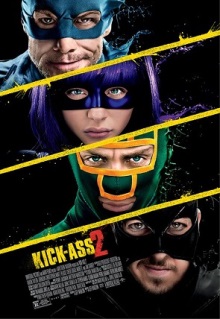
I’m not much of a Mark Millar fan but the first Kick Ass 2 hinted at enough of a subversion of the superhero genre and had enough shock value that it intrigued me. I would have loved a story that wholeheartedly embraced the idea that dressing up as a superhero and going out to fight crime isn’t just silly, it’s also utterly ineffective. Unfortunately the second half of the movie completely reverted to type, becoming yet another poorly executed superhero action movie.