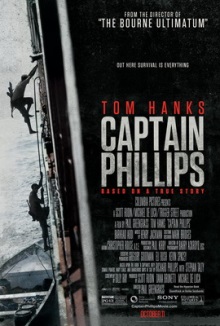
The first time I ever heard about this film was on CNN when I was in Greece. It received quite a bit of airtime and seemed to be considered as a fairly serious movie. I really liked the short clip that aired, showing Abduwali Muse entering the bridge of the Maersk Alamabama and menacing the captain. The scene was tense. The villain looked appropriately un-Hollywood. That was enough to pique my interest. I am therefore sad to report that after viewing it, it does turn out to be standard Hollywood action movie fare after all.
My wife and I usually watch movies on the weekends and television shows on weekdays. One of the shows that we had on rotation over the past few months has been Breaking Bad and we’ve just finished with it. I’m reasonably certain that this show needs no introduction so I’ll jump straight into a list of what I liked and what I didn’t like about it, though it will unavoidably contain lots of spoilers.
The show feels like an experiment into how evil and despicable you can make the protagonist of the story and still have your audience root for that character. It’s pretty fantastic in that regard. Episode after episode, season after season, Walter White graduates to ever greater depths of crime and villainy. And yet since the writers successfully depict him as such a smart, hyper-competent bad ass, you want to see him win anyway.
Over the past few months, my wife and I have been slowly working through a list of some of the more notable Japanese animated films. Among the recurring names is that of director Makoto Shinkai. After watching a few of his works, I have to say that he isn’t one of my favourites. His works do tend to have absolutely gorgeous animation but are light on plot. They seem meant more to convey a specific mindset or emotional state than telling a story. They also seem overly fond of some of the most common tropes in Japanese animation without enough original ideas or perspectives. There’s a certain poetical beauty in his works but for the most part, they’re not to my taste.
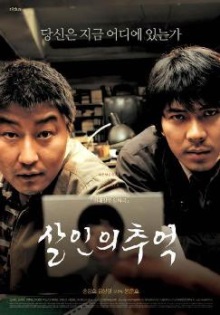
I’ve been paying more attention to films recently so I think I should try to write more about them. My wife and I originally tried to watch this film a couple of years ago, based on the recommendation of a film aficionado friend of ours. But my wife fell asleep halfway through the film and I didn’t feel dedicated enough to continue watching without her. Recently the same friend remarked that South Korea has been producing quite a few films of high calibre recently and reiterated this recommendation, saying that our film appreciation abilities have probably improved enough by now to properly watch it.
This film has been amazingly successful in Malaysia, receiving not only overwhelmingly positive word of mouth reviews on social networks but also breaking local box office records. I was inclined to ignore this film since I was unimpressed by such local favourites as Tiger Woohoo and Ice Kacang Puppy Love. But after reading this enthusiastic review on The Star Online which comes close to calling it a better film than even Yasmin Ahmad’s Sepet, I felt that I should at least give it a fair shake.
Starting with this article from Big Think that provides some insight about how humans can make economically irrational decisions, in this case, the tendency of people to overvalue the things that they already own, a phenomenon known as the “endowment effect”. It cites research showing how Hadza Bushmen in Tanzania who have no contact with the modern economy do not experience the effect. But once roads have been built to connect their isolated communities to tourists, they become involved in the modern economy quickly pick up the effect.
The next one is from Bloomberg and covers research into implantable probes that can help people who have suffered memory losses to recover some of what they have lost. It’s designed for soldiers who have suffered injuries however and works only to help with lost motor skills rather than abstract knowledge-type memories, but it looks like a promising start.
This next one is a favourite of mine. Researchers already know that when people experience art such as a painting or music, certain parts of the brain are activated and this can be detected using MRI scans. This article from the BBC shows how the brains of mathematicians are activated in similar ways when contemplating mathematical formulas. In fact, the more aesthetically pleasing the formula is, the greater the response measured, with the most beautiful formula of all being of course Euler’s identity.
Science has long known that more physically attractive people tend to achieve greater success in a wide variety of fields, many of which are seemingly unconnected with beauty. This article from The Economist tries to tease out these effects by studying participants in the Tour de France bicycle race. Subjects were asked to rate the attractiveness of Tour de France contestants without knowing about the performance of the contestants. The researchers found that physical attractiveness is indeed correlated with being better cyclists in a field in which there should be no bias towards attractive people. The working idea is that physical attractiveness is itself an indicator of good genes and good health, and hence better performance at sports.
Here’s another article from the BBC that talks about research that allows one monkey to control a limb of another monkey. The monkey being controlled and electrodes were inserted in its spinal cord. The master monkey had a brain chip implanted which could monitor the activity of its neurons. The readings were then fed to the sedated monkey, allowing the other monkey to control its limb.
This great article from BPS Research Digest goes into detail about researchers’ attempts to circumvent the inability of people to tickle oneself. They implemented a body swap illusion in which the participants wore goggles that showed video feed from a camera. They were seated opposite an experimenter and the camera would either show a normal forward facing view or a view of themselves from the perspective of the experimenter. Both the participant and the experimenter held a rod with a foam at the other end which could be used for tickling. The idea is that the subject would be confused about who was doing the actual tickling. It turns out even when the subjects were completely fooled by the illusion, they still found it impossible to feel a tickling sensation when it was really their own hand moving the rod but did feel it when it was the experimenter’s hand moving.
Another Coursera course that I’ve been taking at around the same time was How Things Work, by Louis Bloomfield of the University of Virginia. It’s a high school-level physics course that covers motion and basic mechanics. It should be too easy for me and I originally picked it only because my wife wanted to and wanted me to accompany her. It the end, I learned much more than I expected to. As it turned out, having some idea of the principles of physics isn’t the same as being to intuitively understand and internalize them.
The course rams home the point by starting you off with a preliminary assessment of what you already know. There’s no real math in this course, so the assessment, like the weekly homework quizzes, work by asking about hypothetical real-world situations. As example of this would be asking how much force you are using if you are moving a cupboard at a constant velocity across the floor. I expected to totally ace the preliminary assessment since I thought I already knew high school physics, but I ended up doing rather badly.