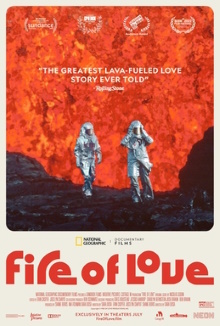
So this is both a nature documentary and a love story of its two central characters. The two, Katia and Maurice Kraff, died in 1991 but they left behind plenty of footage they shot themselves. This film was made by Sara Dosa, apparently with the encouragement of some of the couple’s friends, to document their remarkable lives and their dedication to their chosen field: the study of volcanoes. It certainly makes for a unique documentary and the images they captured of volcanoes are mesmerizing. Unfortunately I don’t share their love for volcanoes so this isn’t the film for me but I do always enjoy learning about people who choose to live their lives in a way completely unimaginable to anyone else.
This is the middle part of the World of Apu trilogy that began with Pather Panchali. I was dismayed at how the first film existed almost purely to highlight poverty and this is even more so the case here. The life of Apu and especially his mother Sarbajaya is so miserable that this is very painful to watch. Nonetheless as a portrayal of life in India of the period, it is second to none and this particular installment even gives us a look into life in the city. Its depiction of the relationship between mother and son is also considered unusually frank for its era and apparently upset local audiences. It’s not an easy or pleasant film to watch but it is certainly a great one.
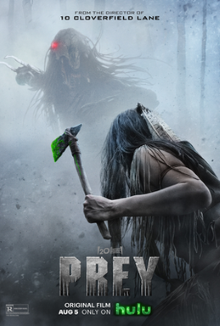
So what am I doing watching the fifth installment of a popular action movie franchise? Because it’s that good that’s why. This newest entry of the Predator franchise is perfectly named and given that it takes place in 1719 is technically a prequel to all the others. By now female protagonists of action movies aren’t rare and they even fall into familiar tropes. What blows me away is that the heroine here, Naru, wins not by being stronger, or more skilled, or faster, but by carefully observing what the enemy can do and being smarter. On top of that it makes great use of its historical setting and the action choreography is fantastic. It’s one of the best action movies I’ve watched, absolutely.
Obviously generative AI is the in-thing now. I’ve been playing around with ChatGPT and every one of the publicly available models for months now and it really makes me feel like we’re living in a sci-fi scenario. There are new announcements in the field practically every day and it’s exciting to try to keep up.
We’ll still start with some non-AI news first. Most people will have heard of how sperm counts in men have been falling. This study talks about how men who do physically demanding jobs have much higher sperm counts compared to the baseline. This may be linked to how they also have higher testosterone levels. Most other studies don’t show a direct link between testosterone levels and sperm count but it’s possible that they could be linked in more indirect ways.
Next we have a story about an American man who developed an Irish accent after being afflicted with prostate cancer. This is thought to be an instance of paraneoplastic neurological disorder in which a cancer patient’s nervous system is attacked by their immune system. This isn’t an altogether new finding but it is the first instance of the cause being prostate cancer metastasizing and affecting the brain. Plus I’m always fascinated by how personalities and demeanors of people can change drastically as a result of injury or disease.
There are far too many announcements in the AI space to cover so I’ll limit myself to news that is more applicable to the mainstream. By now most people will have heard of GPT4 and how it accepts images as an input, in addition to text. This article goes more deeply into such multimodal inputs for AI, integrating text, images, video and sound. It talks specifically about an in-house model made by Microsoft called Kosmos-1 that is unavailable to the general public and is supposedly far better than anything else. The important thing is that such a model would be much closer to a general purpose AI that we think of in science-fiction, able to receive all manner of sensory input from the outside world and respond accordingly.
Next is a paper about the image generation model Stable Diffusion. The researchers talk about how they are able to take images of human brain activity from fMRI and run them through the model to reconstruct an image of what the human subject was seeing at the time of the FMRI scanning. The results are extremely impressive and the surprising thing is that the model is able to do this without any additional training or fine-tuning.
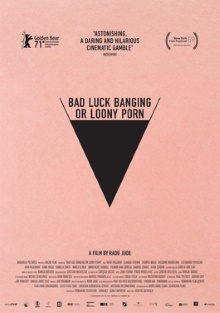
This is a Romanian critically acclaimed film that opens with an explicit amateur porn scene so it’s definitely not for the faint hearted. Perhaps even more daunting is a montage in the middle that amounts to director Radu Jude offering his thoughts on a series of loaded words. To me this film certainly makes for a strong artistic statement but I can’t say that I like it all that much. I do appreciate it for providing an excellent window into what modern Romanian society is like and I was even stunned by how similar the Romanian language sounds to French!
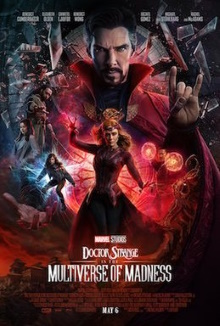
I’ve already given up on the MCU and I wouldn’t even be watching this if it weren’t because it was directed by Sam Raimi. I was curious about this being an MCU horror movie and I still have enough affection for Raimi’s early work to see what he could do. As it turns out, this is an extremely Raimi film and you can recognize the director’s characteristic style from his earliest days everywhere in this. The bad news is that this is not at all a good thing as he can’t seem to resist indulging in his old bag of tricks even when it’s wildly inappropriate. The result is visually entertaining but also tonally inconsistent and emotionally dead. It’s not among the worst of the MCU films but it’s not great either.
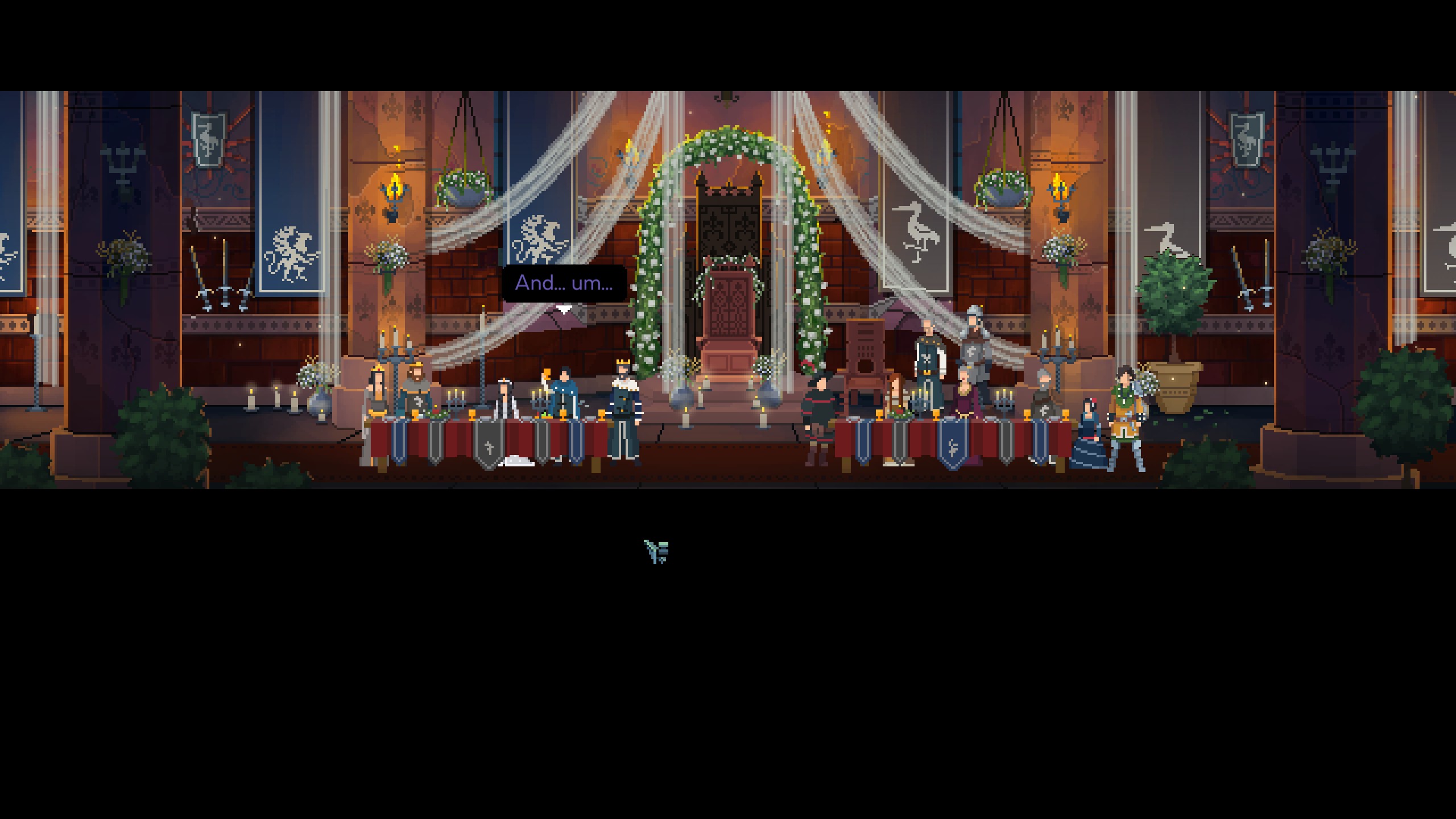
I’m a bit of a sucker for games that manage to combine mechanics with story in interesting ways, especially with this being about playing a king who has to balance the needs of his country and also his family. Unfortunately I don’t think this counts as one of the successful examples as too often it’s difficult to tell which outcomes are hardcoded to happen no matter what you do and how much your decisions actually matter. It’s also an odd combination of sometimes being cutesy and other times being horrifically dark. I laud its makers for their boldness in creating what is in effect a very grim fairy tale but in the end, this isn’t a game that really worked for me.