The Gathering Storm

A word to the wise, if you have yet to begin reading the Wheel of Time series, please don’t start now. I first started reading the series over fifteen years ago. The Gathering Storm is the twelfth book in the series and the first to be written by Brandon Sanderson following the death of the original author who wrote under the pen name Robert Jordan. The thirteenth book, Towers of Midnight, has recently been released but I’m waiting for the paperback edition. The current plan is that there will be one last book after this to finish the series.

The sheer volume of text alone certainly qualifies the series as being epic. While it’s a tragedy that Jordan died before he managed to complete his tale, there’s no faulting him for not trying his darnest, turning new manuscripts in like clockwork. Unfortunately, the prose is pretty uneven in quality. Some of the last few books that Jordan wrote himself were so forgettable that I actually bought one of them twice because I couldn’t remember whether or not I’d already read it! This is because the books were so full of foreshadowing and plotting that hardly anything of note actually happened and the story barely advanced at all.

Continue reading The Gathering Storm

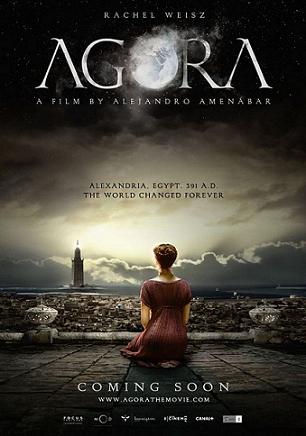
Agora

Any review that I could possibly write about this film must pale in comparison to Gordon Cameron’s excellent post on his blog Picture’s Up, so I’ll just link it. Some observations of my own:

  • The characterization and pacing feel a bit off. The slave Davus’ conflicted loyalties don’t seem very convincing at all. He clearly adores Hypatia and has a talent for science, but is attracted towards the egalitarianism of Christianity. But how does that drive him to bloodlust? He just seems far too enthusiastic about the sacking of the library than the situation warrants.
  • Similarly the flash forward to several years later feels clumsy. Suddenly we see that Orestes, who was happy to grab a sword to kill Christians, is now the Prefect and has been baptized himself. It would have been more believable if the film had previously established him as being ambitious and willing to go along with the tide for political gain. As it stands, it’s odd how he seems to think of himself as a genuine Christian even in private.
  • My wife totally caught how the filmmakers had chosen to garb the Christians in black robes and generally look and act like the stereotypical Muslim terrorists of our time. This is something that Marginal Revolution picked up on this too.
  • Some reviewers have claimed that the film is a condemnation of all fundamentalism rather than Christianity specifically but I can’t think of a single sympathetic Christian in the film. At least the Pagans were shown to respect knowledge and seem generally more civilized and orderly, even if they started the violence first. Plus, of course, even Hypatia clearly thought that owning slaves was perfectly normal. But the Christians are just a hateful bunch throughout. Even when Davus is handing out bread at the church, the beggars look like greedy locusts who eagerly take whatever is offered and eat it without so much as a word of thanks or a moment of appreciation. Then there’s Davus’ questioning of whether the Christians should consider forgiving their enemies and the rebuke he gets in response.
  • My wife says that Synesius is totally evil at the end and I agree. His brand of evil is certainly more scary than that of Cyril. The latter is just the typical religious demagogue. It’s not even clear that Cyril is passionate about Christ. He just seems interested in power. Synesius however seems to genuinely think of himself as being a good friend to both Orestes and Hypatia, and believes that wholehearted acceptance of Christ is what’s best for them, regardless of what they actually want or believe in. He’s scary because there’s no reasoning with him. Cyril at least could probably be cowed with sufficient application of temporal power.
  • Gordon Cameron thinks that the truest emotion the film evokes is frustration about how easily such valuable progress in human knowledge can be lost. While the film tries to play up that angle, especially obvious with the scenes of Hypatia and her colleagues desperately trying to save as many priceless manuscripts as they can before the mob, I don’t think this is what really rings out to me. After all, Hypatia didn’t seem to work very hard to ensure that her own insights would be recorded for posterity. Instead, the strongest emotional reaction I had was the fearful power of mob rule and how it utterly ignores reason and facts. The frustration that I felt was not so much the loss of knowledge but the downfall of civilization and the end of what seemed to be peaceful and orderly lives for so many.

Anyway I’m glad I watched this film but then as I’m one of those militant atheist types. Setting this aside, I don’t think I could say that this is a very good film. It’s a good subject matter and it’s shot beautifully enough but it’s too handles too many things too awkwardly. It does make for a wonderful film to troll Christians with, if I could ever convince one to watch it with me.

Recent Interesting Science Articles (Dec ’10)

Three articles for the last month of 2010. Two of them are arguably about psychology. The other one is about a weird way of getting rid of drug-resistant strains of bacteria. We’ll start with that one first.

Bacterial infections that are increasingly resistant to currently available antibiotics is becoming a prevalent problem, especially in many hospitals where the bugs are able to attack patients already weakened by disease. This article from The Seattle Times looks at a way to treat one of these superbugs, known as C-diff, which can cause severe diarrhea in patients. Affected patients can use an expensive course of antibiotics to kill the bug but this also kills all of the other benign bacteria in the patient’s gut and after that C-diff can still come back.

Continue reading Recent Interesting Science Articles (Dec ’10)

WikiLeaks updates

News coverage of the WikiLeaks affair has been so dominated by the criminal charges against Julian Assange and debates about whether the leaks are good or bad, that it’s easy to forget that the release of the embassy cables are still proceeding according to schedule. So far, we’re on day 23 of the leak and 1,862 cables released out of the total cache of 251,287. The main WikiLeaks website is hard to access, but there are still plenty of easily available mirrors, such as this one. But it’s probably easier to read the summaries released by The Guardian here.

As I previously stated, most of the leaks aren’t really revolutionary stuff, so that’s another reason why press coverage about the actual content of the leaks has been less intensive recently. Relatively few of the cables are genuinely surprising. The best stuff probably include the following:

  • Italian Prime Minister Silvio Berlusconi may be deriving handsome personal profits from energy deals negotiated with Russian Prime Minister Vladimir Putin.
  • Foreign contractors, including the US-owned DynCorp which runs training centres in Afghanistan, have hired local “dancing boys” for entertainment. There is apparently a local tradition in the country of dressing young boys as girls to dance for adult men and this sometimes extends to performing sexual services.
  • The ruling elite of Saudi Arabia, including members of the royal family, regularly attend parties, that contrary to the precepts of Islam, involve plenty of sex and alcohol.

Some other stuff are interesting only inasmuch that they confirm existing suspicions, such as these instances of corporate malfeasance:

  • A top executive of Shell in Nigeria claims that the company has infiltrated all relevant ministries of the government and knows all of their plans.
  • In a story straight out of The Constant Gardener, it emerged that Pfizer has paid investigators to unearth evidence of corruption against the attorney general of Nigeria to avoid having to pay damages for claims that one of their antibiotics had harmed children during a drug trial in 1996.

Other bits are just plain weird, most notably the revelation that the military junta that rules Burma considered paying a billion US dollars to buy the UK soccer team Manchester United in an attempt to use football to distract the country’s population from its economic and political problems.

Unless something really important pops up, it looks increasingly likely that the main impact of Cablegate will be the precedent that it sets rather the contents of the leak, providing an inspiration for countless copycat outfits and reminding those with secrets that it’s hard to keep them off the Internet. As The Economist recently wrote, governments are only now just realizing what the music and film industries have known for over a decade: it is impossible to stop people from distributing files over the Internet.

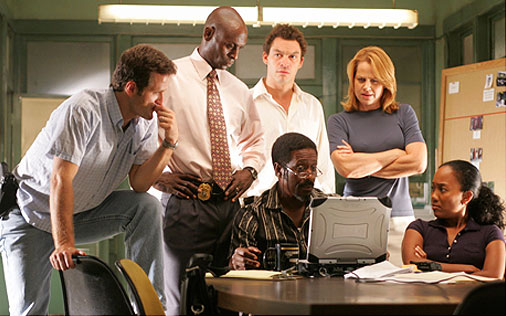
The Wire

My wife and I are currently deep into the fourth season of The Wire, one of the most highly recommended series on QT3. In fact, a number of noted critics from among many others TIME, Entertainment Weekly and The Guardian, have called it the greatest television show ever made. The Guardian in particular loved it so much it ran a blog devoted to it with an update after every episode and for a while made the first episode of the first season available for download on their own website. Yet this was a series that struggled to find an audience when it was on the air and that has conspicuously failed to win any Emmys.

It’s not hard to see why. While the series is presented as a crime drama and the first season certainly does its best to trick you into thinking that it is one, the show is really a wide-ranging window into the world of Baltimore and the people who must live in it. As such, it’s uncompromisingly realistic, ambitious and deep. True to the demographics of the city, the cast is principally black. All characters use authentic dialogue, so it takes a while for the uninitiated viewer to get to grips with what they’re talking about. The street-level gangsters talk in slang. The police and their legal support staff use technical jargon.

Continue reading The Wire

Recent Interesting Science Articles (Nov ’10)

Three articles this month, one on an amazing new implant that allows the blind to see, albeit in low resolution, one on a way of treating auto-immune disorders that I’d long suspected would work, and one about which sorts of people think the most like an economist. Let’s start with the eye implant first.

Using technology to let the blind see again has long been one of the staples of science-fiction, perhaps one best exemplified by the character of Geordi LaForge of Star Trek: The Next Generation. I remember being amazed a few years back when scientists successfully gave a very crude form of sight to some blind people by essentially using feeding the input of cameras to nerve receptors on their chests. But as far as I know, this is the first example of an actual artificial eye implant.

Continue reading Recent Interesting Science Articles (Nov ’10)

The Wikileaks scandal

The biggest news this week, and likely something that will stay in the headlines for months to come, is of course the rolling release of over 250,000 cables from the US State Department by the whistle-blowing website Wikileaks. I have mixed feelings about the whole thing. On the one hand, many of the documents are of doubtful value. It’s clear for example that a significant percentage of the documents are gossipy nonsense. Salacious details like what kind of girls Libyan leader Muammar Gaddafi is into no doubt attracts plenty of eyeballs, but it’s hard to see what kind of public interest is being served by publishing them.

Of the rest, some are interesting but don’t really tell us anything that we didn’t already know. Should we be surprised that the US aggressively spies on top UN officials, or that half the countries in the Middle East are apparently more eager to bomb Iran than even the craziest American neo-con? As satisfying as it is to see these suspicions confirmed, that’s not worth the damage that making this all public will do to international diplomacy. Outing Saudi Arabia in this way for example will simply put more pressure on their government to cave in to their local Islamist factions and compel them to turn up the anti-American rhetoric. In the same way, China seems to be more open to a unified Korea under Seoul than they’d henceforth admitted but this public revelation will simply make them clam up again to appease their nationalist faction.

On the other hand, good can and has many times in the past been served by whistle-blowing. Western governments have certainly been happy to encourage workers to blow the whistle on employers who have broken laws and have recently made it much easier and safer to do so. Why should governments themselves be held as an exception? This editorial from The Economist for example argues that while such leaks damage the effectiveness of government, they also improve the quality of democracy by allowing voters to peer into the inner workings of the bureaucracy and to know what’s really going on. The example it cites, of the Bush administration pressuring Germany not to prosecute CIA operatives involved in the “extraordinary rendition” of somone who was ultimately proved to be innocent, is a solid case of government malfeasance that would not have come to light without leaks of this kind.

The conundrum therefore is that it is in the public interest that morally corrupt government wrongdoing be exposed and that the legitimate business of government that needs to be secret should remain so, but we trust no one to be an impartial and infallible judge of which category any particular case might fall into. Due to this, I guess Wikileaks is not such a bad compromise after all if it could live up to its mission statement of being open to everyone and of being impartial. Sadly, judging from the personal history of its founder Julian Assange and the anti-US editorial Wikileaks chose to attach to this round of leaks, this does not seem to be the case.

The unexamined life is a life not worth living