Philosophical machines

Someone on QT3 linked this earlier this month. It’s a website with instructions to build what is billed as the “most useless machine ever”. Based on a design by Claude Shannon who is known as the founder of information theory, it’s a machine whose sole function when switched on is to switch itself off. Here’s the embedded video showing it in action:

Just today, I discovered something along the same lines, a machine that perpetually tries to sell itself on Ebay. Basically it’s a solid black box with a basic computer inside that can be connected to the Internet. Once every week, if it is able to connect to the Internet, it lists itself as being for sale on Ebay following the hard-coded instructions in its software. Its creator has written a comprehensive contract that goes along with the machine, mandating that every owner must allow it to connect to the Internet and must accept that the machine will sell itself one week after it comes into their possession.

The FAQ also states that in accordance with Ebay’s rules, the current owner cannot bid on the auction himself so he must allow the machine to be sold to someone else. The original creator, Caleb Larsen,  however promises that he will be around to provide maintainance for the device and to update its software if necessary. For example, if Ebay goes out of business, the software will be altered so that the machine will list itself for sale on an alternative platform. Its creator has named it “A Tool to Deceive and Slaughter”.

Baidu.com is awesome

I’ve written about China’s censorship of the Internet before, so I didn’t have much to say that’s new about the brewing dispute between the U.S. and China over the cyberspace attacks that Google recently went public with. However as everyone knows, if Google does pull out of China, the company that stands to gain the most would be Baidu.com, China’s dominant search engine with more than 60 percent of the market. Baidu.com’s shares have duly shot up on the news of Google’s possible withdrawal.

Being a home-grown Chinese company, Baidu of course has absolutely no qualms about enforcing any of the country’s censorship edicts. Since the search engine is actually accessible from anywhere in the world, it’s possible to test it for yourself to see how it filters its results. For an easy test, search for the keywords”falun gong” on Baidu.com and see what happens. Warning: don’t do this if you are actually in China or any territory controlled by China and don’t do this if you’re actually afraid of getting onto China’s hatelist.

Allah in Malaysia

I haven’t posted anything on this because I’ve already vented about it on discussion forums and as comments on the blogs of other people. This means this is mostly just a recap of opinions I’ve written elsewhere. Basically I think that both parties are right. The Roman Catholics should have the right to use the “Allah” name for their deity. On the other hand, I think that the Muslims in the country are justified in fearing that this is a move that’s meant to confuse Muslims and to proselytize Christianity to Malays by stealth.

I realize that while there are non-Malay groups who primarily speak the Malay language, particularly in the more remote parts of Sabah and Sarawak, I think it’s also worth pointing out they represent a tiny minority of the population. By far, the vast majority of those who use the Malay language as their mother tongue are Malays and according to Article 160 of the constitution of Malaysia, Malays are Muslim by definition. Generally speaking, it is impossible in Malaysia for Muslims to convert to another religion. At the same time, deliberately conflating two religions to confuse people is an accepted part of the missionary’s playbook. This is for example how Buddhism spread in China, by taking on the names and characteristics of the existing Confucian and Taoist beliefs and appropriating them into itself.

Naturally the Christians in the country don’t claim to want to spread Christianity to Malays but I don’t see how they can reconcile this with their wish to use “Allah” as the name of their deity and the wish to import and distribute Bibles in a language that Malays can easily understand. 15,000 Bibles in the Indonesian language is a pretty impressive number. This is the 500-pound elephant in the room that everyone involved in the debate is shying about from. Of course it is unfair that non-Muslims can convert to Islam but Muslims can’t convert out of it. I can’t see how you can call it religious freedom while such restrictions exist. But this is the accepted reality and challenging this really would tear the country apart, which is why I think that pushing the issue in such a sly way is a really obnoxious move on the part of the Roman Catholics.

As a libertarian I’m all for true freedom of speech and true freedom of religion but unless the Roman Catholics are willing to come out and really state out what they want without avoiding the main issue, and face the inevitable consequences, all of this is just a distracting sideshow.

Avatar fans upset that Pandora isn’t real

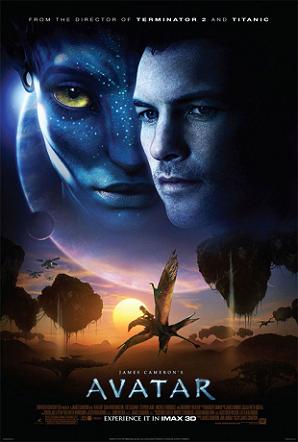
Avatar is currently well on its way to becoming the highest grossing film of all time, proving that James Cameron still has the magic touch. Part of it might be because of unusually high numbers of repeat viewers. Just as Titanic inspired legions of teenaged girls to sit through the ill fated romance again and again, Avatar is inspiring its own fans to do the same thing. As this CNN article explains, fans become so immersed in and enchanted by the idealistic planet of Pandora that they feel depressed when the movie ends and they need to come back to dreary, meaningless Earth. So they go back to watch the movie again. One even claimed to be contemplating suicide in the hopes of being reborn on Pandora. You can read the original forum thread where the fans share their woes here.

I think these people need to be reminded that Avatar is a commercial movie made for the purpose of earning money. This being so, buying into the whole thing would be contrary to the ideals of the simplistic, communitarian way of the life of the Na’vi. Not that the ideals made much sense or were even coherent anyway. Did anyone notice that for all the talk of hunting in the movie, you never actually see any of the Na’vi eat anything? I think Cameron knew very well that showing the Na’vi barbecuing the wildlife and chomping into them, animal juices flowing from their lips and chins, would not mesh with the overall pro-environmental message. These people just need to grow up and solve their own problems instead of thinking that running away would make the problems go away magically.

Anyway, while movies have preyed on the white man’s guilt before and made viewers wish they belonged to another ethnic group, such as the Native Americans in Dances with Wolves or the noble Japanese of The Last Samurai, I think Avatar is the first movie to make people wish to be a different species entirely!

Economists are cheap / Engineers are terrorists

A couple of amusing articles by way of Marginal Revolution and the Freakonomics Blog. The first article from the Wall Street Journal details some of the quirky habits of famous economists. We learn for example that Milton Friedman routinely returned the telephone calls of reporters collect and that a dinner served by John Maynard Keynes skimped on the food so much that Virginia Woolf complained about him serving only three grouse for eleven people. John Siegfried, the secretary-treasurer of the American Economic Association, never cares about the the color of the cars he buys and simply asks for whichever color is cheapest, while Robert Gordon of Northwestern University will drive an extra half-hour to get to a cheaper grocery store.

Economists are also less likely to donate to charity. Research by Yoram Bauman and Elaina Rose of the University of Washington showed that economics majors were less likely to donate any money than graduates from other majors. Even students who didn’t major in economics gave less to charity after taking introductory economics classes. The rationale is that economists are more aware of economic efficiency and find many types of economic decisions made by other people wasteful. This of course extends to gambling as well and the article claims that casinos make very little money from economists.

The second article appeared in Slate and covers a paper by two sociologists Diego Gambetta and Steffen Hertog who after studying 400 radical Islamic terrorists from more than 30 countries, noticed that engineers were three to four times more likely to be violent terrorists than their peers who studied finance, medicine or the other sciences. The next most radicalizing specialization was Islamic Studies but it came a distant second. The same trend also appears to be true anecdotally. 8 of the 25 hijackers involved in the 9/11 attacks were engineers and two out of the three founders of the violent Lashkar-e-Taibi group believed to be behind the attacks on Mumbai were engineering professors.

The articles cites a couple of reasons why this trend exists. One is that engineering is a popular subject of higher education in developing countries and many of the graduates who picked engineering expected it to be a pathway to high-status employment. Thus, they have been frustrated by the corruption and repression in many Middle-Eastern countries which stymied the modernization that they expected and led to joblessness among highly educated jobseekers.

Another reason might be that engineers have a tendency to be more conservative and religious, while possessing a mindset that seeks greater order and stability in society and disdaining ambiguity and compromise. They may believe that only a rigid adherence to religious laws can bring about the orderly society that they crave. In any case, intelligence agencies have already noticed that terrorist groups are aware of this and spend extra time and effort to gather recruits from engineering schools, especially since they possess valuable technical skills that can make them better terrorists.

Recent Interesting Science Articles (December ’09)

Three articles this month, all of them on biology. The first one is only a scientific article in the vaguest sense and talks about the cognitive benefits to gained from travel. The second one weighs in on the age old debate of cats versus dogs and the last one concerns a recent development that could lead to superhuman strength being a reality.

The first article is less formal than the usual stuff that I link to as part of this series and frankly I didn’t think it’s a bit too long for the ideas it presents, but it does make for a rather good if somewhat obvious point: that travel expands the mind and opens us to possibilities that otherwise wouldn’t have occurred to us. What sets this observation apart is that the article cites experiments performed by psychologist Lile Jia at Indiana University. He assigned tasks to two group of students with one group told that the task was from a place far away while another group was told that the task came from somewhere nearby.

Continue reading Recent Interesting Science Articles (December ’09)

Avatar

As usual when I write about films, spoilers abound so you might want to hold off on reading this until after you’ve watched it yourself. However, the plot is so cliche-ridden and so predictable that it’s pretty hard to spoil the film. It’s basically Dances with Wolves in space and all the pertinent plot points are clearly telegraphed from the first moment that you see the planet Pandora. Having only recently rewatched Aliens, I was also struck by how many themes and ideas were re-used. Over the top gung-ho soldier? Check. Greedy corporation exec who cares only about the bottom line? Check. Even the military vehicles and mechs look vaguely familiar.

The wonder of the film is that it all works, which says a lot about James Cameron’s directing skills. The film is genuinely breathtaking and spectacular, so much so that when you see it for the first time you simply know that this is something that you have never seen before. In that sense, it’s every bit as iconic and singular an experience as watching Star Wars or Jurassic Park for the very first time. It’s the same kind of once-in-a-lifetime experience that just blows you away.

It’s when you walk out of the cinema that all of the plot holes and flaws catch up with you. How do the human controllers connect with the avatar bodies? It must be magic because it seems to be unaffected by range or electromagnetic interference and the avatar bodies don’t seem to come with electronics. Why was the human ground force fooling around in the jungle for when the mission was to bomb the Tree of Souls? How ludicrous is it that no animals come to eat the avatar bodies when the human controllers are disconnected, especially after the film has established how hostile the jungle is? How come if the rocks float, the water still falls from it? And if they are made of the magical anti-gravity mineral, why don’t the humans just tow those away instead of trying to mine it from underground?

It’s common knowledge that Cameron wrote the original script for Avatar not long after he finished Titanic, so the script is still floating around the Internet. This website has a good comparison of the differences between the original scriptment and the film that ended up being made. It’s apparent that the original script was more subtle and less filled with cliches but a great deal more bloated. For example, in the original script the Na’vi that Jake falls in love with isn’t the first one that he meets, the research team is being helped by a Na’vi guide and Grace is secretly sleeping with him, there’s a previous human controller who fell in love with a Na’vi girl but she was killed by the military and he committed suicide etc. It all makes the Jake character less unique and less like a superhero who came out of nowhere to save the world.

For all these reasons, while watching Avatar once is practically mandatory, I doubt that the film stands up to repeated viewings. Even the technology will eventually look dated. But for now, it’s undoubtedly one of the most beautiful things ever put on film.

The unexamined life is a life not worth living