As the impending release of the movie based on it makes obvious, this is one of the most prominent science-fiction novels in recent years. It started life as a piece of original fiction freely available on the web and was picked up by a publisher only after it gained popularity. Appropriately enough for our time, the print version of the novel is the last version to become available as both the ebook and audio versions preceded it. Personally I became interested in reading this because it shows up often in lists of recommendations in rationalist fiction circles, a sub-genre that is now burgeoning thanks to Eliezer Yudkowsky’s Harry Potter and the Methods of Rationality.
It was only after finishing this that I learned that it is actually considered part of director Alejandro González Iñárritu’s loose trilogy of films that he made at the beginning of his career. Oddly enough, we’ve now watched all three of the films but I’m pretty sure that we did so in reverse order. This one is more like Babel than 21 Grams however in that it is an anthology of three separate stories, all of which are set in Iñárritu’s native Mexico.
Okay, no more space articles this month. Instead, it’s time for biology.
This Molecular Psychiatrypaper describes an attempt to identify genes that are associated with high intelligence. Specifically they sampled genes from individuals with IQs of over 170 and matched them against a control group to search for genes that are common in the high intelligence group but rare in the control group. Their finding however is consistent with previous such studies in that no genes that are reproducibly associated with high intelligence can be identified even though individual differences in intelligence is known to be highly heritable. This suggests that inherited intelligence relies on the complex interplay of many different genes rather than the presence of any rare ones.
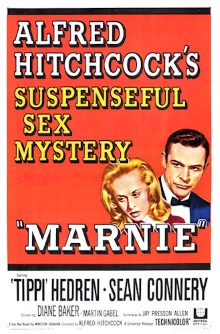
A while back, there was a discussion on Broken Forum about the films of Alfred Hitchcock. After the usual talk of ranking his best films, eventually someone mentioned how Marnie is possibly the most misogynistic film he’d ever watched. When I told my wife this, she became curious and so we added this to our list of films to watch. This one stars Tippi Hedren, who is most famous for The Birds, as the titular character and Sean Connery. I believe that this is the only Hitchcock film in which Connery appears.
Koei seems like a company that makes a living making nothing but games based on the Romance of the Three Kingdoms. I’d played both its signature strategy game as well as stuff like Nobunaga’s Ambition early in my PC-gaming career, but I’ve never actually played anything in its Dynasty Warriors series though I understand that this is where the bulk of their sales in the modern era comes from. Since a PC port of one its newest versions is now available on Steam, I thought I’d give it a shot.
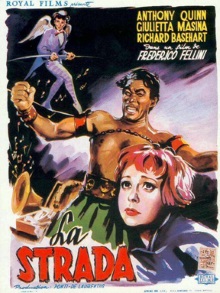
Once again I must confess that not only is this the first time I’ve written about a Federico Fellini film in this blog, it’s also the first time I’ve ever watched a film by this grandmaster of cinema. At least La Strada makes for a great pick to start things off with. It received a mixed reception when it was released but over time its reputation improved until it is now widely considered one of the greatest films ever made. Moreover, Fellini himself came to see this as his most representative work though directing it was an exhausting experience for him.
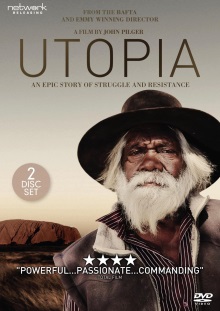
Utopia came to my notice as one of the most highly regarded documentaries of 2014 but after realizing who its auteur is, I’m sure that it would have gained plenty of attention in any case. It was directed and written by John Pilger, who to many of us in Southeast Asia is probably most well known for Death of a Nation. This is the 1993 documentary about East Timor that is credited with helping to end Indonesian occupation of the territory and allowing it to gain independence.