As promised, I’ve been slowly making my way through Rice University’s online AP Physics 1 course on the edX platform. WIth sixteen weeks of content and three separate exams, this is probably the longest single course I’ve taken. It’s so long that they were adding portions of the course even while I was taking it! (I know they actually had it all ready since this used to be on a fixed schedule before moving to a do-at-your-own pace format.) It’s mostly taught by the same professor Jason Hafner but joining him are teachers Gigi Nevils and Matt Wilson who are responsible for walking students through example problems.
One thing this course never really explains is what AP Physics actually means, maybe because it’s intended for American students and they should all already know what it is. As far as I can tell, this means it’s a college-level course who students who aren’t going to major in physics or engineering. Basically it’s as much physics as possible without having to resort to calculus. Apparently calculus is so verboten that Hafner secretly whispers to the camera that this is really calculus but he’s not supposed to tell us that. It works for me though since I found this to be much more accessible than the Electricity and Magnetism course. It’s still difficult enough for me to be reasonably challenged but I had no problems completing all of it.
We’re not completely out of all-time-great films yet. This one was included in the US National Film Registry which officially makes it a great American film and it’s also an adaptation of a great American novel. I understand that the novel is required reading for most US students. This adaptation was directed by John Ford, another great American director who is best known for westerns.
Since we’ve started watching films in earnest we’ve actually been making quite a bit of headway against our list. This is why the films being covered here have been trending towards newer releases. This is a French-Polish production that was released only this year but has become noteworthy enough among critics to earn a place in my lists.
Pulling the trigger on this one a little earlier than usual to square things with my posting schedule.
The most headline grabbing announcement of the month is the news that more than 20 years after Jurassic Park, scientists have found a dinosaur tail preserved in amber. The incredible thing about this find that was made in Myanmar is that the tail is feathered and the features show up in wonderful detail, making it a powerful demonstration that dinosaurs really are feathered animals and not the scaly reptiles as envisioned in the film. Analysis indicates that this early form of feather isn’t well adapted for flight and so must have served some other function, regulating body temperature for example, so it’s also a good example of how features that evolved to serve some purpose went on to become adapted for another purpose.
Biology is probably the theme of this post as the next entry is about elephants. One of the key differences between African and Asian elephants is that all male and female African elephant usually have tusks while only some male Asian elephants have tusks while some female ones have short tusks known as tushes. This article talks about how ivory poaching have caused an increasing number of African elephants to be born tuskless, a clear case of natural selection in action. In one national park, high levels of poaching have even caused 98 percent of female elephants to be born tuskless.
Next up are horses. No new science here, just a bit of news about how Adolfo Cambioso, apparently the world’s best polo player, used a team of six horses in a high-profile event, all of which were clones of the same mare. I find it sobering how this passes without notice these days indicating that this is now a mature and commonly used technique.
Still on the subject of animals, this article talks about how a Chinese team fed silkworms mulberry leaves that have been sprayed with a solution containing graphene. The silkworms then went on to produce silk that is twice as tough as normal silk. This seems a bit too easy. How could the researchers be sure that the graphene would be incorporated in silk? But it sure is cool if it’s true.
Finally, here’s one that’s at least potentially about humans. It talks about disturbing your circadian rhythms can be a cause for liver cancer. The mechanics in mice stems from the fact that disrupted day-night cycles cause the animals to overproduce bile acid. Over time, this damages the liver and leads to cancer. They’re only guessing that the same applies to people and accordingly advise to follow a regular sleeping schedule.
It wasn’t a given that I would watch this. I dislike the idea of Disney releasing a Star Wars film every year like clockwork and having Gareth Edwards direct it is not a mark in its favor. I thought his Godzillawas one of the worst films I’ve watched last year. But word of mouth on Broken Forum and other places eventually led me to realize that this was unexpectedly good and so I duly trooped to the cinema and added my bit to Disney’s ridiculously growing coffers.
The last film that we watched by director Pedro Almodóvar was All About My Mother, a film that I found remarkable for having only female characters. Though the poster for this film features two women, both of them spend most of the time in a coma and so the film is really about the relationship of two different men with these two women while they are hospitalized.
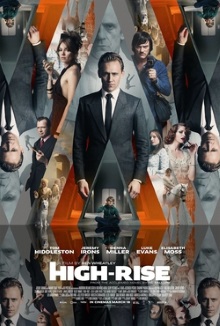
This came to my attention due to a post on Broken Forum but even the poster refrained from calling it a good film. I was further intrigued by it being an adaptation of a well-known novel by J.G. Ballard. Ballard is these days best known for his novel Empire of the Sun due to it being made into a film by Steven Spielberg but most of his literary output is actually dystopian science-fiction, a genre that High-Rise perfectly falls into.