(Since I don’t play boardgames any more, I make too few posts about games to really justify maintaining a separate blog for them, so I’m moving those posts back here. This blog has more subscribers anyway, though more people tend to randomly wander into the games blog. I’m still maintaining as an archive of course.)
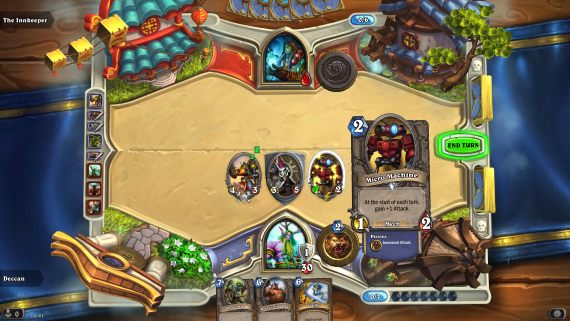
As you can no doubt see, my GPU is still MIA so I’ve latched on to yet another card game to fill my time. I’ve held off playing Hearthstone for the longest time because it’s a mainly online game against other human opponents and I just don’t do multiplayer. But I’ve been pleasantly surprised by how smooth and drama-free the experience has been. I’ll start with comments on the game design and move on to the online experience in a later post.
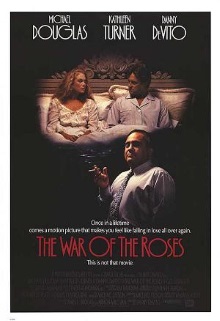
This marks the last of the selections for the Marriage and the Movies course which is due to start next week. It’s actually a relief because while the course picked movies that I never would have watched otherwise and might well have pedagogical value in the context of what the professor will be trying to teach, they aren’t exactly great movies. This one, which was directed by Danny DeVito and in which he appears as a supporting character, is another example in this vein of decent but not really outstanding films.
One of the earliest ever posts on this blog about movies is this list of some of my favorite films, written in 2007. Strangely, even after years of watching more movies and becoming more familiar with the classics of cinema, this list is still a fairly good representation of what I like. Anyway, one of the entries there was David Lynch’s Mulholland Drive. Over the years I’ve gone back and watched his earlier films like Lost Highway and Blue Velvet. While some of these can feel more visceral and therefore are more emotionally resonant, I’ve always felt that Mulholland Drive, due to its high production values and greater sense of coherence, represented Lynch at his peak.
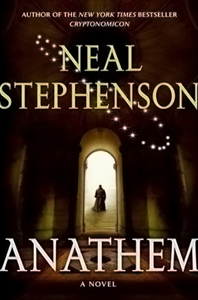
Once again, I am forced to concede that I read embarrassingly few books these days and that even when I do, I fall back on the authors most familiar to me. At least in the case of Neal Stephenson’s Anathem, it’s a solid, widely praised, book that all fans of the genre are probably expected to be familiar with.
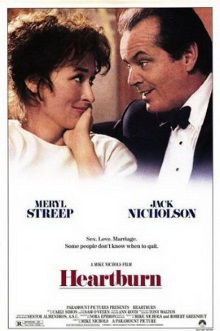
With this selection, the watch-list for the Marriage and the Movies course finally enters the modern era, by which I arbitrarily take to mean movies that were made after I was actually born. The power couple here is played by Meryl Streep, who looks astonishingly young in this movie, and Jack Nicholson, who looks pretty much looks the same as he always does. If you pay attention, you’ll also spot Kevin Spacey as a minor thug in his first ever film appearance.
I have no idea how this film ended up in our to-watch list. Ordinarily this means that my wife added it to the list but she can’t recall where it came from either. Since she almost always adds romantic or animated films to the list and since this isn’t a cartoon despite its poster, I assumed that this was a romantic film.
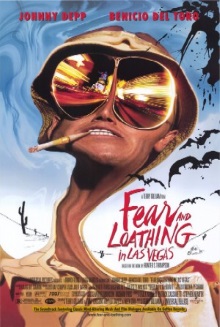
Just because I thought very highly of Brazil and heard that Fear and Loathing in Las Vegas is both a cult hit and quite a unique visual experience, I was rather looking forward to watching it. As it turned out, this was certainly unique and not quite in the way I expected. It also really isn’t all that good, which probably explains why its Rotten Tomatoes rating hovers around the low 50s.