This second part follows directly from the first one and as they were shot together should be seen as a single epic. Nonetheless there are discernible differences. Unlike the first one, this one takes place across a much shorter span of time as we approach the present. With the level of violence escalating drastically in this one, it also starts to feel more like a conventional action movie.
Once again I heard about this epic from The Economist which annoys my wife to no end as Indian films tend to be tediously long. This one more than qualifies for being long as the whole thing comes to well over five hours. It was divided into two parts for theatrical release and so this post covers the first part.
I’m shit at fighting games but keep buying them anyway. This one was a dumbly dumb purchase because although this ultimate version was released in 2016, it’s based on a 2011 game and unfortunately looks the part. The models, textures and effects are all pretty low resolution and look worse than even the other fighting games I’ve played a year or two ago. In addition, I found that I know only a small smattering of the Capcom characters and hence don’t really care about them.
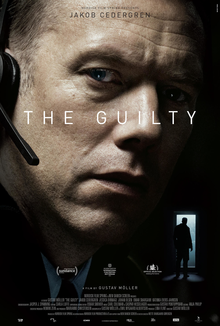
When film critics crank out their best of the year lists, it’s fair to say that this title will appear in many of them. It’s not just that this Danish film is genuinely good, it’s also that its gimmick makes it stand out. There’s basically just the one actor who appears on screen and there is only just that one scene shot in a single location. Yet it has no difficulty being both very tense and riveting.
The Economist had an excellent article a few months back contrasting this film which was a bit of a surprise hit to Asura, a hugely expensive failure. It talked about this as an indication of increasing social consciousness in China and that the authorities probably regretted approval this film for distribution as it helped fan the flames of dissatisfaction with rising medical costs. This film is inspired by real events but after a cursory check, it seems to me that so much has been fictionalized that it should be judged independently.
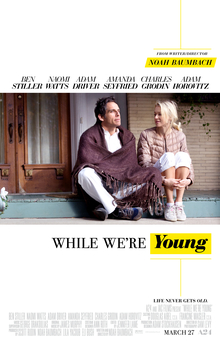
Each of director Noah Baumbach’s films so far has been incredibly rich and insightful treatises on life and this title is no different. This is even a much more ambitious and wide-ranging film than the other two we’ve watched and it features a quite different cast. Not all of its themes gel together perfectly but I would still quite happily call it brilliant.
It’s the end of the year and I find myself absolutely swamped by the large number seriously cool science stuff. Most of it is admittedly in psychology and sociology.
Starting with something in the harder sciences, here’s an article about how amoebas seem to be able to find an approximate solution to the famous Travelling Salesman Problem (TSP), an NP-hard problem, in linear time. The experiment involves growing amoebas growing in a medium. The amoeba wants to grow towards agar but also avoid light. By manipulating the light can simulate distances between cities in the TSP. The system is much slower than conventional computers since amoebas move slowly but it’s intriguing to think whether or not such a setup can be scaled up.
Mammals are known for secreting milk to suckle their young but this next article talks about a species of spider that does something similar. The mechanisms are completely different, with the nutritious fluid being secreted from the canal that the female spider lays eggs. Observations however show that the young spiders are completely dependent on it for nutrition 20 days after hatching and though they are able to leave the nest to find food on their own after that, still partially depend on the fluid until about 40 days after hatching. It’s a good reminder that nature is much weirder than we think and mocks at our arbitrary systems for classifying organisms.
Next up are fruit flies and what has been billed as a very primitive form of culture in their behavior. After adding artificial colors to male flies the researchers allowed female flies to watch other female pick mates. They found that those females were much more likely to later pick mates of the same color that they had seen the previous females choose. More interestingly, this preference persisted in subsequent generations.
Then we move on to people. Facebook has been in the news a lot lately and at least part of the debate involves how much value it generates for its users to see if that justify the costs in terms of data leakage risks and other dangers. However traditional methods of valuing the service is difficult as it is free so instead researchers have turned to asking how much would they need to be paid in order to give it up for a year. This particular survey found that the average Facebook user would need to be paid US$1,000 in order to agree to deactivate their account for a year.
Academics are well known to lean leftwards and be more skeptical of markets. One hypothesis is that markets are only contingently sensitive to school achievement, leading academics to be disappointed that their success in school is only imperfectly correlated with economic success. This survey of 1,500 French academic respondents claims to find evidence that this is true.
The next article surveys a mixture of millennials and older people in order to test the ability of older people to discern the truth. Specifically, the respondents were instructed to tell a lie first and some time later were asked their own opinion on the topic. They found that older adults were more committed to the lie that they first told, as if the lie becomes embedded in their memory and becomes the truth.
Finally, let’s end this with a paper that should really be read in its entirety to get it read but to roughly summarize it asks the question of whether cultural values and opinions in a society change over time due to people changing their minds as they get older or because the people who hold older values die off over time. The paper crunches data from a large General Social Survey in a way that I can’t pretend to understand to conclude that the effects of the latter dominate, that is overall opinions change because the people who held them die over time.