I haven’t updated my blog in a few days due to travel but I’m back just in time for this monthly feature. Just four of them this month and they’re all about biology.
First up, here’s this bit about the first known use of gene therapy to cure a patient of sickle cell anemia. The doctors harvested stem cells from the patient’s bone marrow, altered the DNA so that they would produce normal hemoglobin, used chemotherapy to kill off the remaining stem cells and then inserted the new ones. This makes it a case of genetic engineering on a human patient in vivo, instead of altering an embryo so that it would develop differently.
This next article is also about DNA engineering. In this case, scientists have created wholly artificial chromosomes for yeast cells. The chromosomes are not only synthetic but edited to remove what is believed to be rubbish code in the original DNA and to alter the code’s punctuation to eliminate one letter from the usual stop code. The hope is that the yeast cells can still live normally after these modifications and the freed letters can open up more space for more extensive changes in the future.
Dinosaur aficionados were up in arms earlier this month as a new paper proposes a radical redrawing of the family tree. Historically, dinosaurs have been classified according to whether they are “bird-hipped” or “reptile-hipped”. But as more data has been gathered, this classification system has become ridden with inconsistencies so a new paper now proposes that it be thrown away entirely. It may not seem like much to many people but it does matter to children who grew up memorizing names of their favorite dinosaurs and some of them may no longer be properly recognized as being dinosaurs at all!
Finally here’s a cool bit about a couple of researchers who tried to put hard numbers on how many spiders there are around the world and how much they eat. They conclude that there are around 25 million tonnes of spiders on Earth, a number that is hard to put in context. But a more comprehensible figure is the 400 million tonnes of other animals that they consume a year because that is also the approximate mass of the total number of human beings living on the planet.
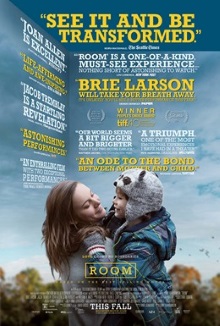
This one was added to our list due to rave reviews about it on Broken Forum but I somehow missed noticing it back when it won a bunch of awards. It certainly counts as a low budget film with a tiny cast and as its title promises, about half of it takes place in a single room. Yet it is in every way a remarkable and highly impactful work.
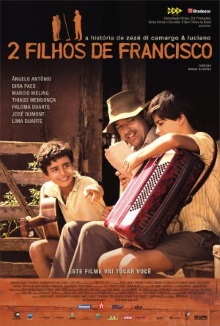
A while back my wife dumped a whole bunch of South American films onto our shared watch list. This one, a Brazilian film by director Breno Silveira, should be the last of them. To be truthful, I wasn’t terribly enthusiastic about watching this after a string of films that focused on the poverty of the peasants in South America. They may be great, but it gets a bit much sometimes. As it turned out I needn’t have worried for while this film has its share of misery, its really all about the music.
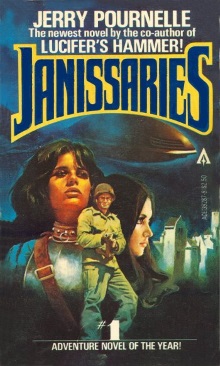
So I promised after reading What Makes This Book So Great that I would slowly work my way through some of the picks in it that I found most interesting. I’ve read some of Jerry Pournelle’s work before, notably his collaborations with the better known Larry Niven, but this was quite recent and I somehow I missed out on reading any of his stuff back when I was first discovering the genre. I picked this one because it has a premise that turns up often in crack fiction or fan-fiction and shows what can be done in the hands of a professional writer.
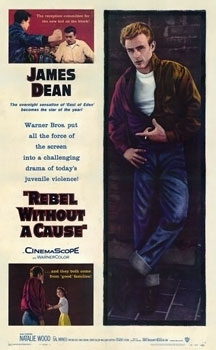
This is another famous classic that we had yet to watch and naturally we were reminded of its existence by La La Land. It’s another case in which many of the individual elements are familiar, such as James Dean’s iconic look, the knife duel and the car chickie run, yet have never added up to a coherent whole. As it turned out, this is indeed an eminently watchable film but I’m not certain that it would have become the huge cultural icon that it is if Dean had not died one month before its release.
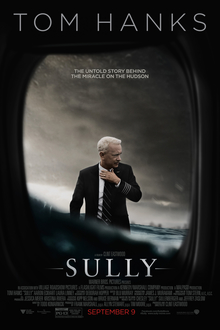
After American Sniper, I really wasn’t sure if I was going to watch this, especially as it’s a film about a relatively inconsequential event. This one does have something like 85% rating on Rotten Tomatoes and Tyler Cowen named it as one of the year’s best films, not just an important one. Combined with the fact that it’s likely an undemanding watch, I decided to throw it into the rotation.
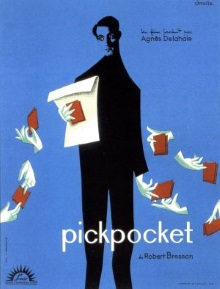
Robert Bresson is considered one of France’s greatest directors and apparently an inspiration for the New Wave filmmakers. We’ve never watched any of his films so I thought we should, starting with this relatively short piece that is supposed to be one his best works.