Roman Polanski and the Ugliness of Talent

My view of the Roman Polanski case is the conventional one: he has admitted to having sex with a girl who was under-aged at the time, plying her with drugs and alcohol to do so, and is a fugitive from justice. Nothing else matters to me including the amount of time that has passed, how much he has suffered before and after the event and how great a talent he is as a film director. Incredibly, despite what seems to me to be a fairly clear cut case, the man still has defenders, even on QT3. I am also absolutely flabbergasted by the French government’s response to the arrest.

The reason for this post however pertains not with the case directly. I’ve been thinking about Ayn Rand’s books again recently, prompted by my wife’s discovery that Chinese translations of her books now exist. Her parents are currently on an extended trip to China and she’s asked them to buy copies of those books if they can find them. I’m very curious what they would be like in Chinese.

Anyway, the connection here is that Ayn Rand has always believed that values and virtues are absolute, hence the name of her philosophy “Objectivism”. This extends to aesthetics as well. According to her worldview, only a person of virtuous character could create or even admire a great work of art and conversely, all works of art that are great must by definition have been created by someone of unimpeachable virtue. Naturally, this leads to amusing consequences. For example, Rand believed that homosexuality is morally wrong and therefore every thing that a homosexual does or creates is tainted. This means that anyone who professes to admire a work created by a homosexual must be flawed in some way as well.

I don’t pretend to be enough of a film buff to be able to competently judge Polanski’s work but I see no reason to doubt the overwhelming consensus that he’s a great director. This, of course, contrasts rather spectacularly with his moral failures as a human being. I’m sure everyone can find many other examples of great talent, especially in entertainment, that have a less than perfect character. So this serves as one example, amongst many others, why Rand’s philosophy isn’t a particularly robust one. I do note that the ancient Chinese shared similar views in this regard. They believed for example that a person’s virtue could be demonstrated through his calligraphy or his paintings. This just goes to show how seductive the idea is that skilled people should also be moral people and how shallow it is to hold up someone as a general role model just because of high achievement is a narrow field.
Mulu Caves / Pinnacles Climb, Part 2

DSC00342_reduced

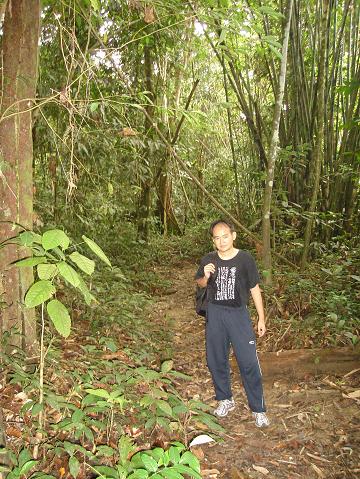
The real adventure for us started with the trip to Camp 5. First we had to take a one-hour boat ride from the entrance to the Clearwater Caves, carrying all the gear that we would need for the next two nights with us. Then, led by our guides but carrying our own stuff, we had to hike along a jungle trail 8.8 km to Camp 5. The terrain was flat for the most part, but there were still plenty of roots, rocks and muddy patches on the trail, so we had to keep our eyes constantly glued towards the ground or else we’d trip or slip and fall. We arrived about 2.5 hours later, including time for a rest stop in the middle.

Camp 5 turned out to be a small cluster of wooden buildings next the swift flowing Melinau River. The accommodation is very spartan: basically each person is assigned a hard mattress on top of a wooden platform in a large communal room. The scenery however is fantastic. The camp itself is located just at the base of the mountain that we’d be climbing, part of Gunung Api. On the opposite side of the river lies the even more majestic Mount Benarat. Meals were prepared by the guides assigned to each group using rations that they had carried with them from Mulu and eaten in the large open cantine area. After dinner, our guide briefed us on what the climb would be liked, reminded us of what we’d need to bring and gave some advice.

Continue reading Mulu Caves / Pinnacles Climb, Part 2

Mulu Caves / Pinnacles Climb, Part 1

DSC00286_reduced

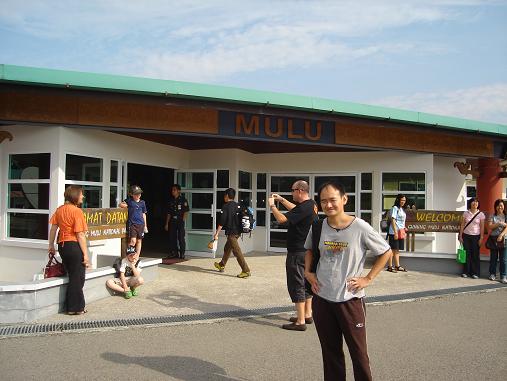
Writing everything that I have to say about this trip would both take too much space and too much time for a single post, so I’m going to split this into two parts. My wife and I went on a four day / three night trip to Mulu in Sarawak state over the extended Hari Raya holidays and, quite unexpectedly to us, had one of those rare, once-in-a-lifetime experiences. We’d originally planned to have a small and simple trip to take advantage of the holidays, and since we’re currently based in Kota Kinabalu, thought that it would be a good idea to visit Sarawak, which neither of us had ever been to. The caves at Mulu is a UNESCO World Heritage Site and we’ve all read about them in our geography textbooks, so it was the natural candidate.

Visiting only the caves however is normally just a two day / one night excursion, so my wife looked for something else we could do in the area. She eventually picked the Pinnacles to tack on to our trip. It was advertised as a hiking and mountain climbing trip. We expected it to be somewhat strenuous and thought it would make for a good warming up exercise for our Mount Kinabalu climb planned for early next year. I did not expect that it would turn out to be the most physically exhausting thing I have ever done in my life. But more on that in the second part.

Continue reading Mulu Caves / Pinnacles Climb, Part 1

A good old-fashioned dungeon romp

Descent(4)_reduced

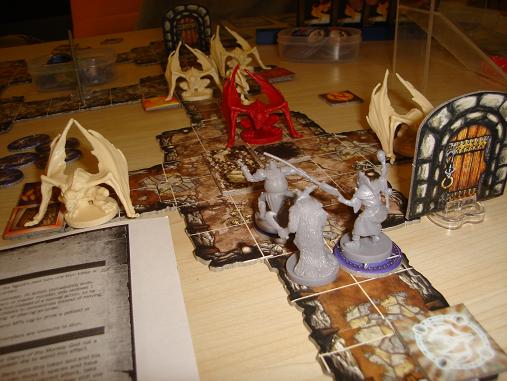
Strangely enough, in all my years as a gaming geek, I’ve never done an actual table-top dungeon romp before. I’ve played pencil-and-paper role-playing games in the past, but due to my snooty attitude towards Dungeons & Dragons, I’ve always stayed away from it and preferred less hack-and-slash oriented games like RuneQuest, Shadowrun and Robotech (okay, maybe this last one is a bad example.) I’ve cleared dungeons in MMOs like World of Warcraft before, but that’s not quite the same thing. So when Sean offered the opportunity to participate in a session of Descent, I agreed despite some misgivings over how long it would be expected to require.

The bad news is that our session actually lasted longer than I expected, about five and a half hours in all. The good news is I had a blast the entire time and would gladly do it again! It’s all a bit embarrassing really because even more so than BattleLore, much of the appeal of Descent lies in being able to play with all the awesome miniatures and other props. As one of the players in our session, Chee Wee (sorry if I got the spelling of your name wrong) commented, there’s an open-mouthed kid in the candystore feeling when you see all that cool stuff laid out on the table.

Continue reading A good old-fashioned dungeon romp

Street Fighter!

StreetFighterIV 2009-09-04 22-21-34-10_reduced

In my last years of high school, Street Fighter 2 was pretty much the arcade game of choice. I remember how great a revelation its graphics and sound were coming after games like Karateka and Budokan. In the days before the Internet, we couldn’t know the full extent of its popularity or the boom in fighting games it kicked off, but we did know that we had something special in our hands. It had a variety of characters, each with different movesets. It gave each of them command-based special moves and it used six buttons to control, which I believe was unprecedented for the time. The boys in school talked about it constantly.

Due to this nostalgia, when Capcom announced that Street Fighter IV would be based not on the forgettable Street Fighter III but the classic Street Fighter II, I knew it would only be a matter of time before I got it. I knew that I would never have the time or patience to master its intricacies in the way a teenager could, and that it would be too light a game for me to be truly absorbed in, but I’d want it all the same just to be able to play around with the familiar characters at my leisure and kill the odd hour here and there with mindless bashing fun.

Continue reading Street Fighter!

Mr. Jack and recording boardgame plays

DSC00236_reduced

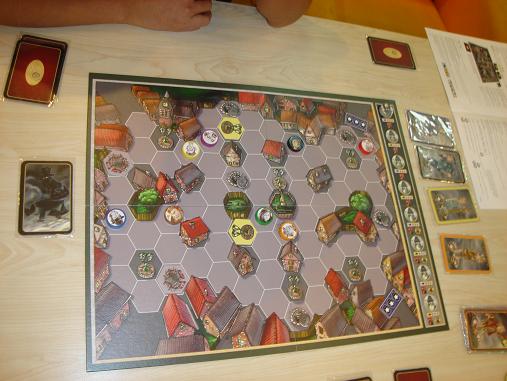
My wife and I played a game of Mr. Jack to start off our weekly session at CarcaSean. It’s a two-player game in which one of the players takes on the role of the infamous Jack the Ripper while the other player takes on the role of the detective trying to catch the murderer. The board represents the Whitechapel district of London and is populated by eight characters, all of whom are connected to the case in some way and any one of whom can turn out to be Mr. Jack. Yes, this means it’s possible that the murderer could be Sherlock Holmes or Inspector Lestrade.

The cool twist about this game is that both players take turns to control the same eight characters. Typically, the detective tries to arrange the characters such that the use of the Witness / No Witness card eliminates as many suspects as possible while the other player tries to prevent this. Quite unintuitively, I quickly found that, as the player in the Mr. Jack role, it is far easier to keep all of the characters in sight than trying to keep them out of sight. I messed up early because of this and eliminated a lot of characters from suspicion on the very first turn. Still, I did manage to keep my wife from guessing who the murderer was until the very last turn. Overall, a light but fun game. It is astonishing however how a game with such a simple ruleset can involve so much thinking.

Our main course for the evening was still Agricola which we played with Sean, using the I deck, the first time for all of us. The thing about Agricola with me is that immediately after finishing a game, I feel like playing a second time because of a conviction that I should be able to do better the second time around. Both of us like it so much that we’ve seriously talked buying a copy. The main argument against that is that we’d end up just playing it against each other, and my instincts tell me that two-player Agricola just doesn’t have enough competition in it to be consistently interesting.

Finally, with some encouragement from Sean, I spent some time today recording my boardgame plays so far on BoardGameGeek. The exact dates of some of the earliest plays are somewhat suspect and I’ve probably left off some plays of the games that we own but it should be pretty accurate otherwise. You can see the list here. As Sean says, it’s not like it serves any purpose, but I guess making lists is just the geeky thing to do. On a side-note, this is the list of games that Sean owns. That’s a lot of games!

Malaysian libertarian lambasts Western environmentalists

I’m one of the (probably) few Malaysians who’s actually signed up for and read Wan Saiful Wan Jan’s Waubebas.org site on a regular basis. It’s the official website for the Malaysian Think Tank which seems to be a group of Ayn Rand-inspired Malaysian libertarians. I have no idea how big or how influential they are, but apparently Datuk Zaid Ibrahim is a member of their advisory board, so it’s seems like a serious operation.

I pretty much agree with most of the editorials their director general writes, but I take issue with this one that appeared on The Malaysian Insider. Now, I’m a libertarian and I do admit to generally being a skeptic on environmental issues. In particular, I believe that the movement relies too much on general feel-good and not enough on rational cost-benefit analysis. On the issue of global warming, I now believe that a preponderance of scientific evidence indicates the phenomenon is real and is indeed man-made. The only debate is how much damage it would cause, how much it would cost to mitigate the effects and whether that exchange is ultimately worth it.

However, what really annoys me about this particular editorial is that he falls back on the old “let’s bash the Western imperialists” clarion call when he should really know better. Granted, it may well be true that some parties that are in government in certain Western governments may have the intention of using environmental regulations as a backdoor to impose protectionist restrictions on Asian countries, but we shouldn’t allow this side issue to dominate what is ultimately a very important debate.

Wan Saiful Wan Jan implies that all local environmentalists have been brainwashed by their Western compatriots who actually do not have their best interests in mind. Why isn’t it possible that there might be Asians who genuinely want a better environment for themselves and their children, even at the cost of some economic growth? This is surely a choice that Asians must make for themselves, all the while being conscious of the arguments on both sides of the aisle. Equally galling is the implication that since the Western countries achieved their present prosperity in part by despoiling the environment, therefore Asian countries have the “right” to do the same. Why not also say that since the United States built its country on the back of slave labour, Asian countries should be free to do the same?

Make no mistake. I’m as outraged as he is when lefties scoff at the importance of economic growth even while enjoying the material fruits of that growth. But I also do not believe in growth at all costs. As Asians countries continue to industrialize and expand their economics, their people need to do some serious soul searching about the relative weights of their different priorities. It’s not just environmentalism either. There are also important debates to be had about how unequal a society they’re willing to tolerate to achieve higher growth rates, how important social mobility is to them, how much they value free time and myriad other issues.

Blaming it all on Western imperialism is just a cheap trick to short circuit the debate and achieve your objectives without having to directly address the arguments both for and against the issue. If Wan Saiful Wan Jan thinks that global warming is a hoax, then let him marshal the scientific sources to back up his claim. If he thinks that economic growth is important enough in the short-term to justify some damage to environment, let him spell out exactly how much damage he’s willing to tolerate and how much growth he thinks we can achieve in exchange. Then let the Malaysian public decide what to go for.

The unexamined life is a life not worth living