Considering how much of the Coen brothers’ output we’ve watched over the years, it’s a bit odd that we’ve never watched Fargo, a film that was critical in establishing their reputation. Given that this has recently been in the news again due to the success of the television series based on it, this feels like a good time to watch it. As with many of the brothers’ films, it stars many of the usual cast they like to work with including Joel Coen’s wife Frances McDormand in the lead role as the local police chief Marge Gunderson.
A slower month and more emphasis on the softer sciences this time around:
The one research paper that has gotten the most attention over the past month is the one that shows a startling increase in mortality rates among middle-aged white Americans. Certainly one factor in its fame is that one of its co-authors Angus Deaton won the Nobel Prize in economics this year. But the main factor must be the sheer surprise of its findings, exacerbated by the fact that this spike in deaths isn’t mirrored in the statistics of other high-income countries. Obviously any explanation of this anomaly will be politically charged. Personally I like this article on Vox which discusses some theories with the gist being that a certain group of white Americans can no longer look forward to the kind of prosperity and social status that they’d been led to expect and this despondency has led to a marked increase in substance abuse.
In more hopeful news, here’s a bit about how gene editing may have been used to save a person’s life for the first time. The patient is a one-year-old girl suffering from leukemia and conventional chemotherapy had already failed. The doctors therefore pioneered a new technique using T-cells from a donor to attack the cancerous cells. However since the patient’s own immune system would ordinarily also attack the foreign T-cells, these cells had to be edited first to remove the markers that would make them targets. This isn’t quite bespoke medicine yet as it’s a pretty general technique but it’s a clear example of the way forward.
I confess that I included this next article because of its extremely disturbing title. It covers an experiment in which scientists have been able to induce a species of flatworm to grow the heads and brains of another species of flatworm only by manipulating the electrical synapses within their bodies. In particular as they did not touch the worms’ genome at all, it makes for a fascinating demonstration of how much morphology can be manipulated through means other than genetic engineering.
Finally here’s a longer-form piece on multi-model sensory experiences. In particular, it focuses on the work of Charles Spence who discovered among other things that the noise made by a Pringles chip when you bite into it affects your perception of how fresh it is, how the color of a cup influences the intensity of the taste of coffee and how merely listening to different types of music alters the perceived taste of an alcoholic beverage. Naturally this has hugely influenced the design of the packaging for many products. This seems especially pertinent after learning about the McGurk effect in the Philosophy and the Sciences course recently.
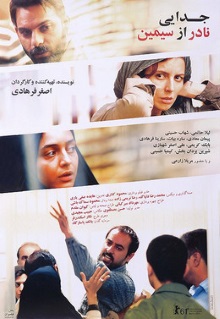
Much like South Korea, Iran’s film industry holds to a standard of quality that is all out of proportion to the country’s size or nominal cultural influence. Sadly this is the first Iranian film to be covered in this blog though hopefully it will soon be followed by many more. This one, directed by internationally acclaimed director Asghar Farhadi, has won a frankly insane number of awards, including an Oscar. Not bad for a film from an Axis of Evil country.
I was a big fan of both of the previous Shadowrun games so it’s no surprise that I backed their Kickstarter campaign for this. It’s kind of hard to believe that it’s been two years since the first one. As its title makes clear, this one takes you to Hong Kong under the premise that you’re a native of Seattle who travels to the city-state in search of your adopted father.
This anime has an unusual genesis, being directly based on an old manga that was itself inspired on the 1927 film by Fritz Lang. Yet this anime version seems to draw more heavily from the silent film than the original manga. It was directed by Rintaro who is well-known for being involved in many science-fiction anime, including the grand-daddy of them all, Astro Boy.
Franchise that I have no real interest in? Check. Hollywood reboot? Check. This is exactly the sort of summer blockbuster that you couldn’t pay me to watch. I relented in this case only because the trailers actually looked sort of good, seeming to make a case for this being an environmentalism film instead of just a monster romp, plus word of mouth on Broken Forum was reasonably positive. Unfortunately sometimes first impressions are correct and I should have stayed away from this pile of crap.
This one is only the second Federico Fellini film I’ve written about in this blog and like La Strada dates from the earliest part of the career of the great director. I was curious about what the Italian title actually meant and so tried to search for a translation. As it turned out, the title is incomprehensible even to Italians as it is either a little known street slang term that Fellini heard when he was young or a portmanteau of other words. Today it is generally agreed to refer to a certain class of parasitic and aimless youths who spend their days in idleness.