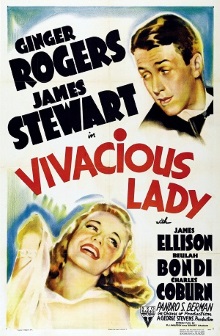
As usual out of the three films that we watch every weekend, one of them is from the upcoming Marriage and the Movies course so as to be ready when it starts next month. This one once again stars James Stewart, who we’ve seen in a couple of other movies recently, and Ginger Rogers, who is most famous for starring in a series of successful musicals with her frequent dance partner Fred Astaire. Unfortunately there is no dancing to be had in this film except for a comedy sketch. Since I didn’t appreciate the humor here at all and found its entire premise annoying, this makes Vivacious Lady the weakest of the marriage movies so far.
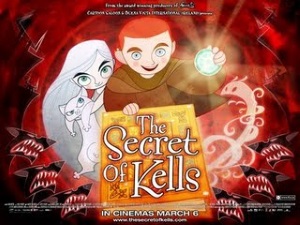
Working through the lengthy list of animated films that my wife wants to watch, we arrive at this French-Belgian-Irish production. It was nominated for Best Animated Feature at the 2010 Oscars but lost out to Up. I’d be the first to complain that the Academy Awards are unfairly biased in favored of American productions. For example in 2007 Persepolis lost to Ratatouille and in 2010 The Illusionist lost to Toy Story 3, both questionable decisions. But in this case, I have to say that the Academy was probably right.
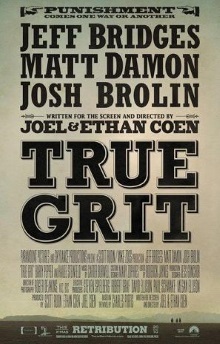
Reviewing the filmography of the Coen brothers, I realized that we’ve actually watched quite a few of them over the years. I’ve also never disliked any of them, except for O Brother, Where Art Thou? whose humor I didn’t really get. One of the most impressive things about their body of work is that they cover such a remarkable range of genres and styles. No Country for Old Men for example is an implacably grim meditation on the nature of true evil while Raising Arizona is just plain wackiness. Apart from good craftsmanship, the one thing that they have in common is perhaps their eccentricity.
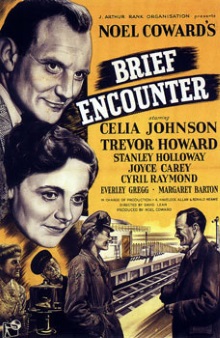
This is obviously a pick for the Marriage and the Movies course but we would have eventually gotten around to watching it anyway because it’s widely considered one of the greatest romances on film. It’s one of David Lean’s earliest directorial efforts, who would later go on to make such cinematic classics as Lawrence of Arabia and The Bridge on the River Kwai. It’s also the last of four films that he worked on in collaboration with playwright and scriptwriter Noël Coward.
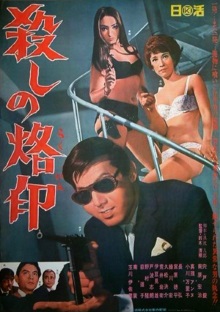
Branded to Kill is the last film that Seijun Suzuki made before his studio finally fired him for making films that “make no sense and no money”. I’d previously written about his eccentric and colorful Tokyo Drifter in this blog. Apparently tired of his shenanigans, the director of the studio tried to force Suzuki to make a more normal movie by cutting his production budget to the bare minimum. This is why this film is in black and white. But Suzuki didn’t let this deter him and turned in even crazier and more absurdist offering.
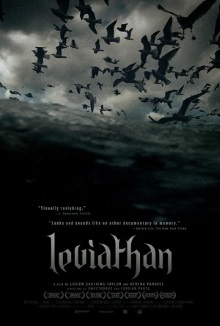
Though billed as a documentary, Leviathan is really a work of pure visual artistry. Made by Lucien Castaing-Taylor and Véréna Paravel who are both anthropologists at Harvard University, it is best described as an attempt to capture what it feels like to be aboard a commercial fishing trawler as it works the seas around North America. With no narration and no dialogue beyond the rare incidental remark by the crew which are almost always completely unintelligible, it is up to the audience to glean whatever meaning that they can from the myriad images and sounds.
Only a handful of articles this time and the biggest one of them, which I’ll start with, is deceptively underwhelming.
CRISPR isn’t a new discovery but it was only recently that it has been put to its current use and its importance understood. This article from Quanta Magazine gives a broad overview of the topic. It was originally discovered as a unusual gene in common E. coli and researchers only later realized that the microbes which possess this gene are able to use it to defend themselves against viruses. Effectively the microbes are able to cut out parts of viral DNA and store them so as to recognize these invaders in the future. Even later, researchers realized that this could be adapted into a gene editing tool which would enable scientists to precisely snip out a specific section of DNA and replace it with anything else. Finally, the changes will persist in future generations of the organism. As you can imagine, this makes all kinds of customized organisms much easier to engineer.
This next article from the BBC is much lighter fare. It talks about how the signalling function of the peacock’s elaborate tail may be much subtler than previously imagined. Apparently in addition to the large size and brilliant colors of the famous fantail, it also produces an infrasonic sound that is inaudible to humans but that both male and female peacocks can detect. This effectively allows peacocks to use their fantails to send signals to each other even when not in line of sight.
Ever wondered why we have lots of adjectives that are sight-based, for example all of the different words for even minor variations of colors, but few words for describing smells. In fact, it is difficult to think of many words for describing smells that don’t refer to the source of the smell. This article from The Economist talks about how a study of the Mani people who live in Thailand that this may at least be partially due to cultural bias rather than purely because our sense of smell isn’t as well developed as your sight. Researchers administered smell tests to them and found that they could identify smells much more quickly than a control group of Dutch people and furthermore that their language contains many unique descriptors for smells.