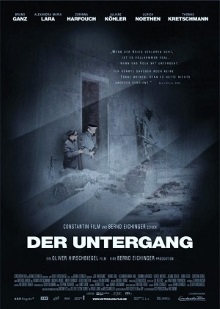
Every single person on the Internet has watched that one scene from this film that provided the material for thousands of parody videos. Comparatively few people have watched the film itself in its entirety. Yet it really is a highly regarded work. It was nominated for the Oscars in the Best Foreign Film category in 2005 and is included in many lists of best films, such as various versions of the famous 1000 Films to See Before You Die checklist.
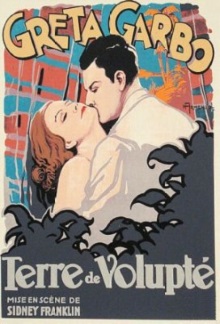
In line with our new interest in cinema, we’ve signed up for another Coursera course called Marriage and the Movies: A History. I suspect that with its focus on marriage it will be more of a sociology class than a movie class but nonetheless we’ll try sticking with it. This means a whole new round of really old movies to watch, starting with this selection from the silent era.
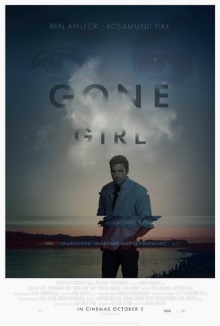
Being a film directed by David Fincher, not to mention one of the most prominent releases of 2014, Gone Girl was always a film that I knew I had to watch. But what really piqued my curiosity was how Broken Forum members reported it as being one of the most misogynistic films they’d ever seen. Last year was a pretty eventful one for gender issues in the United States. It was the year in which Elliot Rodger killed six people and wounded fourteen others in a women-hating killing spree. It was the year that Gamergate got started. It was the year that rape on university campuses entered the national spotlight, culminating in the Rolling Stone debacle on the matter. For all of these reasons, releasing Gone Girl in 2014 seems like very poor timing.
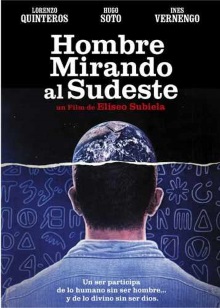
Man Facing Southeast is a film that I would never have heard about in the ordinary course of things. It’s an Argentine movie by Eliseo Subiela with some science-fiction overtones that was one of the recommendations from a Broken Forum member when I asked about interesting South American films.
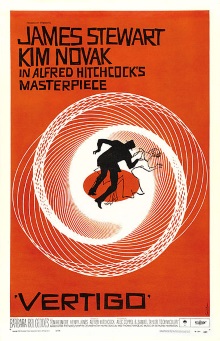
Vertigo is the first Alfred Hitchcock film to be covered in this blog since I’ve started seriously writing about movies. In general, I’ve watched embarrassingly few of his films. Like everyone else, I’ve watched Psycho ages ago but don’t have a clear memory of it. I’ve also watched The Birds a few years back and that’s it. That means I have a lot of catching up to do.
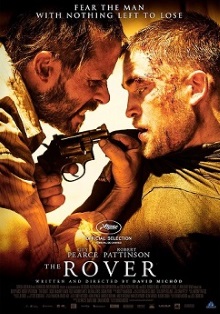
The Rover got mentioned a couple of times on Broken Forum. It doesn’t have terribly good reviews but Guy Pearce appearing in it plus it being a post-apocalypse movie was enough to get me interested. The opening text states that it is set 10 years after the collapse of civilization in Australia but doesn’t explain the nature of the event. Online summaries claim that it’s an economic collapse, but that doesn’t seem to explain the low population that is evident. That’s just one of the many things about its world-building and writing that feels clunky.
Looks like the world of science doesn’t really stop for the Chinese New Year since we have about as much science news as usual.
Let’s start with a correction. Back in March 2014, the BICEP2 research team reported the discovery of primordial gravitational waves. My entry for that month duly linked to one such report. Since then a consensus has been reached that the finding was wrong as updated maps of interstellar dust do not support the original observation. Here is one article from The Economist which talks about it. As the publication notes, getting it wrong is embarrassing but being able to own up to mistakes is science’s great strength.
The next article is from Nature and covers what is called unconscious thought advantage, the notion that the unconscious mind is better than the conscious mind at solving at least some types of cognitive tasks. In what is the most rigorous study yet of the phenomenon, a Dutch team ran experiments that involved test subjects performing tasks like choosing the best car or apartments out of a sample based a list of desirable characteristics and distracting some of them to make conscious decision-making difficult. They also ran a meta-analysis of all known previous such studies. Both results suggest that the phenomenon does not exist and that there is no cognitive advantage in unconscious thought.
As an endless number of funny cat pictures on the Internet can prove, cats just love boxes. This Wiredarticle goes into some of the reasons why this is so. I think the behavioral reasons aren’t much of a surprise. Cats just instinctively like to hide. What is more interesting to me is that the temperature range that cats are most comfortable with is about 6 degrees Celsius warmer than the comfort zone for humans, so boxes just provide extra insulation in addition to just being plain comfortable for them.
The next one isn’t a science article. It’s a report on an extensive survey of Americans on their attitudes towards science. To me, what is especially illuminating are areas where the opinion of the general public diverges wildly from that of scientists. For example, only 37% of the public think that eating genetically modified food is safe but 88% of scientists do. Similarly only 45% of the public favor the building of nuclear power stations but 65% of scientists do. I think it’s worth reading the whole thing through as it covers everything from opinions about the quality of education, the importance of science, science funding and the public’s generally not very good grasp of what scientists believe.
Finally the last one isn’t science article but I like to end things with an extended feature. It’s about an ingenious scheme in which the Columbian army encoded secret messages in Morse code and transmitted it as part of a specially written pop song to hostages held by the FARC. The plan was created by an advertising executive who had personal reasons for opposing the drug trade in the country.