Malaysian equity funds consistently beat the index

One of the most common ways that people arrive on this blog is apparently by searching for Malaysian index funds to invest in. Many more visitors than usual have arrived in recent weeks, no doubt due to the current volatility in the market. Apparently my two posts on the subject, this one and this one, rank quite highly on Google when these keywords are used. It is also evident many of these people, no doubt having read research about how index funds due to their low costs are better over the long run, are interested in finding more information about Malaysian index funds.

My own conclusion is not to bother and in fact empirical data indicates that the top equity funds in Malaysia really can beat the KLCI over the long term, even after costs. For example, working with the database available at Fundsupermart.com.my, I extracted the following for its recommended Malaysian equity funds. Note that all of these are annualized returns:

Recommended Malaysian Equity Funds at FSM

Fund Name1 Year2 Years3 Years5 Years10 Years
FBM KLCI-4.25%6.63%6.11%6.724%6.911%
Kenanga Growth Fund12.36%9.52%17.748%20.404%15.843%
Eastspring Investments Equity Income Fund4.47%7.15%15.109%14.835%10.837%
Kenanga Syariah Growth Fund0.01%7.73%10.921%15.395%13.372%
Affin Hwang AIIMAN Growth Fund0.01%10.10%14.061%12.828%10.038%

As a rationalist, it does frustrate me that such seeming anomalies exist. Not every equity fund outperforms the index, but as far as I can tell, most actually do over the long term, which is surprising according to the literature. I don’t pretend to know how this can be possible and I’ve already discussed some of the possible reasons in those old posts. But it’s hard to escape the conclusion that the Malaysian stock market must be very inefficient at uncovering market information.

A disclaimer: currently I am not personally an investor in any of the funds listed above. I do invest with FSM but only in their international funds. I instead have Malaysian equity funds in Public Mutual for legacy reasons and invest in the local stock market on my personal account. My data for my personal investing record is limited but a preliminary indication is that I outperform the KLCI as well but underperform the best equity funds.
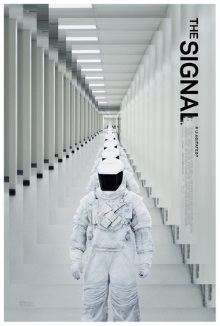

The Signal (2014)

The_Signal_poster

Normally, there are several reliable warning signs to look out for to tell whether a particular science-fiction film deserves to be taken seriously. One is whether or not it knows its stuff when it talks about hacking computers. The Signal passes this test. Another is how closely the protagonist hews to the Hollywood action hero stereotype. Here Brendon Thwaites plays MIT student Nic Eastman who has muscular dystrophy. He looks dorky enough to just about pass muster and fallible enough on his crutches to drop the coffee he has just bought.

Continue reading The Signal (2014)

Trois couleurs: Rouge (1994)

Three_Colors-Red

The two previous entries of the trilogy starred female leads who were already known to me. Rouge stars Irène Jacob, an actress I know nothing about and who seems to have become famous mainly since appearing in Krzysztof Kieślowski’s previous film La Double vie de Véronique. Yet she is easily the most beautiful and charming of the three. Appropriately enough, for as some reviewers have put it, she plays the role of Beauty against Truth as incarnated in the person of Jean-Louis Trintignant’s Joseph Kern.

Continue reading Trois couleurs: Rouge (1994)

All That Heaven Allows (1955)

ATHA01

For all that I constantly rag on about the shallowness and mediocrity of most Hollywood films, I continue to be impressed by how thoroughly they’ve mastered the essentials of film-making so long ago. All That Heaven Allows, a film that was considered unremarkable at the time of its release is, I think, a good case in point. Even without considering any of the more subtle messaging that may or may not be present, it’s a solid movie that impresses with its sumptuous visuals, competent acting, excellent cinematography and just enough of a twist to the conventional formula to make a romance story refreshing.

Continue reading All That Heaven Allows (1955)

Trois couleurs: Blanc (1994)

White_Poster

When I wrote about the first part of this trilogy, I mentioned how each film corresponds with a colour of the French national flag but didn’t talk about how each colour also corresponds with one of the values of the French national motto. In the case of Bleu, I found its interpretation of liberty in a personal sense to be interesting but not especially insightful. In the case of Blanc, it is impossible to see it as anything other than an explicit attempt at the restoration of equality.

Continue reading Trois couleurs: Blanc (1994)

The Double (2013)

TheDouble2013Poster

Our oft-mentioned but unnamed cinephile friend claimed that this film left him flummoxed. For that alone, even if The Double weren’t already on our watch list, I would have put it there. Of course, after I’d watched it, it was my turn to be bewildered. But as my wife explained, this is a film that does most of its work on a symbolic level. While there are plenty of ambiguities over who’s real and what happened, trying to work out some sort of literal truth is a fool’s errand. What matters is understanding its themes and they mean.

Continue reading The Double (2013)

Recent Interesting Science Articles (November 2014)

Quite a few articles for this month and a day earlier too! I just wanted to get this done before getting back to writing about movies.

  • Unless you live under a rock, you’d be aware that the biggest science news this month has been the landing of Philae on a comet 500 million kilometers away from Earth as part of the Rosetta mission. There are many, many articles on this, so this one from The Guardian is just a suggestion. I strongly recommend watching one of the many animations made that describe the incredible 10-year journey. Unfortunately the lander ran of power shortly afterwards due to poor positioning. Hopefully it will wake up again when the comet moves closer to the Sun.
  • This next article is a more challenging read. Appearing in Quanta Magazine, it discusses the multiverse hypothesis, the idea that there are an infinite number of universes for which the constants are set at different values. This is meant to answer the anthropic question of why is it that the constants in our own universe seem uniquely tuned in such a way that would support our existence in it. I’m doubtful about the scientific value of this line of thought but I can’t deny that it makes for fascinating reading.
  • On a more practical note, this article from IEEE Spectrum, discusses a plan to install what are in effect powerful servers in privately owned buildings to serve as heating systems. The individual pays for the hardware but the cloud computing firm pays for data connection and maintenance costs. It’s a neat idea but as the comments point out, the homeowner has no control over the server’s computing load and therefore no control over how much heat it generates which makes it unreliable as a heating system.
  • Next we talk about gravity anomalies, the real kind caused by unusual geological formations, not the fake kind caused by retarded future humans. This article from The Economist covers how pigeons can sense the Earth’s gravitational field and use it to help them navigate even when they are in unfamiliar locations. The experiment used a massive crater which causes unusual variations in gravity. Pigeons were released both inside the crater, and outside of it where there were no gravity anomalies. The pigeons outside all found their way home quickly. The pigeons who started from inside the crater tended to get lost.
  • Finally just because GamerGate is still ongoing even though activity has died down by quite a bit, here is an article from The Telegraph discussing how girls in the 12-13 year old age group seem to outperform their male peers in using a simplified programming language for making video games. Granted, it’s a study with a very limited scope but it at least suggests that there is no biological reason why women cannot be at least as proficient as men in programming, traditionally a male dominated profession. Just check out the comments section if you don’t believe that there is a gender problem in the technology sector. Lewis’ Law is in full effect here.

The unexamined life is a life not worth living