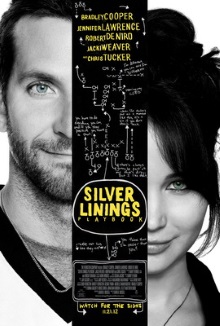
This starts out promisingly enough. Bradley Cooper plays Pat Solatano, a man who is just about to be released from an involuntary stay in a mental health facility. When he starts tearing a doctor’s office apart to stop a song that he keeps hearing in his head, he goes from being an eccentric weirdo to someone you want to stay as far away from as possible. Then you learn that he nearly beat a man for death for having an affair with his wife, insists on not taking his medication, obsessively keeps trying to meet with his wife in spite of a restraining order and generally makes life hell for the parents he stays with. Sure, you think, it looks like his relationship with his wife is fucked, but at least Silver Linings Playbook is shaping out to be a decent film that takes mental illnesses seriously.
I don’t know what I expected exactly from Wild Strawberries. I certainly loved The Seventh Seal while acknowledging that it fully deserves its reputation for being a cold film of stark contrasts, heavy with symbolism and religious weight. You really do need to bring an understanding and appreciation of Christian imagery and theology to fully appreciate it. Ingmar Bergman made this immediately after completing The Seventh Seal so I certainly did not expect this to be a warm, uplifting and completely approachable.
Way back before I started to regularly write about individual films, I had a little series going about my favourite films that I’d recently watched. It only got updated every couple of years or so. Anyway, in the very first installment of that series, I talked about five films. Out of those five, two were directed by Christopher Nolan. He has since gone on to make far bigger and better known films, most notably the Dark Knight Trilogy. But looking back, it’s hard to escape the conclusion that Nolan’s output peaked with The Prestige.
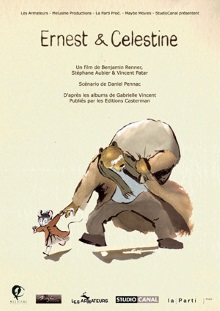
Every once in a while I like to throw a cartoon into our mix just to please my wife. Ernest et Celestine even gets bonus points for being a French-Belgian production based on a series of Belgian children’s books. I get to fill both my quota of cartoons and my quota of non-English foreign films at the same time!
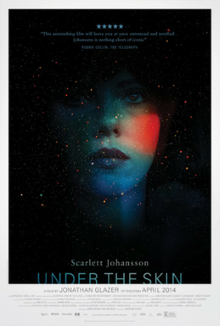
Is it just me or is Scarlett Johansson in a surprising number of sci-fi films? Of course, not all of them are of the same level of quality. For example, I refuse to watch Lucy. When I first heard about Under the Skin and the critical acclaim it garnered, I thought it would easily fall into the “great” category. After watching it however, I find that I have reservations about giving uncritical praise. Since this puts me at odds with people who know a lot about movies, such as the posters on Broken Forum, the onus is on me to explain why.
Like everyone else on the Internet, I’ve seen my share of gifs lifted from hilariously exaggerated scenes from Indian action movies and have invariably been amused. Earlier this year, I’d read an article about how Dhoom 3 was the most expensive film ever made by Bollywood and how it is chock full of ridiculous errors and loopholes. I also noticed that all arguments about artistic merit aside, the series as a whole has earned a tremendous amount of money, both domestically in India and internationally. Since I’d like to think that I give films of all countries and all genres a fair shake, I thought I’ll take a look at this franchise for myself, starting with the first one.
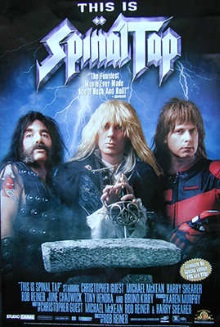
This is Spinal Tap must be one of the strangest successes in cinematic history. It’s a mockumentary about a fictional band that has met with so much success that it has effectively become a real band. It is widely lauded as one of the best comedies ever made and unquestionably one of the greatest rock music movies. It was even the source of the “these go to 11” meme before the Internet was invented.