
This is a sequel to a game that I played a long, long time ago. I really liked it back then but never completed it because it was very difficult and if I remember correctly rather buggy. This time rather than the Ultramarines, you’re put in charge of the mysterious Grey Knights and must contend with the forces of Nurgle. Gameplay-wise it’s pretty much identical to the new version of XCOM, except it’s significantly more difficult, sometimes in ways that don’t feel fair to the player. I had a blast with it but did at times grow very frustrated.
Shortly after a victorious but costly battle, the Grey Knight forces on the strike cruiser Baleful Edict are greatly reduced and its commander is dead. The player is selected to lead the surviving knights as the heavily damaged ship heads back to Titan. But enroute they are hailed by Kartha Vakir who commandeers the force under Inquisitorial authority. She is investigating a plague spread by Nurgle called the Bloom in the sector and is convinced that it portends a more serious crisis. The Grey Knight reluctantly comply, travelling from one world to another whenever an infection appears to stop it from spreading and to gather samples. The trail eventually leads to an Aeldari Craftworld which has been totally consumed by Chaos. They learn that the Bloom has deep roots in the Warp and there are five different strains, each being spread by a Reaper. Once the entire sector has been infected, a being called Morbus will be summoned into real space. Vakir herself increasingly shows signs of corruption as she works to trace the Bloom, prompting concern by your advisor the Purifier Ectar.
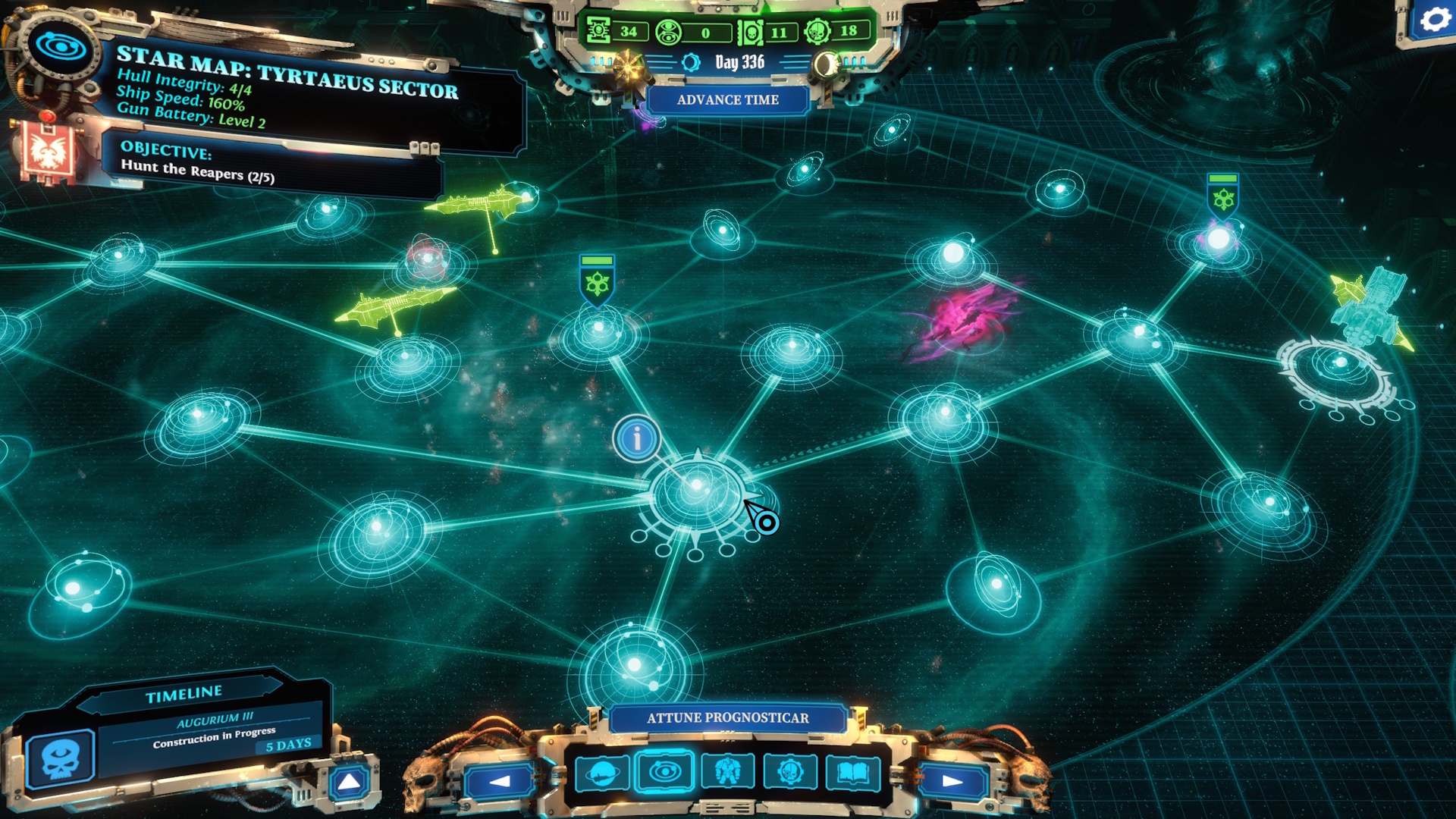
This setup works to mimic the conditions of the rebooted XCOM. The Baleful Edict serves as your mobile base of operations as you play whack a mole putting down Bloom infections across the sector. The ship can even fight the Death Guard ships that you encounter though space combat is fully abstracted. Its extensively damaged state at the beginning of the game explains why its many systems need time and resources to be repaired to bring them online. As the ranks of the Grey Knights on board have been depleted, you’d need to recruit fresh ones from Titan and train them. With Inquisitor Vakir on board, you can research Warp-based powers for use in battle. Every once in a while the Grandmaster of the Order checks in your progress, usually to berate you, and you can request Master-crafted gear and better knights from him.
The tactical battles similarly uses the concept of pods as groups of enemies are activated and fought one at a time. There are many different classes of knights and each class has its own fairly deep skill tree. There are plenty of enemy types to fight but they’re all followers of Nurgle. There are no civilians on the maps and the only allies you might see are weak Imperial Guard soldiers. One important difference is that the gameplay favors playing offensively. Every ranged attack will hit unless blocked by cover and defensive options are rather weak. The Warp Surge Meter builds every turn and every time a knight uses any psyker powers. Whenever it reaches 100%, a random nasty effect happens such as enemies gaining mutations, disabling teleportation or summoning more enemy reinforcements. So you have an incentive to move quickly and kill enemy pods as soon as possible upon activation.
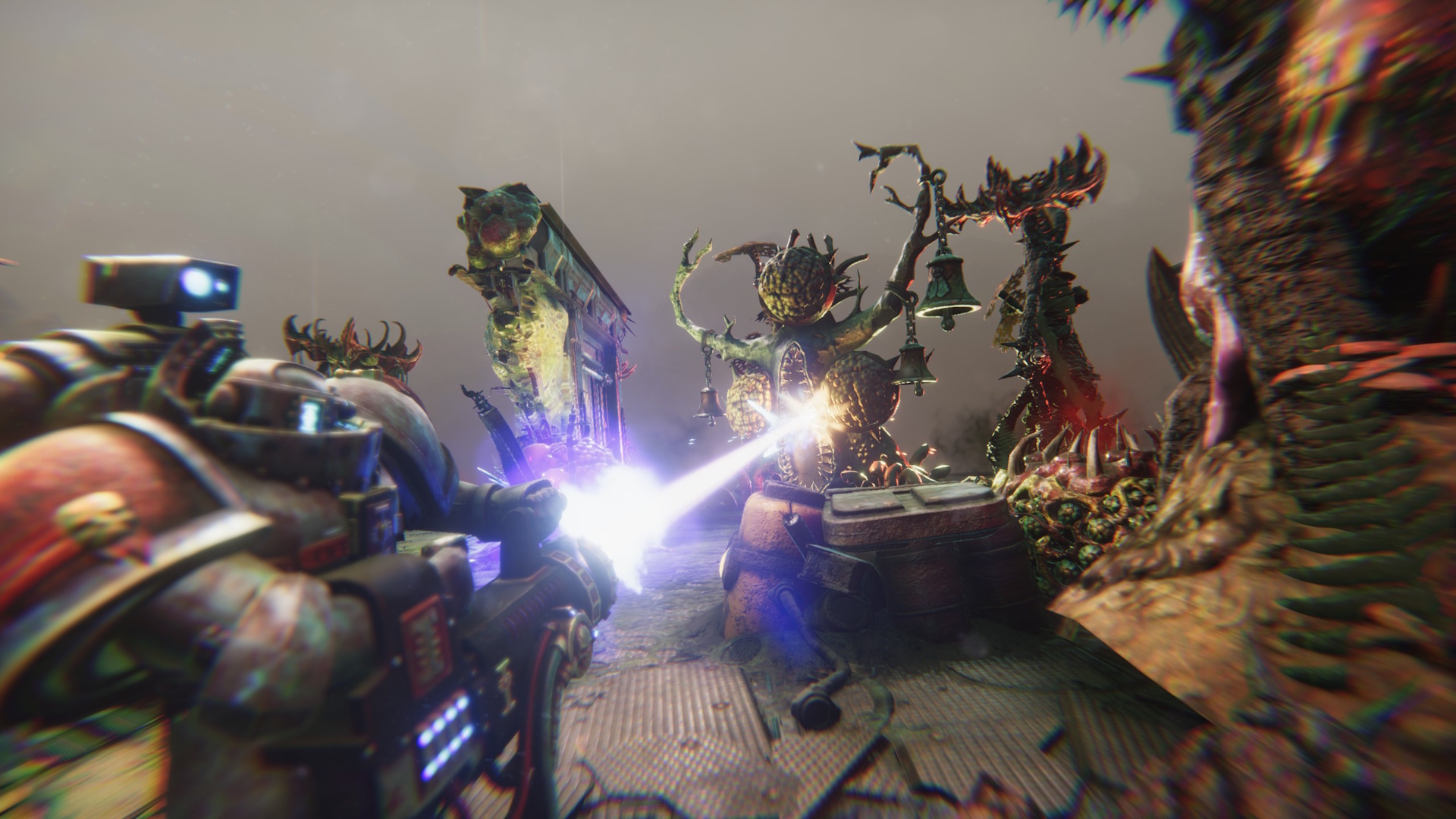
I underestimated how difficult this game was at first and ended up having to restart my first attempt. The random events you get hit by from time to time are pretty much always awful and I didn’t realize how bad it was to get penalties like having ship construction slowed by 50% for 30 days. There are also so many resources and skills to keep track of, I didn’t notice that each knight comes with a unique talent and it’s worth maximizing their build for that. Then there are the usual decisions of which classes to recruit and develop, what gear to get, which ship and research projects to do first and so on. The various classes are very much not balanced and some are better than others! I’ve gotten used to games being a bit forgiving so I wasn’t trying to optimize everything at the beginning. But this game is balanced such that you really need to know what you’re doing. I ended up restarting to take into account everything I’ve learned, including which missions to take based on the rewards that are on offer.
I will say that once you understand how all the moving parts mesh together, it’s possible to build absolute broken squads. You can for example consistently kill an entire enemy pod in the very first turn they are discovered. They never get to take a turn, you never take damage and so there’s no need to bring healing or defensive tools at all. It takes a while to train your knights up enough to grab the required skills and gather the needed gear, so the early game is a hellish slog but then you get to the midgame and suddenly life gets much easier. You’ve repaired the Baleful Edict enough that you can speedily travel through the sector to reach the trouble spots before the missions expire and survive encounters with Death Guard ships. But don’t rest on your laurels yet because after that you need to face the bosses. Each of them has unique mechanics that make them different from normal battles. The result is that the difficulty feels very binary. If you’ve levelled and equipped a squad of knights in exactly the right way, a given boss might be a total cakewalk. Otherwise, it may well be impossible. I was shocked when going into the final mission that you need to fight a boss first and you have no time to heal your knights after that fight. The game isn’t kidding in wanting you to build up a large stable of high-level and properly equipped knights before going into the endgame.
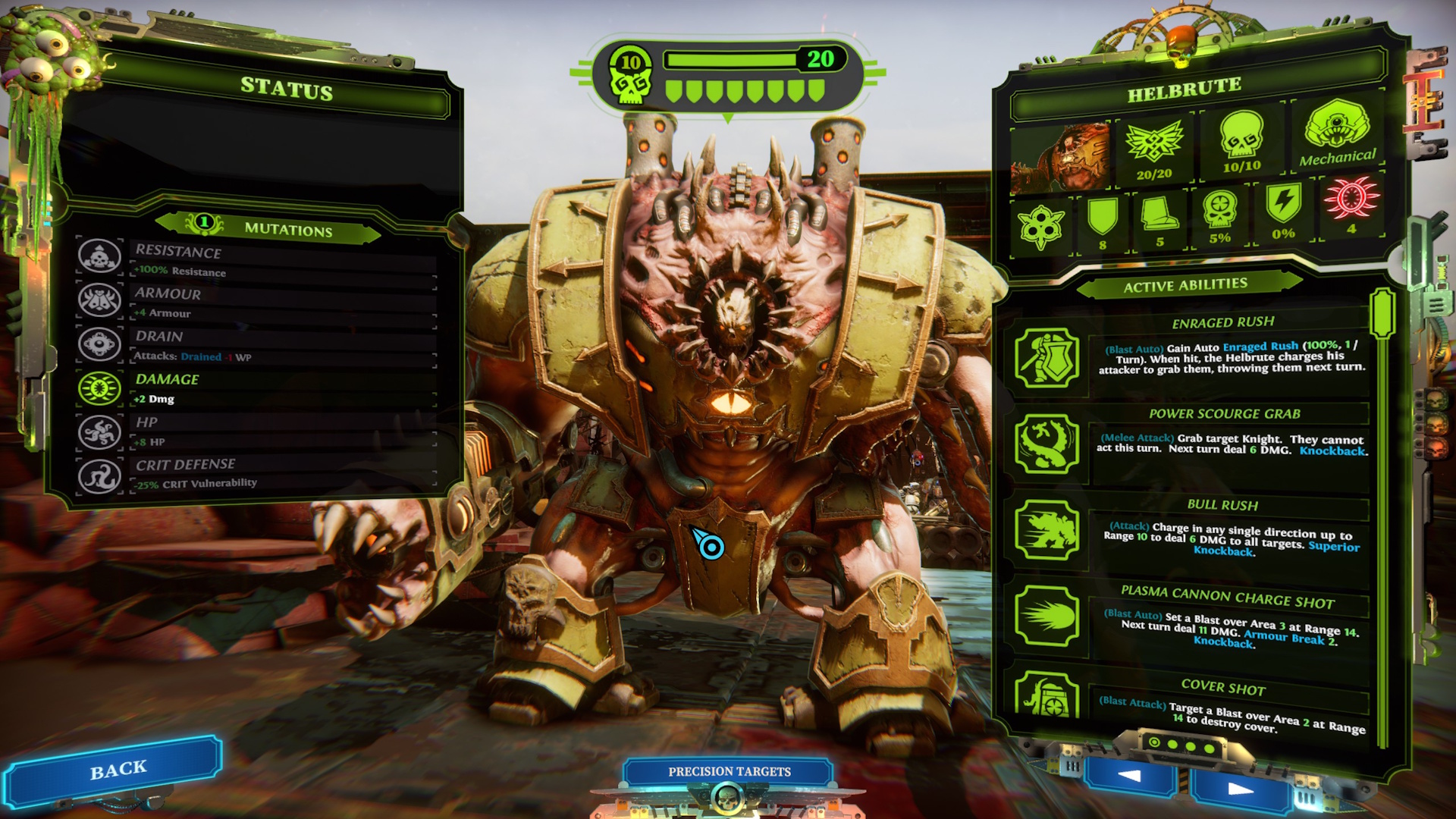
As challenging as this game is, it is undeniably satisfying once you have a firm grasp of all of the tools at your disposal. You’re forced to optimize the use of every Action Point, study every enemy carefully to note their powers and beeline straight for the mission objectives. There are enough classes, skills and special equipment to make squads that work very differently so it’s fun to theorycraft builds. There’s no time limit so long as you’re able to keep the infections under control so you can grind to train up your knights to the level cap and get the gear you want. Since things like traits and gear offered are random, it may take a while to get exactly what you want. It can intimidating when the game throws heavily armored enemies at you but a well put together team specialized in pure damage can indeed take them down in a single turn. The more you play, the more ideas you get about builds to try and that’s a sure sign of a tactical combat game that is very rich in possibilities.
I’m someone who has only the most passing familiarity with the lore of Warhammer 40k as it has always felt so juvenile and overwrought. Yet I’d say that this is one of better uses of the setting in a video game. The way it sets up the Grey Knights, the Inquisitor and the Adeptus Mechanicus against each other fits the setting to a tee. You get how they’re all on the same side yet legitimately have different priorities. The mission as a whole feels appropriately epic in scope while it makes sense why you can’t be given more resources as there are multiple crises of similar seriousness all over the wider Imperium given how huge it is. The story digs deep into the lore and guest stars a figure that I’m sure is important to fans. In-game however it’s unfortunate that he’s actually weaker than the knights you’re able to field once you’ve invested enough in them.
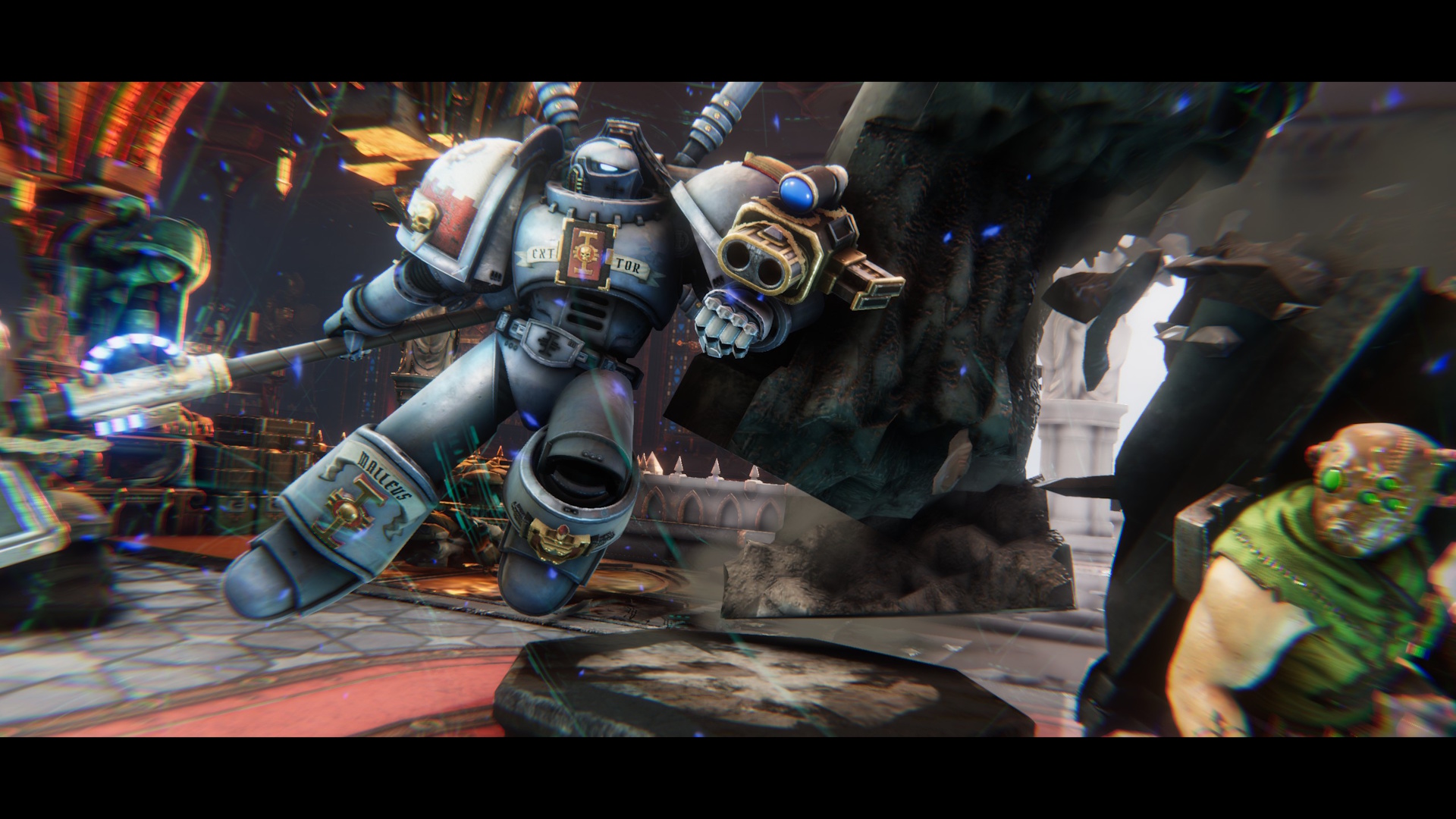
I have a whole host of other complaints such as the user interface not readily making key information available, that there’s no explanation of many key mechanics such as how the Chaplain’s litanies work, and so on. In fact, at times it feels as if the designers went out of their way to annoy the player with how punishing the random events are and how every time you speak to the Grandmaster he berates you even though you seem to be doing a good job. But I also have to admit that the more I played the game, the more I felt hooked by its rich tactical options and the possibility of building interesting squads. This game excels as well in making the Space Marines feel powerful, like armored gods striding amongst mortals. When you have everything set up just right, spending Action Points to move and attack, using Willpower to enhance your moves and then getting those refunded through skills so you can do it all over again repeatedly, it feels like a perfectly tuned unstoppable war machine. You don’t really get this from XCOM as the effects in play here feel much more powerful.
So despite the issues and a difficulty setting that feels unfair at times, I’d rate this as a better squad-level tactics game than XCOM. It’s far better and deeper as well than the Mechanicus game I’d played not too long ago, making that game feel sort of extraneous. It would have been better with some balance fixes like making the Purifier class more useful. Most debuffs seem useless to me since it’s better just to do more damage and so many enemies are immune to them. But it’s still such a damned good game I’m surprised it isn’t better known and more successful.