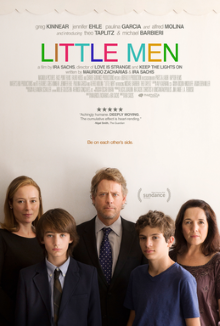
True to its title, this is shortish film about a small scale conflict between two families and the children who get caught up in them. I’ve never seen anything by its director Ira Sachs before. His filmography isn’t very long but he seems to have been around for a while. There are at least a couple of recognizable performers in this low budget production but I’d bet most people would have a lot of trouble placing them.
Once again I find myself playing a game just when its sequel is coming out. It’s debatable whether or not this game was fully completed when development on it stopped due to some kind of dispute between the developer and the publisher. Since then they’ve patched things up and are now about to release the sequel but this version hasn’t been updated since. Anyway the tutorials are certainly insufficient and I found it impossible to understand what you’re supposed to do without referring to a fan-made guide online. But content-wise, I think this game is more than adequate and can provides many hours of gameplay provided you are patient enough.
This film is again obligatory watching due to its excellent reception from critics but it’s certainly puzzling to me how director Jim Jarmusch makes films that are each so different from one another. I’d found The Limits of Control to be almost incomprehensible and Only Lovers Left Alive to be a rather shallow comedy. I can’t say that I really cared much for either of them. Paterson on the other hand is easily one of my favorites of the year and is a pleasant, almost very light, watching experience.
A more normal month this time with some nice diversity of articles. If there’s one overarching theme for this entry however, it must be food.
Since I’m a subscriber to The Economist, I link their articles quite often. Usually this is from their Science & Technology section but here’s one from their Business section. It’s about how an experiment was carried out in Togo to find out how useful different types of entrepreneurship education are. A control group of small businesses was offered no education at all, another group was offered conventional business training in subjects like accounting, finance, human resources etc., and the last one was given a course designed by psychologists to teach personal initiative. The results were that the last course made a tangible difference to the lives of the budding entrepreneurs over the course of the two and a half years they were monitored while the conventional business course seemed to make no difference at all. I’m especially stoked that the scientific method was used to study the effectiveness of different syllabuses though of course it has to be noted that this study can’t be double blind.
Next we have a lengthy and complicated article in the world of mathematics. It’s too complex to really summarize here but it has to do with the fact that there are different types of infinities and one important recent result in the field is proving that two different orders of infinity that have long been thought to be different were found to be equal after all.
Then we move on to the articles about food. First there’s this announcement about a new variant of chocolate, apparently the fourth one in total and the first new one since the 1930. The new flavor is called Ruby and is described to be light and fruity with a reddish-pink color.
Next here’s one about a process that turns landfill gas into food. Bacteria are used in a fermentation process that turns methane into protein. The product is already being used for animal feed. It will be particularly useful for the production of fishmeal which is currently still mostly made from ground-up fish caught in the wild that are unsuitable for human consumption.
Finally my favorite article of this batch is this one about a herb that was famous and commonly used in Roman times but now seems to be extinct. Known as silphium, we know that it existed from Roman recipes and it was also used as a medicine and an aphrodisiac. It also turned up in Roman poetry and literature. Unfortunately its high value and the fact that it could grow only within a small stretch of land meant that it disappeared during the Roman Empire. Scientists today are still studying why it seemed to be impossible to cultivate and there is still some hope that one day that it could yet be rediscovered.
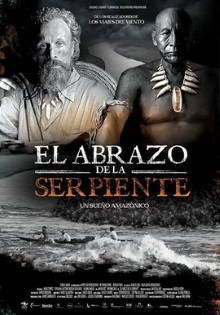
This is a Colombian film filmed almost entirely in black and white and since you’re seeing it here, that means that it was very highly regarded by critics. It was made by little known Colombian director Ciro Guerra and filmed in the jungles of the Amazonia region of the country. An ending blurb suggest that parts of it were inspired by diaries kept by real European explorers and these are almost the only records that still exist of the tribes described therein.
Only Yesterday is one of Studio Ghibli’s earliest films but it received an official U.S. release only last year on the occasion of its 25th anniversary, giving it a new burst of attention. Since I’d never watched I added to our list and I guess I’ll probably eventually work my way through the rest of the studio’s early works someday. This one was directed by Isao Takahata and loosely based on a manga.
Like everyone else I played Duke Nukem 3D back in the day but for some reason or other never got around to playing the original Shadow Warrior. I didn’t play the reboot either but noticed when it was released for free and thought I’d give it a shot when I saw a friend of mine playing the sequel on Steam. I had thought it to be a fairly light game I could slot in between more hefty ones but it turned out to have substantial content and was a more difficult action game than I’m used to these days.