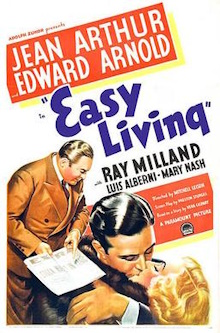
The thing with these very old Hollywood films is that even if they’re not much good, at least they’ll be easy to watch and understand. This Depression-era film certainly qualifies as being the latter and taking into account the quality of storytelling of the time, I think it’s not altogether bad either. What aged the most is the slapstick humor as hitting people or seeing them fall down just isn’t very funny these days. The story about a working class girl skyrocketing to the luxurious heights of the high life is straight out fairy tale material, but perfect exemplifies the escapist fantasy of the period. It may not be a great film, but it’s quite fun!
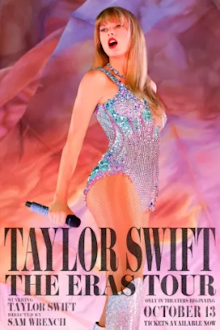
I’m not a fan of Taylor Swift and I don’t know much about her music beyond the famous, mostly older songs that are played all the time. But I’m not blind to the huge cultural phenomenon that she is, especially in America. Her Eras Tour, still ongoing until the end of this year, is arguably the greatest show on Earth as of right now in terms of scale and commercial value. I thought I might watch this film version of the concert to get the merest taste of what the real thing might be like especially as it has been hailed as perhaps the best concert film ever made. As expected, it’s a grand spectacle and though it still doesn’t make me a fan of her work, it did give me a better appreciation the range of themes and genres she has explored.
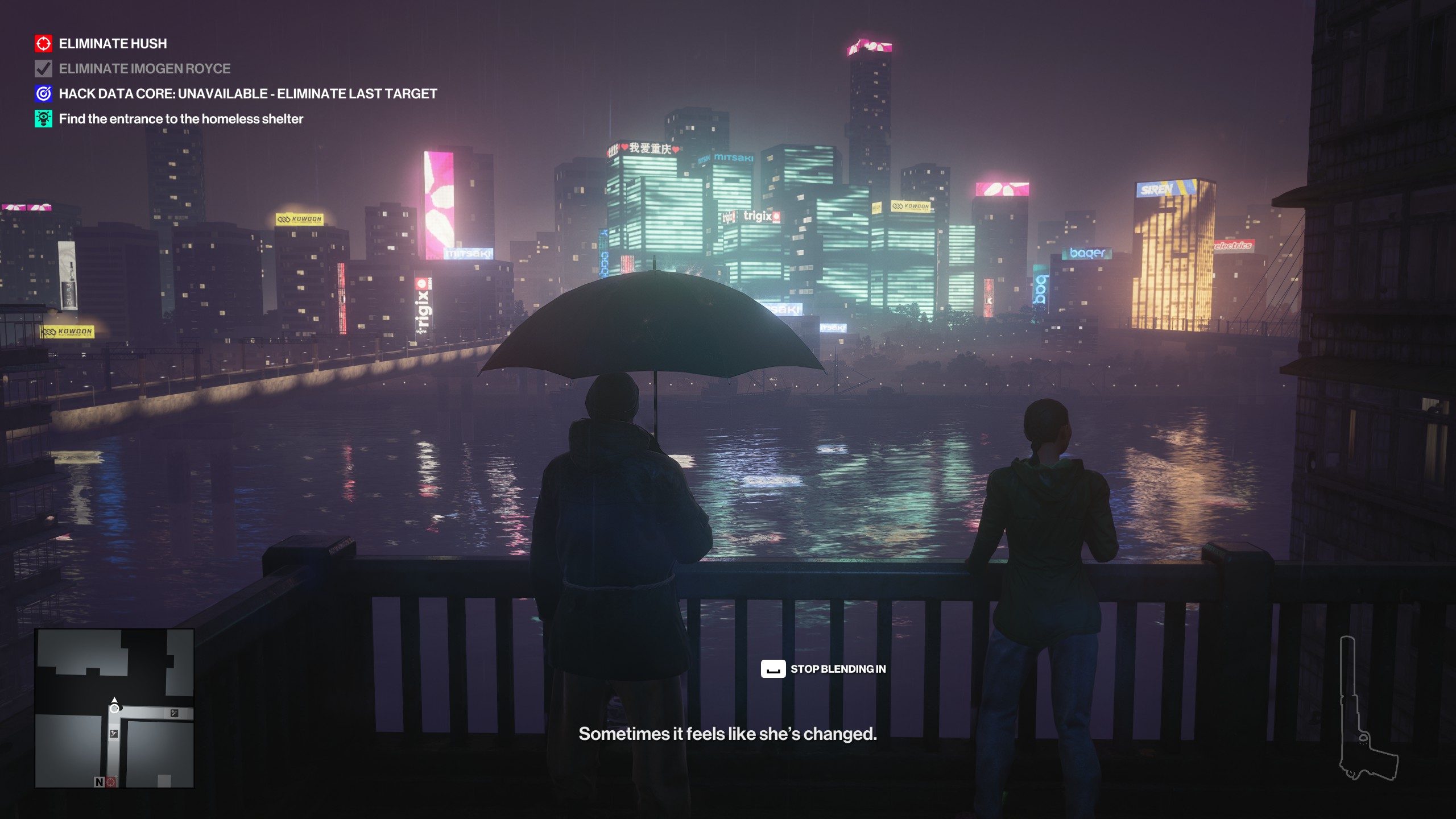
I held off on playing this for some time because it was an Epic Games exclusive for a while and after that it was confusing how they folded everything under the World of Assassination umbrella. Even figuring out what to actually buy on Steam if I only wanted to play the Hitman 3 campaign was something of a chore. I love the series so much I was also going to play it of course but it was probably a good idea to give it a bit of time because I can still get burned out by playing too much of something I enjoy. This final installment of the trilogy got off to a rocky start for me as the Dubai map was underwhelming but the rest are so very good with some interesting variations of the existing formula. I am however upset by the unreliable availability of the servers as it has an online requirement even though I’m only interested in the single-player experience.
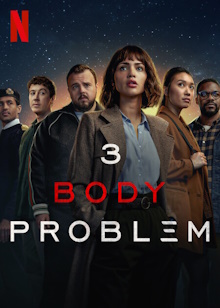
After having read the entire trilogy, I was always going to watch this Netflix series even though I quickly noped out of the Chinese adaptation. There was no way I was going to be able to sit through 30 episodes and so much repetitive content. This English-language version makes big changes to the story, moving most of the scenes to England for example and more importantly creating a new set of characters, the so-called Oxford Five, to serve as the protagonists. I’d say that the changes are for the better as it does away with the marked misogyny of Liu Cixin’s work and makes for a more varied and interesting cast. On the other hand, it is somewhat implausible that the chief of the MI6 would take such a central role in leading the defense of Earth and it really needed more extras to portray the sheer scale of the events. Overall it’s a good adaptation and managing to convey so much of the story in only eight episodes is commendable. I’ll definitely be waiting for the next season.
Jacques Tati is another of the great names of French cinema but I haven’t seen any of his work before this. PlayTime is considered his masterpiece and it’s so delightful and easy to watch that I wondered why I hadn’t made this a higher priority. There’s no plot and only incidental dialogue, with the real star of the show here being this huge caricature of a futuristic Paris that has been dubbed Tativille. The Monsieur Hulot character, played by Tati himself, reminded me of an extended Mr. Bean skit but of course this draws on older comedians like Charlie Chaplin. This film cost too much to make however and never made the money back. It also took some time before it was properly recognized as a work of genius and that may be why Tati ended up making so few films in his life.
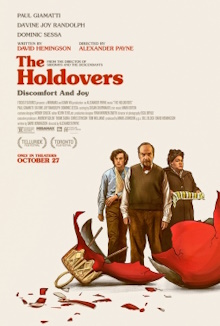
Sideways was a surprisingly memorable film for me when I’ve forgotten many other good films and it seems to be a favorite of many others as well. So a second collaboration between Alexander Payne and Paul Giamatti was highly anticipated. Payne’s films are always wonderfully humanistic but perhaps lean a little too sentimental. This one I think gets the balance just right, being recognizably a Christmas film with all the schmaltz that implies, yet finding new ways to imbue it with meaning. He did have to set this in 1970 however as it would be unimaginable for a student in such a school to submit to a teacher like that in the present day.
We have a lot of science stuff to get through this month and even a couple that are not biology!
Let’s get through the non-biology stuff first. The title for this new physics paper is difficult to parse and the abstract isn’t much better. What it is really saying in simple language is that the team succeeded in making the electromagnetic counterpart of an “air vortex cannon“. We’re all familiar with the electromagnetic waves that underpin so much of our communications infrastructure. This team however has proven the ability to create an antenna that transmits electromagnetic pulses that have toroidal shapes. As the paper notes, there are all kinds of possible applications in communications, remote sensing, positioning and so on. What it doesn’t say is that it probably will be useful as a weapons technology as well.
The other one is this economics paper that is being widely talked about, offering a conclusion that is intuitively obvious and yet apparently original. It examines the issue of why workers so viscerally dislike inflation when in theory wages gains should match the increase in prices. The authors explain it in very simple terms. In times of inflation, workers must engage in conflict behavior with their employers to demand higher wages or risk settling for wages that are declining in real terms. It’s not surprising that many workers are uneasy or unwilling to engage in such conflict behavior and so they hate inflation above and beyond what we would expect.
Next we have a simple paper that lays out a plausible explanation for the long COVID affliction that some patients experience. They find that fibrinogen, the central component of blood clots, is abundant in the lungs and brains of COVID-19 patients and is a predictive biomarker for post-COVID-19 cognitive deficits. They posit that antibodies that target fibrin may be an effective treatment for the condition.
Then we have this study about transgender men given testosterone supplements that is sure to add to the ongoing debates around trans issues. They found that these transgender men who were assigned female at birth underwent changes in their immune systems that made them more closely resemble that of cisgender men. That is their immune responses to the type 1 interferon proteins, used as a proxy for the strength of their response to viral infections, decreased, while their responses to a signaling pathway that is typically associated with inflammation increased. The sample size is small so this is just a start but the changes seem startling after a course of testosterone supplements of only three months.
Another paper that is sure to spark widespread debate is this one that finds evidence of human evolution in ancient DNA. They compared DNA of ancient humans with that of contemporary people and conclude that there are many loci that were likely altered as a result of selective pressure. They claim for example that there is evidence that the predisposition to store energy during food scarcity has changed after the advent of farming and that there are other changes such as lighter skin color, lower risk for schizophrenia and bipolar disease, slower health decline and many more. In short, they claim that changes in human DNA has accelerated in response to civilization. I expect a lot more noise on this paper in the near future.
Finally here’s a strange discovery that feels like it could be science-fiction but actually makes sense upon reflection. The researchers found that applying a commonly used food coloring to the skin of mice effectively makes it transparent. Specifically they used the food dye tartrazine which was was found to absorb light in the near ultraviolet and blue part of the spectrum and allowed red and orange light to penetrate deeper into the tissue of mice. This allowed them to watch neurons tagged with fluorescent markers in real time without doing anything else. The medical applications of this is obvious though it isn’t immediately possible to use this on humans as our skin is much thicker and the dye would have to completely saturate our skin tissue. It does make one wonder why this wasn’t tried earlier.