I’ve loved every one of Asghar Farhadi’s films I’ve seen so far and I do consider this to be another great film. However the story seems to have been inspired by a real-life event as covered in a documentary made by a student of Farhadi named Azadeh Masihzadeh. She claims that Farhadi pressured her to sign a statement that the original idea came from him which she now denies and the two have since been embroiled in contentious lawsuits. I don’t think ideas belong to anyone as execution is everything but Farhadi seems to be in the wrong to me at least in being so insistent about not acknowledging any contribution whatsoever from someone so much further down the hierarchy of power than himself. Ironically this is itself the theme of the film and makes its statement about Iranian society much more powerful.
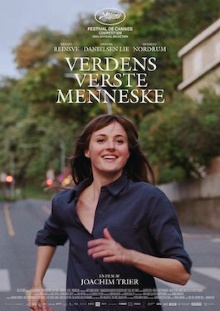
So this is certainly an eye-catching title for a film. My contention in this post will be that while the main character may be seen be as a bad person as judged in accordance to conventional values, director Joachim Trier employs the title ironically and tries to portray her in a mostly sympathetic light. As always the mark of an interesting film is how much discussion it engenders and this makes for a wonderful subject of conversation. I’ve never watched any of Trier’s work before this but I believe he is really on to something when it comes to the future of human relationships.
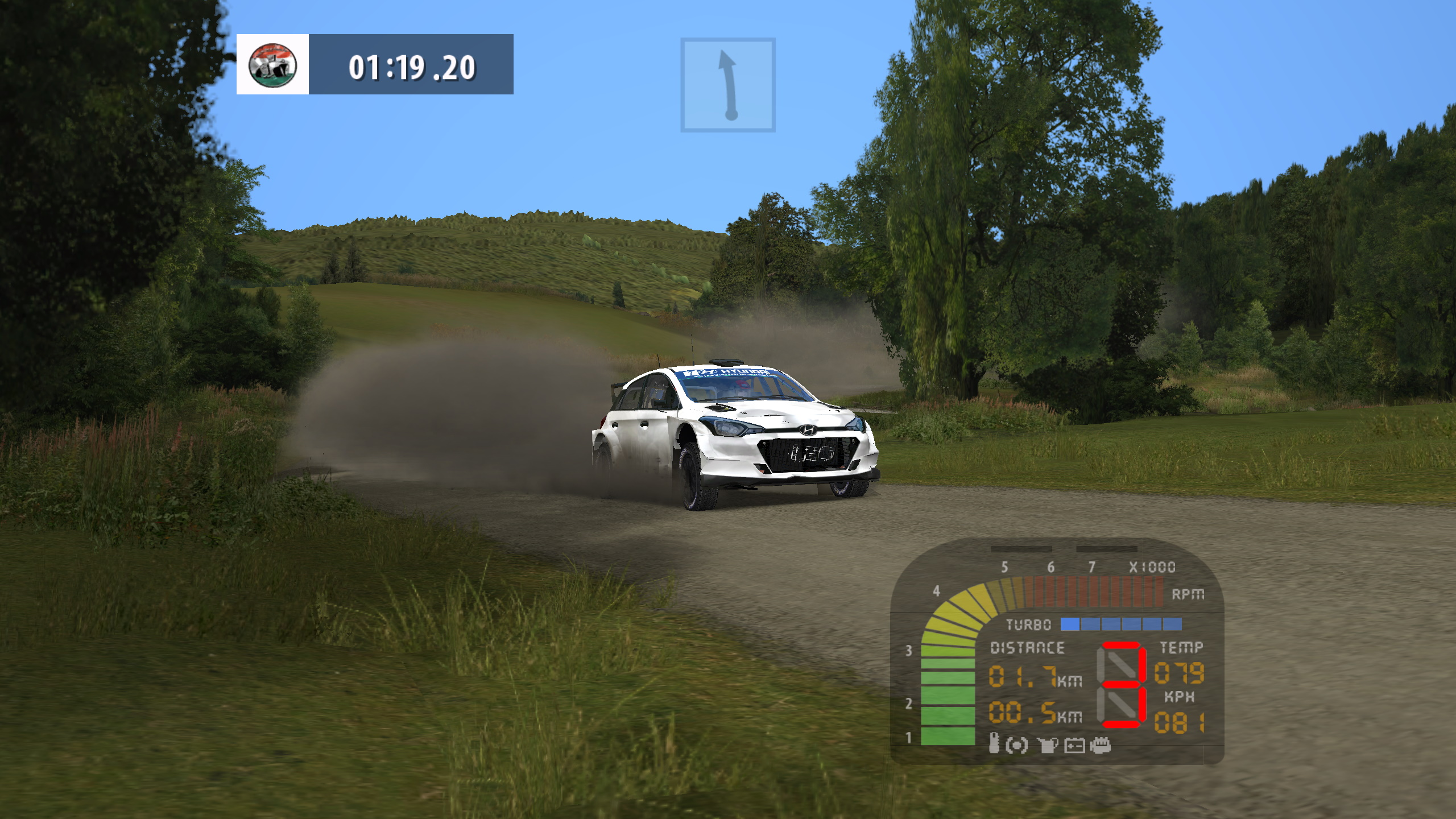
My Steam Replay tells me that by far my most played game of 2022 has continued to be Dirt Rally 2.0 as I’ve made a more determined effort to go through just about every bit of content in it. But of course all sim rally racers will tell you that the greatest ever sim rally game ever made continues to be Richard Burns Rally, a game that was first released in 2004. Its makers having long gone out of business, the game is today maintained by a community of fans and modders, and is effectively free to download. I elected to download the version from rallysimfans.hu, the so-called Hungarian plugin as everyone says it is the most developed and has the largest community.
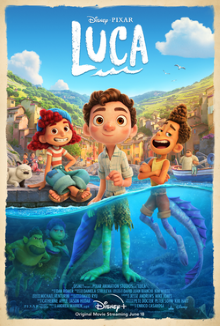
This Pixar film didn’t seem to make much of a splash on its release and I even preferred to watch Turning Red from a year later before this. I came back to this after seeing some beautiful still images of the fictional town of Portorosso it is set in and realized that it’s inspired by Italian culture. Pretty as its art is, its themes and its story make it too juvenile to take seriously and its references to Italy too generic to be meaningful. It’s watchable but it feels almost boring next to Turning Red.
I had this pegged as an American film on my list, was surprised to see the opening set in London and that’s it’s full of British characters and then later read that it is American after all. That actually makes sense given how much it exaggerates English mannerisms and makes fun of how one is supposed to behave according to one’s class from a perspective of an outsider to their society. Unfortunately while this film has its amusing moments, its many flaws causes it to fall short of true greatness and it isn’t that memorable.
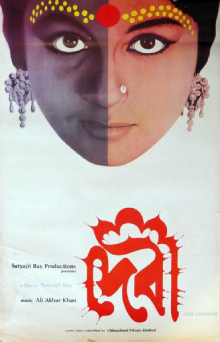
Every one of Satyajit Ray’s films we’ve seen so far has been at the very least strong contenders and this one impresses us once again as a powerful invective against traditional superstition. I particularly love how this film very small and yet very large at the same time. It’s based on a short story and limits its scenes entirely to one family and their household. Yet its themes encompass the pantheon of Hindu deities and carry all of the weight of tradition, the patriarchy and wealth. It says so much and so powerfully in one compact package.
This month’s pick of developments worth paying attention is more substantial than usual and I think at least a couple of them will have serious long-term implications.
Starting with lighter news first, the announcement that lab-grown retinal cells are capable of reaching out and connecting to other cells is exciting. Lately many researchers have been experimenting with all kinds of organoids, organized clusters of cells that can be regarded as very primitive versions of organs. This is a similar example that involves coaxing stem cells to develop into light-sensitive retinal cells. The latest development is to show that these cells are capable of forming synaptic connections to other cells. We’re still a long way from growing artificial eyes in this way but it may be possible to use this technique to treat certain eye disorders and injuries.
Next is a paper that claims that chimpanzees possess risk-taking behaviors that are similar to humans. This means their risk assements are broadly correlated across domains, they shy away from ambiguous situations, males are more willing to take risks than females and that appetite for risk peaks in young adults, patterns that are broadly similar to humans. From a philosophical perspective, these results are interesting as chimpanzees are of course not influenced by human culture, suggesting that there may be an evolutionary basis to risk-taking preferences.
Then we have this longer article about how the old model of animal learning, famously known from Pavlov’s experiments with dogs, is slowly being debunked. The old model looked forward and stipulated that learning works by trial and error. A prediction is made in response to cues and adjustments are made to future predictions as a result of how correct it was. The new model looks backwards, such that when a reward or punishment is received by the animal, it looks back in its memory tp search for what might have caused the event and learns accordingly. New experiments suggest that the new model seems closer to the truth. Though the difference between the two models may be subtle to most of us, this amounts to a revolution in neuroscience with major implications.
Finally some of the early results from the James Webb Space Telescope are in and they are suggesting that cosmologists’ ideas of how the universe formed may be all wrong. The new telescope effectively lets astronomers see further back in time than previously possible and the surprising finding is that there are too many mature galaxies out there and that they are too bright. The researchers expected to see more chaotic and primitive structures from the distant past, yet it seems that the past looks too similar to the present than what is predicted by current models. No prominent astronomer has quite come out to explicitly say it yet and they’re all still reviewing the results but I believe this shows how little we really know about the formation of the universe and the models we have are really just educated guesses.