Quite a rich trove of articles this month but once again the really fascinating stuff are in the life sciences.
Easily the most significant and controversial finding of this month’s batch is the discovery in China of a human skull that dates from a million years ago. The skull found in Hubei province and called Yunxian 2 was originally assumed to belong to a member of Homo erectus. New analysis now suggests that it was actually a member of Homo longi who was thought to have lived alongside Neanderthals and Homo sapiens. If true, this sets the timeline of the evolution of large-brained humans back by at least half a million years. Some are using this finding to challenge the established provenance of humans as being from Africa but it’s more likely evidence that there is still so much more that we don’t know.
One of the key symptoms of schizophrenia is auditory hallucinations, hearing things that aren’t there. One explanation for what is going on is that the patients are unable to distinguish between inner speech and external voices. A new study tests this hypothesis using EEG to monitor brain activity while they were asked to internally produce a sound without speaking it out loud and while listening to an audible syllable without doing anything else. The team found that patients known to have auditory hallucinations had brain activity that suggests they experience inner speech as more real than external sounds.
Here’s something that won’t occur to most people but will likely seem like a horror story once they hear about it. Some children suffer from epilepsy so severe that the treatment consists of surgically disconnecting the part of the brain in which the seizures originate from the rest of the brain. Yet the tissue remains intact and remains alive. One team wanted to find out whether the part that gets disconnected still has some awareness. So they took EEG readings of both the intact brain and the disconnected region before the surgery and at regular intervals afterwards. Thankfully the results aren’t horrifying. Electrical activity in the intact portion of the brain showed no changes but in the severed portion, the EEG showed slow rhythms called delta waves which are consistent with deep sleep. So it’s not dead but at least it isn’t fully aware all the time.
Finally here’s an article about similarities in sounds made by birds of different species separated by vast distances and how the phenomenon provides new insight into the development of human language. The researchers found that more than 20 different bird species across four continents produce nearly identical “whining” vocalizations when they spot parasitic birds. They performed playback experiments which showed that birds who hear the calls for the first time will come to investigate the sound. They are then able to learn and reproduce that sound in the future. This suggests a novel pathway for how languages might have developed.
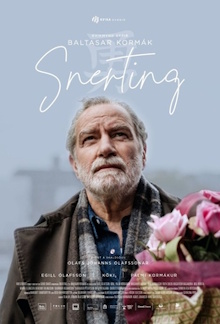
A Icelandic-Japanese film feels like an odd combination to me but it must have been natural for Ólafur Jóhann Ólafsson. This film was adapted from a novel by Ólafur and he in turn is an Icelandic businessman who helped create the original PlayStation while serving as the CEO of Sony Computer Entertainment. So this film spans both cultures across a gulf of some fifty years. It’s a heartfelt romance with an ending that is perhaps a little too perfect but it’s executed with so much finesse that I found myself being very much a fan.
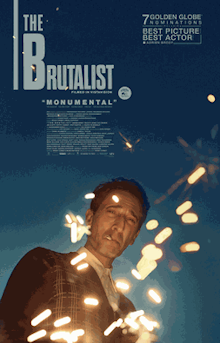
At over three hours long and with so many award nominations, this is a true epic, even the swelling music it opens with proclaims it as such. Given its premise, I’d expected it to be similar to a biography of an artist even if the character is fictional. Yet the film resolutely refuses to stay in that box, spends as much developing other characters as the protagonist and is barely about architecture at all. In the end, all is explained and I have to admire the director Brady Corbet’s unique artistic vision. But it feels like a bit of a bait and switch to me and so I’m not a big fan of this film.
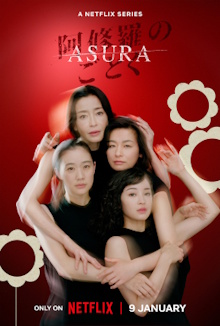
I’m not sure how or why a renowned director Hirokazu Kore-eda has the time to also make television shows but this is highly acclaimed and readily available on Netflix so I’m all for it. It’s a remake of a 1979 series and so is set in that year. The moment I read its premise about four sisters discovering that their elderly father is cheating on their mother with a mistress, I thought that Kore-eda is doing his usual theme of pointing out the failure of parental figures again. But it’s more than that as over the leisurely course of seven episodes, he is able to intricately map out the relationships between the sisters and their families.
As usual as I like to do a rundown on the scientific prizes every year because it’s downright criminal how little attention the announcements get. The task is a little easier this year because the discoveries they involve should be straightforward for the layman to understand.
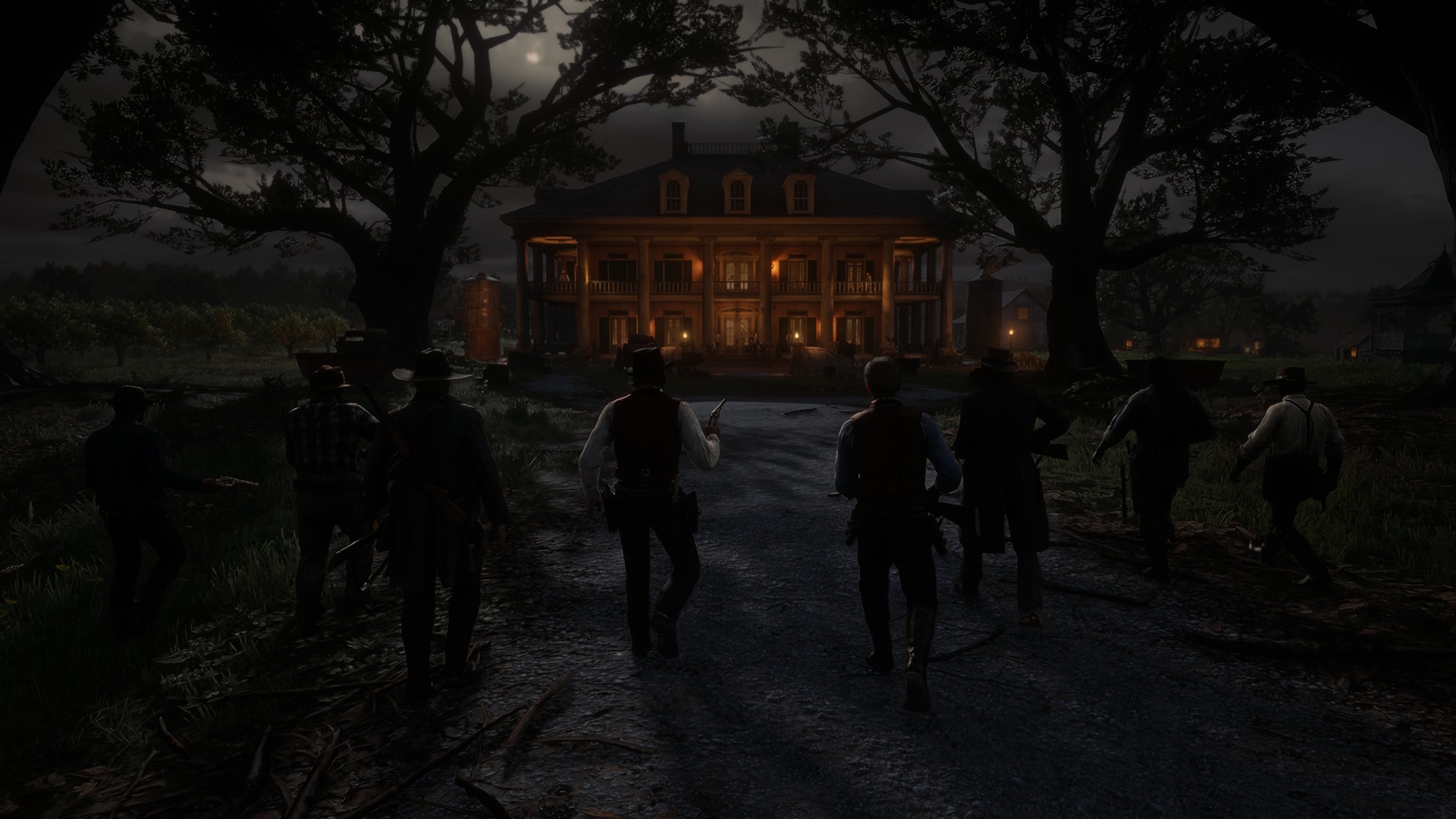
I haven’t been posting anything about games recently because I’ve been stuck for way too much time in the world of Red Dead Redemption 2. The first game was originally released in 2010 and I really wanted to play it but it was a PlayStation exclusive. It did eventually get a PC adaptation, in 2024, but the second game in the series arrived on PC first in 2019. Pure insanity. It still took a while for me to get around to playing this because it has rather hefty system requirements and I wanted to experience it at full quality. By now the game is old enough that it’s far from state of the art. Yet it’s still so gorgeous and detailed that it doesn’t matter at all and I’m glad I waited to play it.
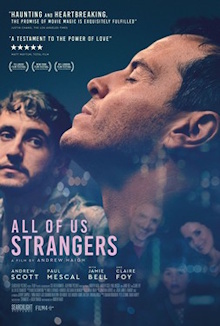
With a large, modern apartment tower overlooking London that is seemingly inhabited by only two people, this film aims to be disorienting from the beginning. When the main character visits his childhood home and seemingly meets his deceased parents, we’re not sure if all this is in his head or if there is a supernatural element. Eerie atmosphere aside, I loved how it perfectly addresses the question of what a person would say if given the opportunity to speak to their parents as a peer adult. There’s more to this with the gay aspect but the relationship with the parents is the best part and I’m sorry to say that the film is weakened by attempting to do any more than that.