I own a copy of the Twilight Struggle boardgame and though it mostly sits unplayed, I’ve always admired how it portrays real world history in terms of game mechanics. I was naturally intrigued when GMT Games later published a game about the US War on Terror using some of the same mechanics. This was long after I’ve stopped playing boardgames so I had to wait until this digital version to check it out. I had no illusions about the digital version being actually enjoyable as I know this should really be played against real people. I only really wanted to learn and understand the mechanics and in that I was satisfied enough.
This was made by Park Chan-wook and stars Tang Wei so we were always going to watch it. As expected of this director, it’s a tough film to talk about without spoiling anything important. I suppose it’s harmless enough to mention its dual murder structure and both are meticulously plotted out. Its heart though is a kind of mutual obsession that could be interpreted as love. This isn’t as striking and interesting as the earlier films that established Park’s reputation but I’d judge it to be a solid film and a worthwhile watch all the same.
This film was notable enough to attract the attention of international critics and it seems that the directorial duo of Julien Maury and Alexandre Bustillo have established a reputation for themselves in the horror genre. That’s enough for me to give this a chance but I don’t think it was worth it. The plot hook of clueless youths breaking into a haunted house is standard and while there is some startling imagery and interesting backstory, it’s barely coherent. Worst of all, there doesn’t seem to be any larger theme and not much point to the film at all.
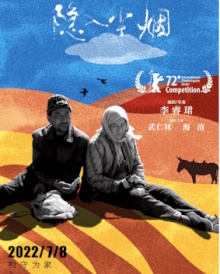
This was a low-budget art house film that did unexpectedly well at China’s box office and then seems to have been quietly censored. There was no official announcement but it was simply removed from cinemas and streaming services. On the face of it, there’s nothing in this very old-fashioned story of poor peasants in Gansu province that seems objectionable. Yet the abject poverty that it asserts continues to exist in the present day probably doesn’t accord with the Communist Party’s vision for China and its depiction of how government measures to alleviate poverty are instead often subverted for the benefit of the well-to-do probably doesn’t help. It’s too traditional and straightforward for me to really like but there’s something to be said about its plain simplicity.
Only a handful of news items this months but they’re all really critical ones.
The most important science event of the month is of course the announcement of the supposed room-temperature superconductor LK-99. This article serves as a good overview of what happened, beginning with the claim made by a team led by a pair of Korean scientists that they had discovered such a material. Specifically they claim that a form of lead apatite, modified according to a formula that they provided, could conduct electricity without resistance at ambient pressure and temperatures. Such a material would be the stuff of science-fiction with the potential to revolutionize countless fields. After the initial burst of enthusiasm however the consensus is now that the material doesn’t have the desired properties as efforts to replicate it have failed. There are plausible explanations for the observations made by the original team, including that it may be diamagnetic instead. Novel science might still arise from further study of the material but it seems this will not change the course of human development.
Anyone reading this will have seen the reports of how this is the hottest year on record ever and the spate of disasters a hotter climate has been causing all over the planet. Apart from the usual, one reason might be the end of an unintended form of geoengineering that helped reduce the planet’s temperature. It used to be that the fuel used in ocean-going ships contained sulfur but since 2020 regulations have cut sulfur pollution and improved air quality. However the sulfate particles also used to create reflective clouds that follow in the wake of ships and these helped to reflect sunlight and thereby cool the planet. The regulations therefore amount to a natural yet unintended experiment in geoengineering to prove that seeding clouds using sulfate particles does help counteract global warming even if it comes with other costs that we dislike.
Resistance to antibiotics in bacteria is another long-term problem that the world has to struggle with. While people intuitively understand how chance mutations can cause a bacterium to be more resistant to particular drugs, bacteria seem to be evolving resistance faster than this mechanism would imply. This article talks about another mechanism via the viruses that infect bacteria. It goes into detail about how this works in several different ways that I won’t repeat but the upshot is that bacteriophages can transfer the genes of one bacterium to another or even integrate their own genomes into that of their prey. This causes the genetics of the bacterial population to change faster than expected and explain why bacteria seem to evolve resistance to antibiotics so quickly.
Next we have a paper discussing how latent diffusion models actually work. These are the AI models that create images and just like the large language models that are used to generate text, researchers aren’t quite sure what’s happening internally within the models. This paper claims that the models, as part of the process of being trained, actually create internal representations of the geometry of scenes. This is despite the fact that the images they are given as training data contain no depth information at all.
Finally as a bit of more lighthearted science news, this talks about how scientists assigned to the remote outpost of Antarctica have developed a subtle yet unique accent of their own. The interesting part is that the scientists assigned there change all the time yet there is still enough carry over from group to group to create an accent as the isolated population there influence one another as they speak while having less interaction with the rest of the world.
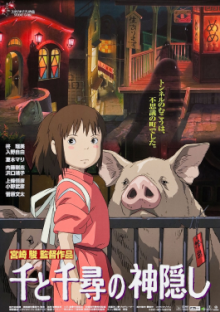
As promised, I’m beginning my tour of the Studio Ghibli classics and this one was picked simply because it’s available on Netflix. My wife commented that she didn’t really like this when she first watched it. It was of course ridiculously successful and critically acclaimed, yet it is in essence one long, dream-like adventure in a fantasy world of pure imagination. The art and the magical world it conjures into being are outstanding and it’s amazing how the film keeps surprising you with every new character and scene. Still, as with all dream sequences, you eventually start to wonder whether any of this matters and what it all means. I found the themes of being kind and admonishing against greed and waste to be fairly light and Hayao Miyazaki keeps repeating the same tropes, even if he arguably pulled it off best here.
Jordan Peele’s latest had much more of a mixed reception among critics and now that I’ve seen it, it’s obvious how much of a mixed bag it is. It’s some kind of horror science-fiction film with a Western aesthetic and is full of references to Hollywood. In fact, there are so many references that I’m sure I missed most of them. Peele does make it all work, somehow, and I found myself thoroughly entertained. I can’t even imagine what kind of a twisted mind he has to put this particular combination of elements together. The result is fascinating to contemplate but not something I personally like very much.