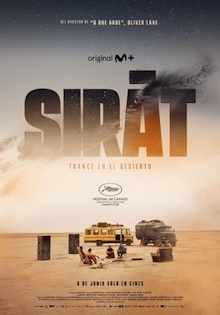
Whatever the results of the awards circuit, critics were more or less unanimous in pronouncing Sirāt to be the best film of last year. Freely shifting between Spanish, French, Arabic and English, this film defies genre expectations and has been described both as a road trip drama and science-fiction. To me, it is one thing above all, as pure a religious experience as you can achieve on film, without being explicitly about any religion in particular. It’s a stroke of genius on the part of its director Óliver Laxe to interpret the rave scene in this manner and I would agree that it’s the most outstanding film of 2025.
It hasn’t even been that long since the last time I played a 4X strategy game but this one has been sitting in my queue forever and I bought it back then because it was designed by Soren Johnson. This one innovates on the usual Civilization formula in two key ways. One is that its setting is only the ancient and classical eras, hence its title. Two is that you’re constrained by the number of orders you can issue each turn. The intent is to streamline the gameplay and it works. At the same time, there are so very many rules and interactions to learn. I believe that this may well be the most complex 4X game I’ve ever tried. It’s honestly overwhelming. I can see why fans who love optimize everything to the smallest detail love this. Me, I just feel that I’m too old for this much micromanagement.
It feels like Chinese cinema is on a roll in producing neo-noir crime films, or at least ones that share similar vibes. Only the River Flows is set up like a textbook murder mystery set in a rural town in 1995. But despite the lead detective’s diligence in following the clues step by step, the case defies all logical explanation until we begin to question if this is really a murder mystery after all. It’s no real spoiler to say that this one of those mind-bending films in which nothing is as it seems. It looks fantastic, the abstract themes are at least worth thinking about and yet in the end I feel cheated out of a perfectly good police procedural.
I’ve read about the controversies surrounding this film, how earnest its apparent antifascist take is for example, before I learned anything about its story. Now after watching it, I still can’t make up my mind and I wonder if it doesn’t matter at all. This is a frustrating film on so many levels as it builds viewer expectations towards a certain direction but then refuses to give us the catharsis we need. Still we can’t pull our eyes away from it though due to its spectacular action scenes and sheer bizarreness. I wouldn’t agree that it’s the best film of the year but it’s auteur film, that’s for sure.
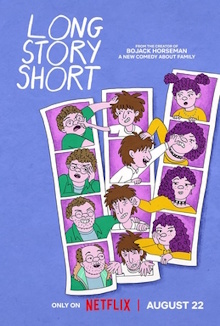
I liked BoJack Horseman enough to watch a couple of seasons of it and I thought this new show by its creator Raphael Bob-Waksberg might be at least a little similar, with less drugs and depression. In fact, this is a different kind of show entirely. While the characters have various kinds of trauma from their childhoods, it’s actually a very wholesome show with a strong focus on Jewish culture. I was a little lost at the beginning due to the very fast paced dialogue but by the end I was thoroughly in love with the characters and their family dynamics.
This has been a fairly explosive month in terms of science news because one particularly talked about paper. But that’s not the only thing we have this month.
That paper presents a massive study of ancient DNA from nearly 16,000 people across more than 10,000 years with a view towards identifying instances of directional selection. That is, a type of natural selection in which a gene confers a trait strongly enough that it makes a difference in survival and reproduction. The obvious example given is lactose intolerance after infancy. The dataset and the methods they developed are itself scientifically valuable but commentators have focused on the results so far. Many have assumed that natural selection has more or less stopped in the modern era as our technology and mastery of the environment has improved. This paper shows that natural selection has accelerated after the introduction of farming. Some seem logical such as immunity to HIV infection. Others seem counterintuitive, such as gluten intolerance spiking after wheat farming became widespread. This is just a starting point as this dataset only covers West Eurasia but it’s understandable why this one paper has led to so such heated discussion and debate.
A more depressing and yet completely predictable finding is the paper claiming that perhaps half of all results published even in reputable journals in the social sciences can’t be replicated by independent analysis. It’s another nail in the coffin of the reproducibility crisis. What’s even more depressing is that they’re not actually redoing entire experiments. Just reanalyzing the supplied data to confirm the results. If they actually start collecting fresh data for themselves, I’d bet even few papers will be replicated.
The next paper is personally fascinating to me. It provides evidence that depressed people have a pessimistic bias against future positive events. I found this result validating because they usually claim that they’re just being realistic and see the world more accurately. The methodology they used is brilliant too. They asked the participants to predict what would happen to them in their personal lives in the near future, then checked back later to see how their predictions held up. Interestingly the depressed could be convinced that they were wrong and adjust their attitudes but this new optimism was fragile and they tended to return to their previous pessimism soon.
Moving beyond human concerns, here’s a cool paper that tries to nail down some details of the communication of sperm whales. It adds to the growing body of knowledge that not only do the codas, or series of clicks that they use to communicate, resemble human vowels acoustically, their patterns also seem to parallel the phonetics and phonology of human languages. We’re not yet at the stage where we can understand what it is that they are saying to each other but that we might be able to one day is scary enough.
We end with a fun bit of science news that is not biology. CERN recently carried out an experiment that involved transporting antiprotons in a truck across their site. The extremely volatile material is stabilized in a portable cryogenic trap and the distance involved is short but it does let them claim to be a world first in achieving such a feat. It’s a bit of news that would excite science-fiction fans as this is after all antimatter that annihilates on contact with ordinary matter which would happen if the trap fails. But as there are only 92 antiprotons involved, the theoretical energy released would only be about that of a small static electricity spark.
I’ve skipped over so many of the Predator and Alien films that I have no idea what’s going on in that cinematic universe any longer. I opted to watch this one because it was directed by Dan Trachtenberg who made the excellent Prey. The twist here is that the protagonist is a Predator for the first time, teaming up with human-made synthetic to survive on an alien planet. It’s okay enough as an action movie but has too jokey a tone to carry any emotional weight and the predictable lesson of protecting each other belongs more in a Disney feature than a Predator movie.