You Are The Apple of My Eye

If you’re Chinese, you can’t help but be inundated by posts about how innumerable Facebook friends were moved by You Are The Apple of My Eye and how it left them teary-eyed. Clearly it does something right. It’s been a chart-topper in every Chinese-language market it has been released in and made instant stars of its two leads. So my wife was understandably insistent that we watch it, which we did this weekend.

I think it’s won’t be a surprise to readers of this blog that I don’t think very highly of this film. Teen love movies are a well-worn genre after all and unfortunately this film does nothing to break new ground. In fact, all too often director Giddens Ko falls back on familiar, overworn tropes. In fact, he explicitly lampshades it, ‘this is the fat friend, this is the joker friend, this is the plain girl who is the heroine’s constant companion’ because, you know, every teen love movie needs one of each.

Continue reading You Are The Apple of My Eye

Midnight Riot

Midnight Riot is a book that I picked up as light reading from book recommendation threads on QT3 and Broken Forum. I had some trouble finding information about it on the net and later discovered that this is because it was originally published as Rivers of London is the UK but its US publishers chose the title Midnight Riot, probably because the original name sounded like a boring treatise on British geography. The Americans also changed its cover, creating controversy by choosing to depict the lead character in silhouette. The critics claimed that this was to hide the fact that the protagonist is of mixed race, which would supposedly turn off would-be buyers.

Anyway the book’s back blurb describes it accurately as what would happen if Harry Potter grew up and became a policeman in the UK. Peter Grant, a young constable who has just completed his probation, seems set on a boring career of pushing paper at the Case Progression Unit, when a chance event alters the course of his life. He is standing guard at the scene of a seemingly random act of murder when an eyewitness comes up to him with critical information. The witness turns out to be a ghost, the uncanny nature of the case gets it referred to Detective Chief Inspector Thomas Nightingale, who is the sole member of the London’s Metropolitan Police to specialize in magical crimes, and Grant becomes the first officially sanctioned wizard’s apprentice in Britain in 50 years.

Continue reading Midnight Riot

Recent Interesting Science Articles (May ‘2012)

I’m getting an early start on this month’s installment of this regular feature. I’m really digging how this new abbreviated format allows me to burn through more articles in a succinct fashion. Here goes:

  • The first article is actually a post on Robin Hanson’s blog Overcoming Bias who points out that stories, both the telling and enjoyment of them, has interesting and unexpected effects on a person’s outlook on life. In particular, enjoying fiction seems to, in a sense, cause us to buy into the fictional world with its sense of poetic justice and ethical norms. So we believe the world to be more just and less impersonal than it actually is and behave accordingly. Hanson further speculate that this is a benefit that religions also share, regardless of the underlying truth of that belief.
  • Next we have a real-life, honest-to-goodness version of Robocop. This Phys.org article talks about how South Korea is testing robotic guards in one of its prisons. The robots are equipped with a wide variety of sensor devices and software that helps determine the behavioral characteristics of inmates. They are capable of autonomously patrolling the halls of the prison and are supposed to alert human operators if they detect anything out of the ordinary. They’re not armed yet but it seems the next plan would be to get the robots to perform body searches, looking for hidden and improvised weapons in particular.
  • Next we have an article about a study confirming something that all dog owners already suspect to be true: just as people yawn when they see and hear other people yawn, so do dogs. This article from The Washington Post covers research which shows that not only do dogs yawn when they hear humans yawning, they are more likely to do it when they hear a person whose voice they recognize yawning.
  • Online learning is all the rage these days and I’m currently taking free courses for fun from coursera.org myself but the effectiveness of such computer assisted learning is understandably a big point of contention within educational circles. This article from Inside Higher Ed looks at an experiment that compared the results of students who studied in the traditional way with lectures from a live instructor and students who studied using a hybrid format devised by Carnegie Mellon University’s Open Learning Initiative. This involved a mere one hour of live instruction per week with the rest of the time spent on an artificially intelligent learning platform working through lessons and exercises. The results were pretty shocking: the students using the hybrid format needed only about one quarter of the time to obtain the same results as those using the traditional format.
  • Modern animal researchers are very careful about anthropomorphism, that is explaining animal behaviors through the lens of human experience but as this article from the BBC indicates, for some animals this is actually warranted because they really are so alike to humans. Chimpanzees and orangutans it seems are so similar to humans, due to our shared evolutionary history, that not only can each animal be said to have a distinct personality but their personality types are similar to those of humans. This is after carefully controlling that human observers aren’t projecting human biases into their observations.

Driverless cars

For a while now, I’ve been talking about how public transport should work ideally in private conversations with my wife. This is because I think privately owned motor vehicles are terribly inefficient. They’re idle the vast majority of the time, they transport too few people for the road area they occupy and consequently waste too much energy. I for one was shocked when I first learned than more than 50% of the area of a typical city is devoted solely to roads. But in practice, privately owned vehicles are so convenient compared to the alternative of public transport that, except for the very densest of cities, they’re the method of transportation of choice despite their inefficiencies.

So all this has remained my personal pet peeve. (I guess I’m also personally biased against cars because I dislike driving.) Until now, at least, because with the advent of Google’s driverless cars, suddenly my vision of an efficient public transport system now seems almost like the inevitable future. Some relevant links to consider:

  • This news item about Google being granted a license to operate driverless cars in the state of Nevada early this month kicked off a lot of articles and blog posts about the effects this development will eventually have.
  • This article about a reporter’s account of being transported in one of Google’s cars reveals that a lot of work remains to be done. Google’s engineers wouldn’t allow the car to be driven away from the fixed routes it was trained on and the computer handed back control to the humans at a few moments when it was unsure about what to do.
  • Still, it does seem that the kinks will be worked out eventually and this blog post points out how the widespread deployment of driverless cars could drastically reshape our urban geography.

Of course, driverless cars would also alter our lifestyles. Freed of the need to pay attention to the road, time spent in transit would be extra time to spend as you wish, whether working, reading, watching videos or even sleeping. I predict that with transport becoming vastly more efficient, this would drive down transport costs and raise effective standards of living. And of course, cities would be more beautiful and more pleasant to live. This truly would be the next revolution to look out for.


 

7 Tips for successfully invading the Earth

One thing that I didn’t like about The Avengers is how the alien invasion at the end is yet another half-assed one without a chance in hell of actually succeeding. As one QT3 poster put it, “How did they expect to conquer Earth with a few hundred guys on flying motorcycles?” Never mind the Avengers, the US military would be more than sufficient to repel the so-called invasion once it had enough time to organize and deploy. And this is with real-world military assets, not the fancy toys SHIELD has. In the interests of one day seeing a halfway competent alien invasion plan put on screen, here is some advice for would-be alien invaders:

  1. So the portal is the only way for your forces to get to Earth. This means that your entire plan hinges on defending that portal and keeping it open. Randomly scattering your advance forces around the arrival area is a terrible idea. Terrorizing unarmed civilians serves no strategic purpose and therefore wastes time and troops. Instead, you need to secure your beachhead. Establish a strong defensive perimeter around the portal and launch assaults only against enemy forces that are intent on seizing control of the portal.
  2. Once your beachhead is secure, you need to identify longer-ranged threats. Yes, the Avengers are a clear and present danger. But their military value is insignificant compared to human weapons launched from way out of visual range which can decimate your entire force in a matter of moments. This means casting a sensor net widely outside of your landing zone and preemptively striking at enemy forces that are a threat, such as that cloaked helicarrier with nuclear-armed fighters.
  3. When invading a hostile populated planet, it is imperative to invade with overwhelming force. The aliens did not employ overwhelming force. Their pathetic weapons appeared limited to visual range only and their largest war machines relied on physically running into objects to cause damage. That is terribly impractical and tactically worthless. Where were the alien equivalents of bombs, artillery and cruise missiles? In fact, given that collateral damage wasn’t a concern for the invaders, why not just saturate the target area with lots and lots munitions before the first soldier even stepped through the portal? If brute force doesn’t work, then you’re not using enough.
  4. For that matter, why are you using an infantry heavy invasion strategy? They’re soft and have limited offensive power. Where are the alien tanks (remember US M1 Abrams tanks have an effective killing range of over 2.5 km, you need to have better performing equivalent tanks) and the alien fighter craft? Leave the infantry at home, at least until you’ve established secure control of a decent chunk of the planet, and bring only the big guns. Use infantry to police the local population only after organized resistance to your conquest have been decimated.
  5. Do not, repeat do not, run your entire command and communications system out of a single base, no matter how powerful and impregnable you think it is. If destroying your mothership shuts down your entire invasion force, then you’re doing it wrong. Always have back up command posts. In any case, deployed units that are cut off must be able to function autonomously based on last received orders and reports until the command hierarchy can be re-established.
  6. Defend your high-value assets, such as motherships, in depth. Employ screening elements so that enemy forces must go through them to reach your mothership. If your mothership lacks even basic defensive mechanisms that allow it to detect and intercept incoming hostile projectiles, well, you really should build some in before kicking off the invasion.
  7. If your enemy has nukes and you do not possess weapons of at least equivalent potency, I’m sorry but you lose. If you do not possess a technological edge over the enemy planet, then you shouldn’t be invading in the first place. In fact, you should be prepared to be invaded instead. And if they have nukes and you don’t and their nukes can kill anything and everything you have, believe me, you do not possess a technological edge no matter how scary you think your flying worms are.

Hopefully with the help of these handy tips future alien invaders will give a better go of it so that our heroes can finally have some serious enemies to fight.

Avengers

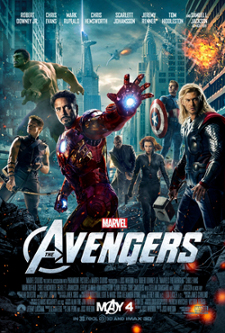
About four years ago, I wrote about this being the golden age of superhero films. I can now say with confidence that the golden age has reached its zenith with The Avengers. Yes, other films like Christopher Nolan’s Batman series and Watchmen have shown that superhero films don’t necessarily have to be mere action movies, they can aspire to be something more. But it’s obvious that with modern film-making techniques that allow anything at all that we can imagine to be put onscreen, action films and the superhero genre are a match made in heaven. And as Davin Arul of The Star has commented, it’s hard to imagine a more perfect superhero action film that this.

Continue reading Avengers

Recent Interesting Science Articles (Apr ’12)

No less than five articles this month! I’ve been a little busy bee, especially with moving into a new house and all.

  • Jon Stewart commented that you rarely see a headline in 2012 that sounds like it should be a headline in 2012 when you were just a kid. This is of course apropos of the asteroid mining plan announced by space startup Planetary Resources. There are lots of articles on this all over the web but this one from Forbes talks about the firm’s plans to be cashflow positive even though no actual mining will happen for more than ten years at least. That makes it sound a bit more real and less of a pipe dream, even if it is backed by Google’s founders and the creator of Microsoft Office.
  • The wise old mentor is a trope that everyone knows, but is it true? Does age actually confer wisdom? Inasmuch that wisdom can be quantifiable, researchers from the University of Waterloo, Canada, has attempted to verify just that, as detailed in this article from The Economist. The results are nothing short of astonishing. North Americans do appear to gain wisdom with age, but the Japanese appeared to be nearly as wise as wizened North Americans even when young and their wisdom scores never varied much with age. This is just the sort of finding that calls for lots more cultural study.
  • When I was studying in France, my French language professor liked to comment about how the Chinese can say so many things with so few words. This is because each syllable in the Chinese language is unusually dense with information, possibly because of the different tonal variations possible. This Scientific American article shows how to correlate this fact with another observation: different languages are spoken at different speeds. It turns out that while each syllable in Chinese is packed with more information than the norm, the Chinese language is also one of the slowest spoken languages, so its overall information transmission rate still roughly matches that of other languages. In the same way, languages which are spoken very fast, such as Spanish, have less information per syllable.
  • Ever since buckyballs were invented in 1985, it was hailed as a game-changing revolutionary material and science writers loved to hype it up. I suspect that it’s at least partly because using the word buckminsterfullerene in print is so fun. Until very recently however, very few practical applications have been found for its unusual properties. This blog post points at a completely unexpected use for it. A team studying the long-term toxicology effects of the molecule by giving it to rats in a solution of olive oil not only found it to be completely non-toxic, it actually extended the lifespan of the rats by some 90% making it the most effective life-extension treatment ever found for rodents. Now, that is game-changing indeed.
  • On the astronomy front, a huge new discovery about what surrounds the Milky Way is new reason to think that the mysterious dark matter might not exist after. Dark matter was posited to explain why the relatively sparse matter that we can observe is far less than the mass that the universe needs to have. It turns out that we simply haven’t been looking hard enough. This news release from the AlphaGalileo Foundation trumpets the discovery of a vast structure of satellite galaxies and clusters of stars that surrounds the Milky Way. I guess space just isn’t that sparse after all.

The unexamined life is a life not worth living