Recent Interesting Science Articles (August 2012)

Participating in the Coursera online courses is keeping me busier than I’d first thought, but I still had time to read up on science-related stuff.

  • Ever wondered while on a journey why the return trip always feels like it passes more quickly than going there? According to this article in The Irish Times, this is due to how our psychological perception of time differs according to circumstances. The article calls this an act of retrospective timing. That is we try to estimate how much time an event took after it has already passed from memory. However, this is done by recalling the information we stored during the event, and the more information we stored, the longer the duration we perceive it to have taken. This means that when we’re first traveling to a new place, we have all sorts of new data to absorb and store, but during the return trip, most of it will have become familiar already. Hence we perceive the outbound trip to have taken longer than the return trip.
  • Along with video-gaming nerds, comic books fans have long been relegated to the depths of otaku social outcasts. But this article from The Pacific Standard talks about closely identifying with a superhero may have measurable positive effect on their bodies. A study invited undergraduates, male ones only, to state how familiar they were with Batman or Spiderman and went on to query the students about how they felt about their bodies. Those who did identify with one of the superheroes not only felt better about their bodies, they were also able to demonstrate measurably greater strength, especially when they were shown pictures of a more muscular version of the superhero in question.
  • This next link seems to be down frequently but it’s such an interesting article that I just had to link to it. It appears on the Psychology Today website and talks about the Baining, an indigenous group of Papua New Guinea, who have the distinction of being known as one of the dullest people on Earth. They apparently have nothing in the way of the usual cultural accoutrements such religious rites, myths, festivals etc. and discourage playful of any kind, even among their children. The only thing they have going for them is work and they value all products and activities that are associated with useful work.
  • Finally an article about the Curiosity rover currently on Mars. It’s from The Atlantic and it reveals how the engineers at Jet Propulsion Laboratory built in a little Easter Egg. Specifically the vehicle’s treads are designed to spell out in Morse code the initials J-P-L as the robot slowly makes its way across the red Martian soil. That is such a geeky thing to do I just had to include it here.
A logical puzzle

I’ve been remiss in writing for this blog because I’ve been busy with the courses I’ve been taking on Coursera.org. Currently I’m taking both Introduction to Finance and Algorithms. The Algorithms class is particularly challenging for me and involves significant work because there’s a programming assignment each week. It’s taught by Robert Sedgewick of Princeton, who is something of an authority in the subject. Interestingly, Sedgewick’s own doctoral thesis advisor was Donald Knuth, who is of course a legend in computer programming circles.

Anyway, just for fun, here’s a logical puzzle from a recent assignment for you to ponder over. I’ve converted it into a puzzle to make it more accessible, no actual programming necessary, but the essential logic of the problem remains the same.

Let’s say that you’re working at a booth of some sort and you have only one task. A client will come up to your booth and announce a number. Call this number k. This number represents how many items you will need to hand back to the client at the end of each task. The client then starts handing you items, let’s say they are beach balls, each of which are uniquely identifiable, one at a time. The client never tells you how many balls there are in total. He or she just starts handing them to you, one by one.

At some point, the client will announce that he or she has finished handing over balls. Now your job is to return k balls, selected with uniform randomness from the balls you were just given, back to the client. Sounds easy right? But here’s the constraint. Your booth can only store k balls at maximum. That is to say, you can only hold as many balls at a time as the number of balls you need to return to the client at the end of the task. You may choose to keep or discard any ball but once you choose to discard a ball it is gone forever and you can’t ever get it back.

So how do you ensure that you can select k number of items with uniform randomness, out of a pool of potentially many more items, while being restricted to only holding k items at a time?

“Curiosity has landed” video

Ok, this totally breaks this page’s formatting, but what the heck. Forget the Olympics. This is the greatest spectacle going on right now and it’s not even on Earth. Yes it’s a CGI rendition instead of real imagery but what do you expect about something going on on Mars? The landing procedure is the stuff of science-fiction.

Recent Interesting Science Articles (July 2012)

July 2012 has been a less awesome, insofar as science articles go. I guess things do slow down in the summer.

  • This isn’t the first article about empathy for humans as displayed in dogs that has appeared in this blog, and it won’t be the last! This article from The Economist covers experiments performed to see if dogs can really perform actions out of empathy for the perceived suffering in humans, as opposed to acting out of curiosity. This was done by observing the behavior of dogs when alternately encountering a human crying and exhibiting other signs of distress or merely humming. They also alternated between using a trusted human for the dogs and a complete stranger. The results were that the dogs could indeed recognize distress in humans and react by whining, nuzzling, licking, and fetching toys for the human perceived to be suffering. They did this to the suffering human even if he or she was a stranger and their master was in the same room, indicating that it was the comfort of the suffering human that they sought rather than their own comfort.
  • Just last month I had an article talking about how more modern pop music is getting sadder and sadder while becoming more emotionally ambiguous. This month I have a new article from Reuters making a different claim: that pop music is getting louder and louder, while at the same time becoming less diverse with a more limited variety of sounds. They’re not directly contradictory but they are odds enough that the two teams should probably have a good long discussion with each other about just what is going on.
  • This next one is cheating a bit as it’s more of a demonstration video than a science article. Its about the color shifting abilities of a species of cuttlefish in Australia, Sepia plangon. Nothing new, you say? Except that this one is not only capable of shifting its colors, it can apparently shift each side of its body to a different color scheme, in this case, mimicking a female with half of its body and a male with the other half. This demonstrates not only as astounding level of control over its own colors but also an awareness of just who is looking at it from each direction.
  • Ever wondered while walking in the rain if it would be more effective to run through the rain or walk steadily through it to minimize wetness. I did and judging by the contents of this Washington Post article, I’m not the only one. Intuitively, running is better to minimize your time spent in the rain but at the same as you travel fast, you run into more raindrops in your path. Walking steadily increases your exposure time, but you present a small target and you don’t walk into raindrops. The paper summarized in this article concludes that for most cases, running is best but the true answer really depends on your body shape, the direction of the rainfall (vertically or at a lateral angle), the angle of the path you are traveling across and so forth. It is truly a profound topic.
  • Finally, no rundown would be complete without the biggest scientific news of the month: the confirmation of existence of the Higgs boson at the Large Hadron Collider. There are many articles about it on the web but I’m partial to this one from the BBC. There are no practical applications for this but it is pretty solid confirmation of the Standard Model of physics.

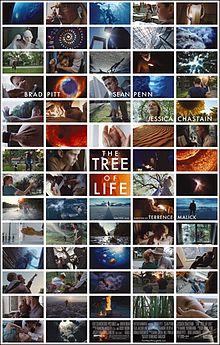
The Tree of Life

Back when I started my series of “Favorite Films” posts in 2007, I took extra pains to define what that title meant. It isn’t sufficient for a film to be merely entertaining and likeable. A film must pass that test, I thought, but more than that it must also aspire to be a work of art. Either by conveying a profound meaning or by expanding the vocabulary of cinema through innovation.

However I failed to consider that it might be possible for a film to fail the first test but completely blow the competition out of the water on the second. For this reason, Terrence Malick’s The Tree of Life is in a class of its own. I do not find it entertaining. Yes, it is utterly captivating to watch but it is also so intense that it is too mentally exhausting to be considered entertaining.

Continue reading The Tree of Life

Recent Interesting Science Articles (June ‘2012)

It’s time for our monthly round-up of the coolest, most fascinating science articles of the previous month and June 2012 has been an especially bountiful month in that regard. So here goes:

  •  How exactly does mainstream pop music evolve over time? This article from the Pacific Standard summarizes research demonstrating that on general pop music has been getting sadder and sadder over time. This is reflected not only in increasingly negative lyrics but also in the slower tempo and music with mixed emotional cues.
  • The next article belongs in economics which many dispute is really a science at all, though I tend to disagree. This one is from the Library of Economics and Liberty and talks about how employers in different countries are averse to firing workers in different ways. The survey finds that there are two extremes, reflecting the different values of the countries involved. The Anglo-American business world likes being efficient, even if that means ruthlessness. They are more likely to fire expensive, middle-aged workers with middling performance. The Germans are more sympathetic towards middle-aged workers, preferring to fire a younger worker with comparable performance even if his wages are cheaper.
  • The Economist has an article on a subject that Thomas Kuhn would no doubt heartily approve of: it is dangerous to generalize findings in experimental psychology too widely. This is because a lot of such research uses test subjects that fall into the same demographic category which the authors of the paper being cited have summed up in a media-savvy acronym: WEIRD. This stands for White, Educated, Industrialized, Rich and Democratic. To solve this, the authors have tried to use crowdsourcing to open surveys to a wider group of participants and since there seems to be an infinite supply of people willing to work for next to nothing on services like Amazon’s Mechanical Turk, it’s dirt cheap too.
  • Normally the articles I like to select about new scientific discoveries rather than the latest technological gizmos. Gadgets are cool and all, but the years and years of research behind the principles that make them work are the really intellectually interesting part in my opinion. But I make an exception when it’s something that could open up cybernetics in a big way as this article from ExtremeTech explains. It’s an implantable fuel cell that generates electricity from the glucose in the human body. Once installed it can generate electricity indefinitely to power any other cybernetic implants you might have. Heck, there’s no reason why you couldn’t have an external port built into your body to charge your mobile phone or similar device with it. The only cost being that you might feel the need to eat a bit more than usual.
  • The Turing Test is a well known test to determine the quality of an AI by engaging it in conversation. This article, again from the Pacific Standard, can be thought of as a variation of that. Can sophisticated, specially trained music aficionados tell the difference between a composition that is written by a human and one written by a computer program? It turns out that they can’t as a blind survey of musically knowledgeable listeners revealed that they found computer-composed works just as appealing as those written by real humans.
  • Finally just for fun, this article from the Mail Online covers one of the greatest scientific achievements of humanity: the Voyager 1 space probe that was launched in 1977 is now leaving the solar system. Incredibly it is still in contact with NASA, despite a communications delay of 16 hours. We probably shouldn’t expect it to be able to keep that up for long once it enters interstellar space.

Assorted links

Every month I read tons of articles online and save the science ones for my monthly features. I happen to have found too many cool articles this month and since some of these aren’t science-article, I thought I’d throw in an assorted links posts for them. Here goes:

  •  Google gets involved in a lot of odd projects that on the face of it have little to do with their primary online search business. Well, this one may just be the oddest of them all. This article from The New York Times talks about how a Google laboratory cobbled together a machine-learning neural network from 16,000 processors and set it to the task of watching cat videos on YouTube. Result: a neural network that is really, really good at recognizing cats no matter what their size, shape or color and no matter what the cats are doing. Cue jokes about why Skynet wants to kill all humans.
  • The next article is notably mostly because of how well it lends itself to jokes. It’s America’s hottest new export and it’s man-made! Talk about gross national product! Erect a new future today! America is in good hands! Follow the link to this The Daily article to find out what it is.
  • Okay, so everyone know the Japanese are crazy about giant mecha but this post on the Anime News Network shows just how crazy that can be. Some quarters in the Japanese government are looking into the feasibility of building piloted walking combat robots and two members of the Liberal Democratic Party claim that they working to include realization of a Gundam Development Project into their manifesto.
  • This last one isn’t a joke and will likely be of interest only to Malaysians. The listing of Felda Global Ventures Holdings Bhd. (FGVH), effectively the third largest oil palm company in the world, has hit headlines due to being the second biggest IPO this year, after Facebook. This investor’s report from a Netherlands-based analyst makes for an eye-opening read since it goes far beyond FGVH’s financials into the history of the Felda project, its links with key government officials and why the settlers are so opposed to the IPO. It basically tells global investors to stay away because it’s a gigantic scam due to poor expected returns and undisclosed political risks and further argues that investing in it would be unethical as the IPO directly undermines Malaysia’s fledgling democracy.

The unexamined life is a life not worth living