Interesting links

I’m leaving on holiday to Taiwan soon and will be leaving my job after that. This means that this blog will probably be updated only intermittently while I’m a in transition phase. In the meantime, here are a few links to some of the most interesting things I’ve read recently.

  • As everyone knows by now, the Rapture did not in fact arrive on schedule. Or perhaps it did but no one, including the folks from Family Radio International who so hyped up the event, was judged worthy. The station’s owner and preacher Harold Camping has since come out with a statement claiming that he’d made a mistake. May 21st was merely the spiritual Judgment Day during which God evaluated everyone’s souls. But the judgment will actually be executed only on October 21st, five months from now, triggering the end of the world.
  • Thankfully Malaysian high schools are nothing like the hellholes that public US high schools seem to be but thanks to American shows and movies, we have a decent idea of what they’re like. One aspect of the US high school experience is how students are segregated into different groups that are organized into a hierarchy that revolves around popularity. This extended essay examines why nerds in school, who are consistently found to be smarter than their peers, are consistently among the least popular students and comes up with some interesting insights.
  • Many vegetarians don’t eat meat because of the perceived moral issues involved in killing an animal for food. What if meat no longer had to obtained by butchering animals? What if you could simply grow the meat in a test-tube? This article looks at how meat could be grown by immersing stem cell samples in nutrient-filled petri dishes, and then moving them into scaffolding platforms to get them to grow into muscle tissue. If this gets off the ground, not only will it dispense with the moral issue of eating animals, it will also be a far cheaper and more environmentally friendly way to farm the meat that we so crave.
  • When I mentioned on QT3 that Ted Chiang had never published a novel, a fellow fan was quick to correct me. Actually, it’s more like a novella than a novel, but you can judge for yourself since The Lifecycle of Software Objects is now freely available to be read online. To be honest I find it to be the weakest of Chiang’s works I’ve read and it’s really more of an essay presenting many different insights and ideas about conscious software as pets and children than a novel. The central thesis is that you can’t create an artificial intelligence by writing an algorithm and running it iteratively until it reaches sentience. Instead, you need to nurture it just as you would a pet or a child, patiently teaching it and allowing it to have a variety of different life experiences to enable it to grow.
  • Finally, just for Malaysians, here is a link to the latest report on house price indices for Malaysia, updated for the first quarter of 2011. Some very tentative conclusions are that overall house prices in Malaysia are still increasing and especially prices for terrace houses in the Klang Valley are still holding up. But prices for high-rises in the Klang Valley is stagnant and has dropped for Malaysia as a whole. Condo prices in Penang in particular seem to be dropped significantly and the index has dropped to 2009 levels. This is especially illuminating since I’ve heard many people complain about very low occupation rates for condos in Penang despite the high prices. As always, a single quarter’s worth of data is not proof of a developing trend and should be taken with the usual grain of salt.
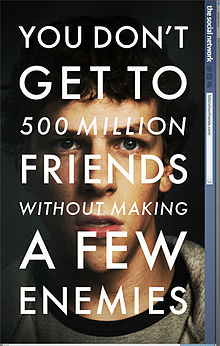
The Social Network

Near the end of The Social Network, Mark Zuckerberg is worried that the legal proceedings are making him look like the bad guy. So the young lawyer played by Rashida Dati (whom my wife and I have come to know from watching the US version of The Office) assures him that whenever emotional testimony is involved in a case, she automatically assumes that 85% of it is exaggerated and 15% of it is pure perjury. As strange as it seems, all clues point to the writer deliberately inserting this phrase to refer to the film itself.

I’d put off watching this for a very long time even after reading numerous favorable reviews of it. I kept thinking, “It’s a movie about a kid in college building a gigantic social networking website. How entertaining could it be?” I was wrong because this turned out to be one of the most riveting and entertaining films I’ve watched in recent memory. But a quick check on Wikipedia suffices to reveal that it achieves this by the simple expedient of taking tons of liberties with the facts. Even its writer Aaron Sorkin admits that he wanted to tell an interesting story first and foremost and this film isn’t meant to be a historically accurate documentary.

Continue reading The Social Network

Property prices in Malaysia and economic forecasts

Please take this entire post with a huge grain of salt. I am not an experienced investor and I have no special knowledge of the local market. Plus I can and have been spectacularly wrong. So this is all just amateurish speculative musing. Also, this is mostly written from the perspective of a property investor. If you’re buying something to stay in yourself, you can rarely go wrong so long as you’re happy with what you’re buying.

The talk of the town lately is the ongoing boom in residential property in the Klang Valley. No one in KL could possibly have avoided noticing that double-storey terrace houses in desirable areas are now in the RM700k to RM800k range. That is up from around RM500k just two to three years ago. And prices are still going up with no end in sight. Despite recent moves by Bank Negara to curtail lending for property purchases by limiting loan amounts to 70% of the value of the third property and above, lending has actually increased in the first quarter of the year.

Continue reading Property prices in Malaysia and economic forecasts

Recent Interesting Science Articles (Apr ’11)

Three articles this month and all of them are from the softer side of science. One is about how doctors choose treatments for patients. The next one is a groundbreaking new study on the origins of language. The last one is a study confirming the widespread hunch that more education leads to less religion.

The first article covers a recent survey by researchers from Duke University which asked doctors how they would choose treatments for themselves and compared the results against what the doctors would choose for other patients. The survey found that when choosing treatments for other people, doctors tried to minimize the risk of death as much as possible, even if the treatment involved the risk of long-term complications. When it came to themselves however, doctors were much more willing to risk death if it meant avoiding medications with side-effects.

Continue reading Recent Interesting Science Articles (Apr ’11)

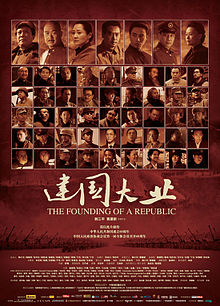
The Founding of a Republic

My experience of writing a game diary for Hearts of Iron 3 prompted me to do some extensive reading on the Chinese Civil War and the early years of the People’s Republic of China. Naturally, this led to seeking out and watching The Founding of a Republic, the 2009 historical film made to mark 60th anniversary of the country. So who says that videogames aren’t educational?

There is no doubt of course that this is a propaganda film. It was explicitly commissioned by the China’s film regulator and made by a state-owned film company. It’s main claim to fame outside of China is that it features dozens of celebrities, albeit mostly in very minor roles, all of whom worked for free, no doubt out of a sense of patriotism, or maybe just out of fear of causing offense and missing out of paid gigs. Yet within China itself, it has established itself as the highest grossing domestically produced film, suggesting that despite being propaganda, it is not entirely without merit.

Continue reading The Founding of a Republic

Interesting links for further reading

Due to a combination of various factors including illness, an unexpected holiday and an abnormally slow Internet connection, I have been remiss in writing new posts this week. Here are a few links to some interesting items to tide you over:

  • China’s State Administration of Radio, Film & Television has effectively banned all plots involving time travel from films. The stated reasons are that such stories treat history frivolously and disrespectfully and time-travel itself is unrealistic bad science. The suspected real reason is that China does not want people to compare the society that they have now with living conditions in the past. I’d also hazard that China feels uncomfortable about exploring “what if” historical scenarios. Additional fun fact: the Hearts of Iron games are also banned in China because it depicts places like Tibet, Shaanxi, Yunan etc. as independent states.
  • Iphone and ipad users should be careful. Apparently Apple has been secretly tracking the movement of users of the devices. The devices seem to automatically log its geographic position together with a timestamp at irregular intervals and save the data to an internal file without asking permission from owners or telling them that it is doing so. As many Internet pundits have noted, if you’ve been having an affair or lying to your employer about where you have been, a look at the file will reveal all your secrets.
  • In the latest of many pages on the sins of the Catholic church, an investigative reporter has written a new book alleging that thousands of Vatican-based priests have illicit sexual relationships. The book tells stories of priests having families complete with children in secret, of paid sex with escorts and of gay priests partying in nightclubs in Rome. It also cites research alleging that up to a quarter of Catholic priests in the US are involved in heterosexual relationships with women. My take: it’s not the sex that is offensive, it is the hypocrisy that rankles.
  • Finally, I recently learned that Ted Chiang has a short story available for reading online. Exhalation was apparently made available for free when it was nominated for the Hugo Award for 2009. It won incidentally. It’s a fantastic story that successfully paints a picture of strange society of alien within just a few succinct paragraphs. Ted Chiang is probably my favorite writer of short science-fiction right now ever since Greg Egan’s quality dropped in the 2000s. My favorite story of his however is still Story of Your Life which examines free will from the perspective that language determines thought.

Fake eggs

I’ve been amused by the recent news reports of fake eggs in Malaysia, which were supposedly imported from China. By now, the Veterinary Services Department has announced that the eggs are actually real, albeit low-grade ones that aren’t supposed to be sold to the general public. But the Consumer Association of Penang continues to insist that at least some of the eggs are fake. All this is despite an earlier announcement that Malaysia does not actually import fresh eggs at all from China.

So what prompted all this? My guess would be that someone noticed some odd looking eggs in a shop, recalled reading the widely e-mailed news reports of fake eggs from China from about 3 to 4 years ago, and put two and two together. But were those reports credible in the first place? My curiosity piqued, I set out to do some serious Googling.

The gold-standard in websites exposing scams and hoaxes of all sorts is of course Snopes, but unfortunately they don’t appear to have an article on this subject. The forum on Snopes however does have this discussion thread dating back to 2007 which largely concludes that making artificial eggs from chemicals doesn’t make economic sense and that no mainstream news organization picked up on the story. Since the tainted milk scandal in China was widely reported around the world, it doesn’t make sense that something as egregious as fake eggs would escape notice.

Another website specializing in scams and hoaxes, Hoax-Slayer, does have an article on the subject, also dating from 2007. It shows the widely circulated e-mail about the fake eggs in its entirety. This article also broadly concludes that there is no credible evidence that such reports are true and also traces how the hoax was originally spread by a number of websites and subsequently retracted. But as with all rumors, people only remember the rumor itself and never the retraction or refutation.

The unexamined life is a life not worth living