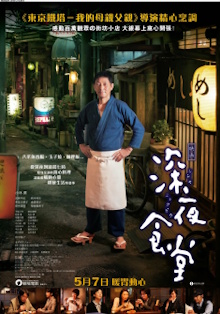
This Japanese series and the manga that inspired it is so beloved that there are Korean and Chinese versions of the show. My wife mentioned it in passing a while and since it’s leaving Netflix soon, I thought I should give it a shot. The format with its short episodes of straightforward stories, each highlighting a dish is easy to digest. It’s also as easy to like as the comfort food it features. Unfortunately it’s equally as insubstantial and far too sentimental. I can see the appeal for some audiences after watching one season but it’s not for us.
Every episode opens with the owner of the diner, known only as the Master, laying out his policy. The small eatery located in an alley in Shinjuku opens in between the hours of midnight and six in the morning . It has a simple, cut-down menu and the Master will make anything his customers request if he has the ingredients. The place attracts a regular cast of customers who each have their signature orders and each episode focuses on one or more of them. So the very first episode features a Yakuza boss Ryu who arrives in the company of his henchman Gen. At first this looks like a shakedown as Gen mocks the diner’s sparse offerings. But then Ryu asks if the Master has wieners and the Master cuts them into octopus shapes for him and he becomes a customer. Other regulars include three office ladies approaching middle-age who grouse about being single and order ochasuke, each with a different topping. At the end of the episode, the customer gives some tips on how best to prepare the featured dish.
The format feels too episodic in the beginning as every customer and their story is over and done with in short order. It gets somewhat better once the show establishes its recurring characters who can comment on the story of the day. What’s fascinating is that since the diner operates during night hours, its clientele is composed of people who have reason to be up and about at this time. That means plenty of people in the nightlife industry including other bar owners and bartenders, the aforementioned gangsters and even a stripper. That means the stories often have a level of sauciness that might be unexpected, probably stemming from its origins as a manga. One for example involves a male porn star. It’s rather heartening that the show doesn’t shy away from sex and embraces a sex positive attitude with progressive views of trans characters and sex workers. Still, I suspect that the scene of middle-aged men cheering at a woman spreading her legs would be way too icky for Westerners.
Even with a decent cast of regulars, the stories have a gentle, heartfelt sentimentality that is far too shallow for us. Someone will almost certainly shed tears as their favorite comfort food reminds them of some formative memory. All of the other customers will be supportive and sympathetic while the Master watches wisely in the background. The little cooking tips at the each of each episode don’t amount to much more than common sense as the dishes like butter rice and egg sandwiches barely count as cooking. I can appreciate that Japanese audiences may find delight in these familiar comfort food as an occasional treat but surely no one can stand eating the same dishes night after night.
So yeah, we’re done with this after just one season as my wife has been complaining about how boring this is. It’s a sweet conceit made to appeal to the masses but it isn’t even trying to be sophisticated or deep.