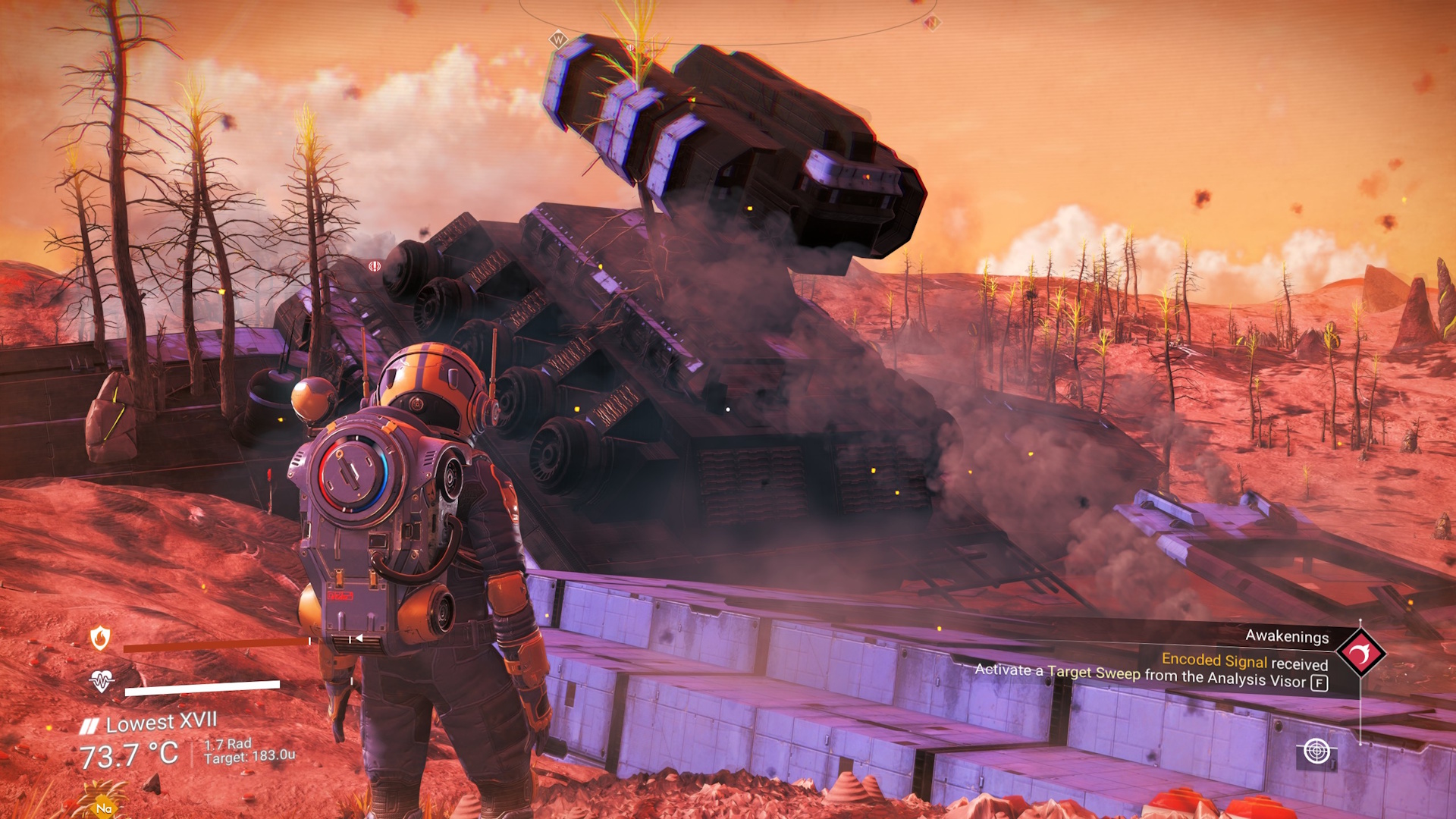
This is another example of a game that was soundly panned at launch as it failed to live up to its hype. The developer swore up and down that they’d continue to work on it. Some ten years and many updates later, the consensus is that they’ve more than made good on that promise and there’s been a complete turnaround in opinions of No Man’s Sky. I like space games but dislike survival games so I opted out at first. But with this being so much better than it used to be and on sale, I finally took the plunge.
Upon launching, the game puts you into the shoes, or more properly the exosuit, of a humanoid Traveler on an alien planet. There a crashed spacecraft near your location that you can repair by gathering resources using your multitool. You have no idea who you are or where you are but you will quickly realize that the ship once belonged to another Traveller named Artemis. Following the logs left by Artemis will lead you to explore the wider universe. On space stations and scattered elsewhere, you’ll encounter alien species whose languages you don’t understand. You’ll also meet other Travellers who hint that they are from other parallel universes. As you venture to other planets and star systems, you’re also run into the mysterious robotic Sentinels who seem to regulate ecosystems. They become aggressive when you harvest resources from protected planets. Over time, you’ll build and develop bases, upgrade to better ships and even own and manage large capital ships as you plumb the secrets of the universe.
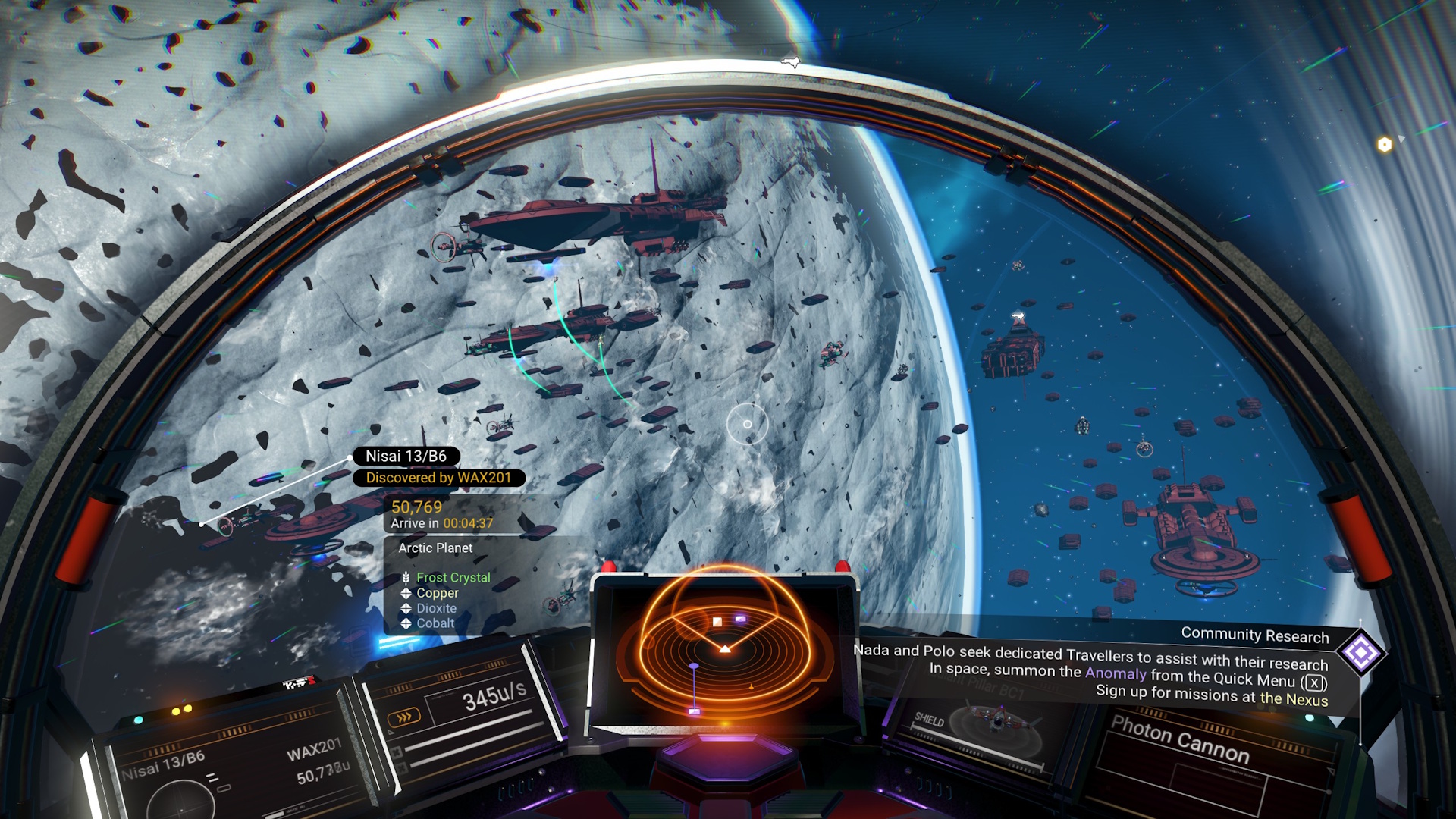
The key feature of No Man’s Sky is its vast, procedurally-generated universe. From orbit, you can seamlessly land on any planet to marvel at its flourishing ecosystem including plants and animals, dive into its oceans and dig into its underground caverns. Scattered around are alien ruins, inhabited outposts and all manner of strange curiosities. Out in space, there are asteroids to mine, derelict ships to scavenge from and alien space stations to explore. As the developers state, there are so many star systems and planets in the game that no matter where you go, you’re almost certainly going to be the first human player to get there even so long after launch. No matter where you go, you’re certain to witness spectacular wonders: unusual rock formations, lava-spewing volcanos, towering trees, creatures that soar through alien skies, ambles across the ground or swim in its oceans. The procedural engine generates detailed descriptions of these finds so you get data of the mineral composition of different rocks and can read up on the life cycles of alien fauna. The system even keeps track of all kinds of weird records such as the deepest ever fish you’ve found or the animal with the highest body temperature.
The frisson of exploration is real. Finding your first alien ruin or crashed ship is an unforgettable experience. You might be scanning the landscape with your analysis visor and notice this odd ‘Metal Fingers’ geological feature in the distance. You might poke a nasty looking alien egg to see what happens. There are a large enough variety of types of planets that arriving on each one for the first time is memorable. I can vividly remember the first time a mission marker sent me to an ocean planet and I couldn’t find solid ground for my ship to land on. Most planets will be hostile to life in some way, either being too hot or too cold, or toxic or radioactive. To survive in these environments, you’ll need to be constantly feeding resources to fuel your exosuit. Occasionally storms will break out drastically worsening conditions so you’ll have to take shelter underground or in a building. If you follow the main quests, you’ll be guided to yet more landmarks and sights.
Unfortunately this is all still procedurally generated rather than handcrafted. After your first half dozen or so planets, you’ll start to feel that the differences between them are really only cosmetic. So you need phosphorus to survive on hot planets and dioxite to survive on cold ones. Big deal. You’ll stop even bothering to read the descriptions of alien lifeforms because they’re just flavor text with no gameplay effects. Instead you just scan them because you get units, the game’s currency, for that and just move on. The game keeps track of how many individual aliens you meet but as they have no real personality they’re effectively interchangeable. The main quest deals with learning the secret of the universe. I haven’t played it all the way through to the end but I can already see where it’s going. The issue is that it’s not emotionally engaging. You’re meant to feel something for Artemis but it’s tough going due to the awkward writing and the fact that these are all weird aliens with no particular backstory in a universe you know nothing about.
This lack of engagement also reflects the fact that No Man’s Sky is fundamentally a very chill game. The difficulty settings are highly configurable and let you turn the dials all the way down to nothing but even at default, this isn’t a challenging game at all. Provided you’re paying attention, it’s easy to gather enough resources to survive indefinitely on pretty much any planet. There’s ship combat but the flight model is so simplistic that you’ll get bored of it very quickly. The only ground combat is against the Sentinels and that too is very straightforward. I’m not much of a twitch gamer but I didn’t die once playing this and I’m pretty sure you need to go out of your way to die. The whole game kind of feels like this, a gigantic playground of toys that you can mess around with. But none of it is deep and none of it feels real. The game doesn’t even try to simulate a living universe. There’s no illusion that it’s full of traders, pirates and other denizens each on their own lives. Instead everything is there for the player’s amusement to engage with at your convenience.
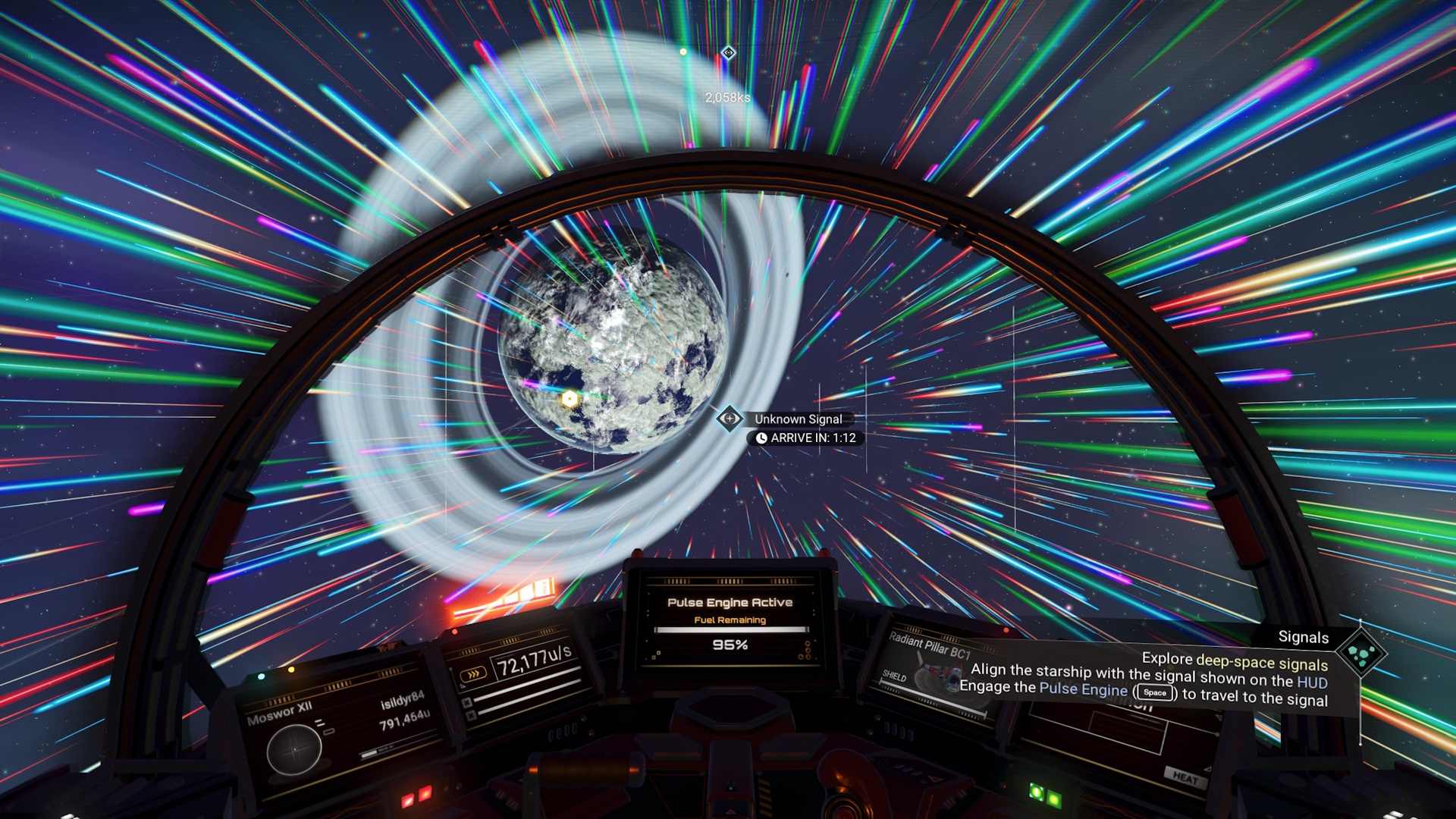
One design choice that irks me is that the universe is objectively huge. You really can go anywhere and due to the randomness of procedural generation, you could end up on truly wacky looking worlds. Yet it still feels small because of how prevalent the teleportation portals are. You only need to visit any station once and after that you’ll always be able to teleport there along with your ship. That kills any sense of distance. Ships have maximum hyperspace distance limits but I don’t see how it matters in any way. Want to find some resource you’re lacking? Pick a star to jump to, any star. It’s all random anyway. Thanks to teleportation, no matter where you go, you’re no more than one hop away from your bases, all your stuff, your settlements, your ships, everything. The game does have the expeditions feature which are seasonal events where you effectively restart from nearly zero. But it’s a bit of a separate thing from the main game as you only return to your main save after completing the expedition.
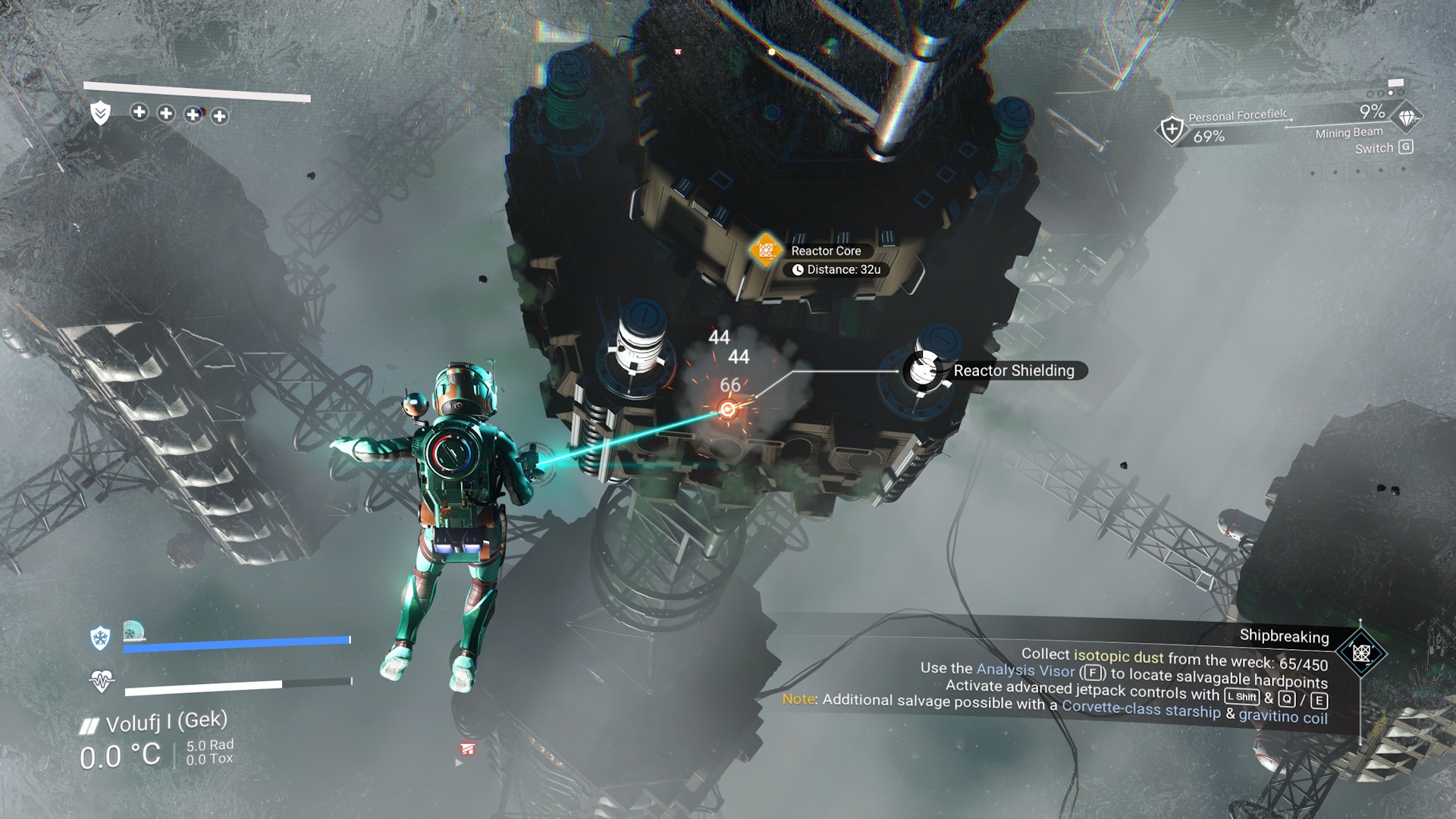
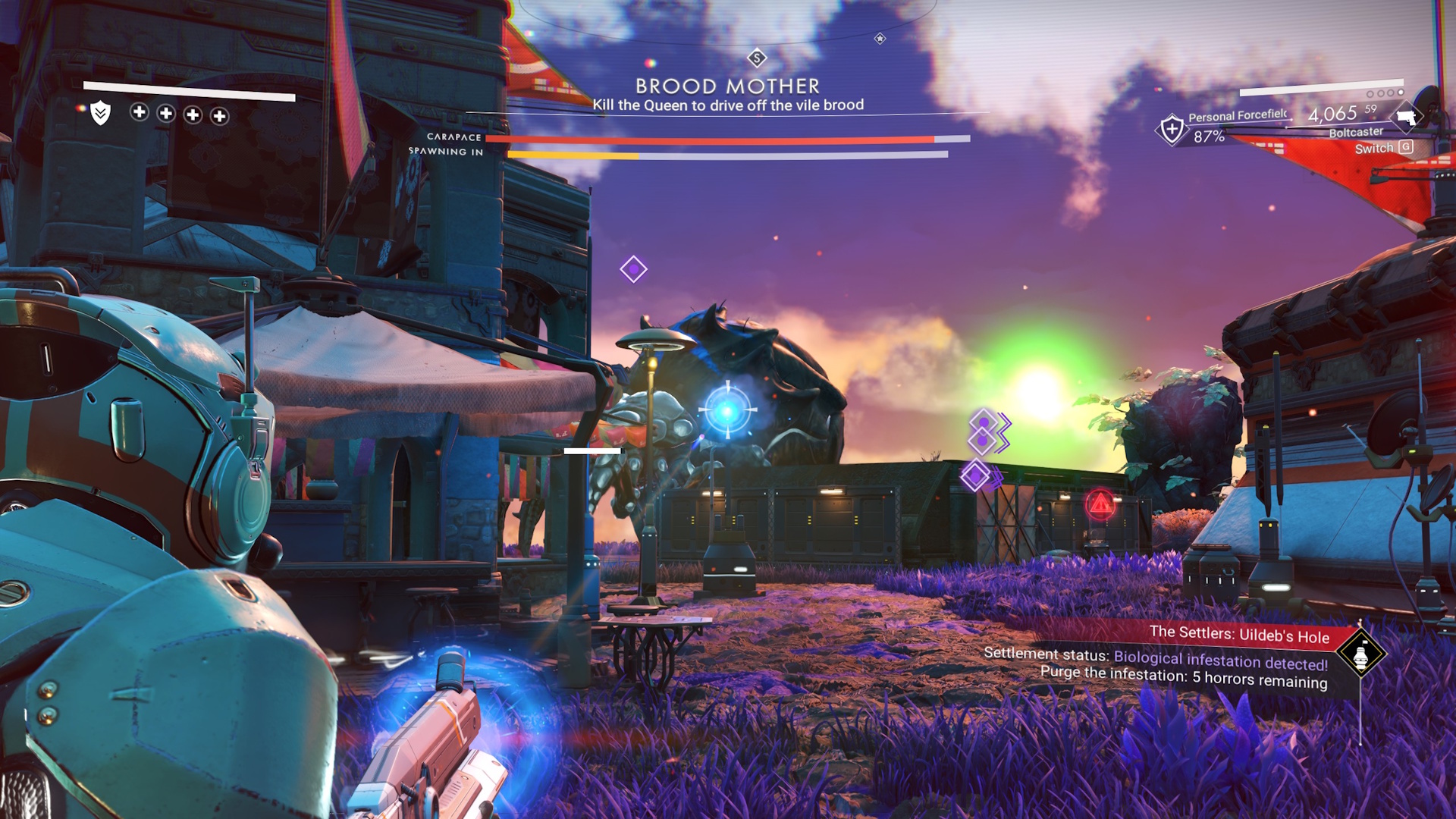
There is a ton of content in it after all these years of updates. You can manage settlements and defend them from attacks. You can farm stuff on your bases. You can custom build a corvette from parts. You can scavenge scrap from wrecks. You can go fishing. Most players who have been doing this for a while spend an inordinate amount of time grinding for rare drops, the perfect S-class ship, the perfect multitool, and so on, even though the game is too easy for those extra stats to matter. I only barely dabbled in these activities. They’re effectively very shallow mini-games that don’t interact with one another at all. You pick one or the other to do and gain benefits in the form of resources of some kind. But the crew of say, the freighter you command, can never visit the settlement you manage and vice versa. There are certainly players who sink hundreds of hours into this game just because they want to live in this world. But to me this has all the entertainment value of a theme park. Impressive at first glance and fun to immerse yourself in for a while. But there’s just no depth under all these systems.
That said, the game is still a very inspiring turnaround story. The early hours of discovery are magical as you run into all kinds of animals, plants, devices, aliens and ships. The developers have done something incredible with procedural generation. One the more entertaining things you can do is to just stay in a space station to watch all of the strange configurations of ships that stop by. But this isn’t the game for me at all. If I wanted space combat, I’d go back to playing Elite Dangerous. If I wanted to command freighter fleets and own space stations, I’d pick the latest entry of Egosoft’s X series. No Man’s Sky does nothing better than those other games, except I guess marvel at the landscapes of alien planets so this is as far as I’m going with it.