Free Will and Morality

A while back, I blogged about how philosophy is embracing empirical experiments. A couple of experiments, one by the University of Minnesota and the other by the University of British Columbia, make for a great example of this. Both experiments had similar aims: to examine what effects belief in free will has on human morality and were structured similarly. The experimental subjects, mostly college students, were separated in two groups. One group was given text to read that expressed skepticism on the subject of free will, arguing that human actions and decisions were mechanistically determined by a variety of genetic and environmental factors. The other group was given either a neutral text in the case of the first experiment or a text that explicitly endorsed and defended free will in the second experiment.

After reading the texts, the students were given the task of completing a test. In both experiments, the students were given the opportunity to cheat on the tests, while being erroneously led to believe that their cheating would not be detectable. The results were that students who were given texts that were skeptical on the subject of free will were more likely than the others to cheat on their given tests. The researchers wisely caution against reading too much from these results, but at first glance, they appear to confirm concerns that advances in our understanding of how our minds work have far greater long-term ethical implications that the more publicly known worries over genetic engineering and nanotechnology.
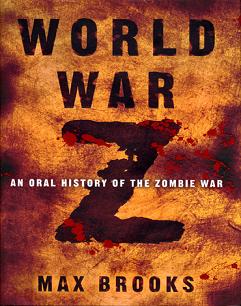
A Book: World War Z

world_war_z_book_cover_reduced.JPG

Max Brooks’ World War Z is a follow-up to The Zombie Survival Guide which became a commercial success largely through word of mouth on the Internet. While The Zombie Survival Guide was a fictional manual covering the biology of zombies and suggested methods of killing them and surviving a zombie outbreak, World War Z tells the story of a worldwide zombie apocalypse scenario through the oral testimonies of over 40 survivors. It has since become popular enough that there are plans to make a film version of the book with a screenplay by J. Michael Straczynski.

World War Z places the initial zombie outbreak in Sichuan Province, China, where a boy diving for treasure amongst the submerged villages of the Three Gorges Reservoir comes to the surface with a mysterious bite mark on his foot and is kept locked in an abandoned house by frightened villages after attacking and biting a number of them. They notify the local hospital and the doctor who is sent is shocked to discover that the boy is as savage as an animal, biting and clawing at anyone who comes near him. His skin has become cold and gray, and though numerous wounds are found all over his body from his struggles to free himself, no blood comes out of them. A hypodermic needle inserted into where his veins should be comes up filled with a strange, viscous matter. He is even able to snap his own arm in an effort to free himself and seems affected by neither pain nor exhaustion. Not unexpectedly, all of the villagers bitten by the boy have become comatose with cold and gray skin as well.

Continue reading A Book: World War Z

China Bans Ghost Movies

Yahoo News has a report saying that the Chinese has banned video and audio content containing ghosts, monsters and other such entities detailed in a list by a government department. The stated aim is to “control and cleanse the negative effect these items have on society” but as the report notes, it looks as if this is part of a wider crackdown to make sure that the government is in full control of all media during the Olympic games.

Sometimes it seems that I have an obsession with reporting on the latest ridiculous decisions made by the Chinese government. Part of it stems from how out of touch such decisions seem to ordinary lives in our world today and I realize that this is due in part to the Chinese government’s near absolute control over its citizens lives and the lack of a need to account for their decisions to anyone. I find it a marvel that Chinese bureaucrats can even issue directives like this and the earlier example of banning reincarnation without official government approval with a straight face.

A Game: Bioshock

Is a man not entitled to the sweat of his own brow? No, says the man in Washington. It belongs to the poor. No, says the man in the Vatican. It belongs to God. No, says the man in Moscow. It belongs to everyone. I rejected these answers. Instead, I chose something different. I chose the impossible. I chose RAPTURE.

– Andrew Ryan, founder of Rapture

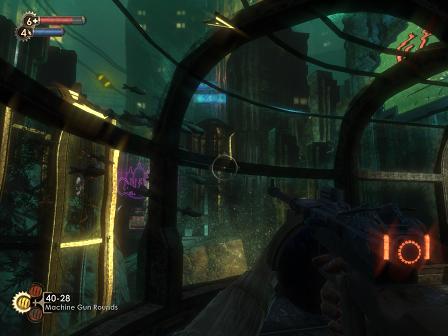
bioshock02.JPG

Bioshock has been named by multiple sources as the best PC game of 2007, so it was some trepidation that I picked it up, hoping that all the hype wasn’t totally unfounded. As the much heralded spiritual successor of System Shock 2, also written by Ken Levine, Bioshock has always had a lot to live up to, and judging at least by its unexpected commercial success and the near universal acclaim of game critics, it has largely succeeded at that. To me, there’s no question that Bioshock is a pretty much a unique gem, there’s nothing else quite like it in the market, but at the same time, I’m painfully aware that a lot of the hype is undeserved and the thought of what Bioshock could have been, if the designers had just been a little more ambitious and daring, is positively agonizing.

That Bioshock is a triumph of aesthetic design and storytelling goes without question. The opening FMV of the protagonist sitting in a plane, reading a mysterious handwritten message, segues seamlessly into the first scene as the player takes control of the sole survivor of a plane crash in the middle of the Atlantic Ocean. Flames rage on the surface of the ocean as you, confused and exhausted, swim through a gap in the burning debris of the plane to the shelter of a lighthouse that stands, incongruously, on a lonely rock in the middle of nowhere. You push through the gilded double doors and suddenly it’s like walking into a different world. A banner proclaims, “No Gods, No Kings. Only Man”. Music wafts in from an unseen source. Plaques on the walls valourize the virtues of “Art”, “Science” and “Industry”. The grand stairs lead down to a roughly spherical pod sitting in a small pool of water, a bathysphere. You step inside, because there’s nowhere else to go. Then you settle in your seat as it takes you to the bottom of the ocean. The year is 1960. Welcome to Rapture.

Continue reading A Game: Bioshock

Sharia Law in Great Britain

I’m a little slow on this issue but I felt that this article in the Asia Times is well worth pointing out. On February 7, Archbishop Rowan Williams, head of the Anglican church, made a speech in which he predicted that sharia law would inevitably be accepted in Great Britain. This article is one of many others written in protest against the speech.

There are plenty of reasons to be dismayed by the U.K. granting legal recognition to sharia law alongside with its own national laws including what many commentators have already described as a means of appeasing fundamentalist Muslims, even if it means sacrificing the liberal values that flow naturally from a recognition of universal and inviolable human rights.

Personally, I must also confess that I find the issue of sharia law itself uncomfortable. Inasmuch as sharia covers areas such as marriage, or food preparation standards or finance in which all of the participants voluntarily agree to have any disputes be arbitrated under it, I, of course, have no objections. But since sharia is supposed to apply to Muslims only, it seems more than a little unfair that Muslims who change their minds and renounce Islam find it hard to do so and hence are still subject to sharia against their will.

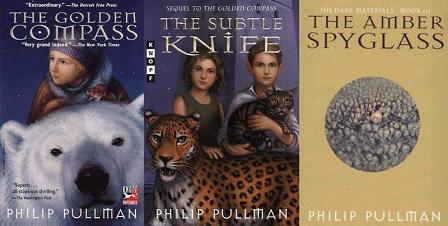
Books: His Dark Materials

“There are two great powers,” the man said, “and they’ve been fighting since time began. Every advance in human life, every scrap of knowledge and wisdom and decency we have has been torn from by one side from the teeth of the other. Every little increase in human freedom has been fought over ferociously between those who want us to know more and be wiser and stronger, and those who want us to obey and be humble and submit.”

– Phillip Pullman in The Subtle Knife

800px-hisdarkmaterialsus_reduced.JPG

(Normally I try to keep my book reviews relatively free of spoilers so that readers can choose to read the books themselves and still enjoy them after having read my review. However, to do the same for these books would prevent me from saying what I want to say about them, so instead of a review, this post should really be thought of as a kind of analysis. As such, be warned that further reading will spoil the books for you.)

It’s not hard to imagine what went through the minds of the executives at New Line Cinema when they greenlighted the movie version of The Golden Compass that was released late last year. Their film adaptation of The Lord of the Rings had proved to be a tremendous commercial success. Walt Disney Pictures had The Chronicles of Narnia series going for them and Warner Bros. had the goldmine that is the Harry Potter series. The movie-going public clearly has an appetite for the fantasy genre, especially for films adapted from children’s books, so what could be better than the new and popular His Dark Materials trilogy by Phillip Pullman?

Continue reading Books: His Dark Materials

Are Games Art?

Quartertothree regular and EA producer Jim Preston tackled this very question recently in a thoughtful essay on Gamasutra that’s worth reading both for anyone seriously interested in video games and the question of what constitutes art. He claims to have been inspired by two things: freelance game reviewer Tom Chick’s review of Bioshock which answered the question simply by saying, “Games are this” and renowned film critic Roger Ebert’s review of the recent Hitman film (based on the video game series of the same name) in which he boldly claims that video games will never become an art form.

You really do need to read the full essay to appreciate it, but Preston basically argues that it’s pointless for video games to aspire to the status of Great Art as it is popularly conceived through the process of reasoned debate. Instead, he argues that things become art by gradually sublimating into the consciousness of the mainstream and acquiring a revered status in the minds of the people who like it. Eventually, the people who do like it will place it in a context, as in a museum or a concert hall, in which it becomes publicly acknowledged as art.

The importance of context towards interpreting whether or not something is art is reinforced in an intriguing story that Preston references. On the morning of January 12 2007, the Washington Post organized a little experiment. They arranged for Joshua Bell, one of the greatest living violinists in the world, to play six classical pieces representing perhaps the greatest musical achievements in Western culture on his invaluable 1714 Stradivarius violin in the L’Enfant Plaza metro station in Washington for 43 minutes. Hidden cameras and reporters for the Post carefully recorded the reactions of the passersby of the morning rush hour. Out of the 1,097 people who walked by during that time, only two people truly recognized the quality of what they heard and only a handful of others stopped what they were doing for a few moments to listen. Bell earned a total of $32.17 in tips, excluding another $20.00 from the one person who recognized him. The irony of course, as Preston intended to point out, is that Bell is the kind of performer who can earn $1,000 a minute by playing in the right context to the right audience.

The unexamined life is a life not worth living