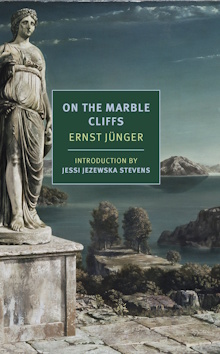
Something far different than the norm for me this month and it’s novella-length, yet published as a book. This particular work is I think significant not only for its text but also for who its author was, when it was published and its significance as a parable for the rise of the Nazis. Ernst Jünger was a highly decorated soldier, a militarist and a political figure of the conservative right. Yet he was also opposed to the Nazis and was indirectly implicated in the famous Operation Valkyrie plot against Adolf Hitler’s life. This of course made him a more polarizing and fascinating person. The book itself is set in an idyllic fictional land that is described in such a dreamlike way that it may well be considered fantasy. The story itself is short and simple but is rife with symbolism that can be interpreted in any number of ways.
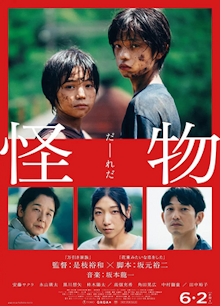
Hirokazu Kore-eda keeps churning out solid films and so I keep watching them. He stays on the subject of children being let down by adults but this time around it is a little muddier who exactly is being wronged and who the guilty party or parties are. This film pulls you irresistibly into a story about bullying at school and a gross taunt about a child having the brain of a pig. There are red herrings and misunderstandings aplenty, complicating the search for the truth. Unfortunately once you dig past the confusion, what remains isn’t that substantial and hiding the nature of the boys’ relationship as a twist feels like an outdated move. It’s not bad but it’s weaker than his usual fare so I’d consider it missable.
As a philistine, I have never heard of Anselm Kiefer and this film made me embarrassed about it. Ostensibly a documentary by Wim Wenders about the contemporary German painter and sculptor, but it is a work of art in its own right. With no narration and only brief snippets of Kiefer being interviewed, the film mostly lets his artwork speak for itself. Accompanied by music and readings from the poetry that inspired Kiefer, watching this is a mind-bending experience. The breadth of Kiefer’s talent, the vividness of the worlds he creates and of course the incredible scale of his works boggles the mind. This is probably the best art film I’ve ever seen and nothing else comes close.
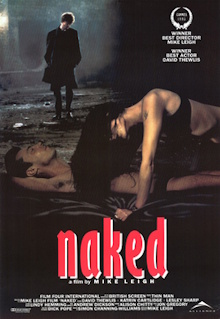
Mike Leigh is a celebrated auteur of British cinema so it’s unfortunate that the only film of his that I’ve watched to date has been the mediocre Peterloo. To remedy that, here is one of his best, a film whose dialogue is so dense with British colloquialisms that it’s difficult for us to parse. The main character here reminds me a great deal of the one in Henry Fool, cynical losers who are intelligently and weirdly attractive to women. But this film goes to far darker places with a cast full of equally broken people. It is funny in parts but there is nothing amusing about it at all.
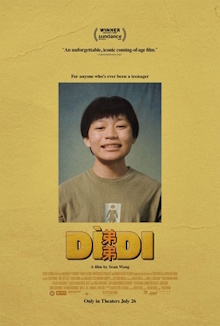
Sean Wang must be an up-and-coming director to watch since he managed to get Joan Chen to appear in his debut feature. It joins a growing lineup of Chinese American films and appears to be a semi-autobiographical account of the director’s own childhood in Fremont, California in 2008. The main character is a little shit who I don’t find sympathetic in the least but I suppose this attests to how realistic it is as a coming-of-age film. It’s the kind of film that can feel underwhelming as nothing especially earthshattering happens. But I like understated films so this is a winner for me.
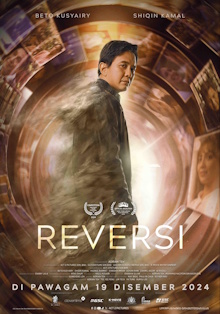
Adrian Teh is Malaysian director of Chinese ethnicity who has made a career out of commercially successful Malay language films. They’re not my usual fare so I’ve never watched them. His latest is a science-fiction film that has garnered decent reviews and strong word-of-mouth. Since it’s easily available on Netflix, I thought I should take a look. Since it’s billed as a heartfelt time travel story, I had a few thoughts on how that might play out. Unfortunately my worst fears proved true as it’s the usual ‘can’t change destiny’ and ‘arbitrary constraints on superpowers” tropes. It’s a bold project for a Malaysian but it’s just not that good of a film.
A few interesting announcements for this round and once again, it feels that the really cool developments are going on in the life sciences.
By far the most significant bit of news, and one that I’d hoped would be shouted from the rooftops, is the successful use of the CRISPR gene-editing technique to treat a child’s unique mutation. The patient in question was born with a rare disease known as carbamoyl-phosphate synthetase 1 (CPS1) deficiency which usually kills in infancy. In this case, doctors were able to devise a targeted fix to edit DNA in the liver cells, test the treatment in mice, get approval from the FDA and administering the treatment all in a matter of months. They still don’t know if the effect is permanent but for now the patient is well enough to be able to leave the hospital since being born. The key here is the incredible speed of this achievement and the fact that this is a treatment personalized for that specific patient. We should all hope that this is only the first of many such achievements.
Next up is a medical development that feels like something out of science-fiction. An American man, Tim Friede, had for personal reasons exposed him to the venom of a large variety of snakes in escalating doses over the course of 18 years. As a result, he has generated antibodies that are effective against multiple types of neurotoxins. By isolating the antibodies in his blood, researchers have devised a broad spectrum antivenom that should now be almost universally effective against snakebites. If the project comes to fruition, this would be a radical improvement from the current practice of needing to manufacture and stock multiple types of antivenoms in case of emergencies.
The last paper was released a couple of months earlier but I hadn’t noticed it then. It’s about a study conducted on the Hadza, a hunter-gatherer tribe in Tanzania whose nomadic lifestyle is thought to have been unchanged for thousands of years. This makes them an ideal subject to interrogate about human nature before the advent of civilization. In this instance, researchers were interested in whether such peoples are inherently disposed to be egalitarian as some anthropologists contend. They gave the Hadza participants food endowments to be shared with others and studied how fairly they carried out the redistribution. They found that like just about everyone else, the Hadza mostly did not seek perfectly equitable distributions. They tolerated inequality when it benefited but complained about it when they thought it was unfair. As usual, it’s unwise to generalize too broadly from such studies but I’d always thought that stories of pre-civilization peoples being inherently more noble to be too fanciful to be true.