A bunch of cool science stuff this month, all of which stem from biology but touch upon different topics.
The simplest and most directly beneficial of these announcements is the US approving a twice-a-year shot that will completely prevent HIV. This doesn’t quite count as a vaccine as it does need to be taken twice a year but it is the longest lasting protection against HIV yet. In its original form, it’s probably too expensive for widespread use in developing countries but generic copies will eventually become available and that could well mean the end of AIDS.
Ever since it was first identified in the 1980s, the Flynn effect has invited endless speculation on the cause of the increase in intelligence and whether the trend will continue. This new paper uses data from the Norwegian Armed Forces which has administered a general mental ability test on recruits since 1954. It argues that while some types of skills improved over time, notably non-verbal reasoning ability, word reasoning and numerical reasoning abilities decreased over the same period. This suggests that it might not be accurate to say that intelligence in general has increased over time.
Next we have a paper that claims to advance our understanding on how sperm whales communicate. It argues that their codas, the series of clicks that they use to communicate, not only resemble human vowels acoustically but also appears in patterns similar to human language. These findings are used to construct a case that these codas are intentionally controlled and constitute a type of language that we could one day unlock.
Finally here’s a paper that attempts to do the seemingly impossible, study the phenomenon of qualia itself. The team purports to answer the age-old question of whether your ‘red’ is the same as my ‘red’ by doing the following: collect detailed reports about the relations between sensory experiences of various participants; construct what they call qualia structures from the data, meaning embeddings of qualia that represent the similarity or lack thereof of the participants’ judgment of what they have experienced; compares two individuals’ qualia structures in what they call an unsupervised alignment method which doesn’t assume that there are particular correspondences between the structures. The upshot is that the team could align the structures of color-neurotypical group, meaning those who are not color blind and self-report seeing colors normally. They could also align the structures of the color-atypical group despite differences in the type of color blindness within that group. But they could not align the structures between the color-neurotypical and color-atypical group meaning that those structures are too different. It’s hard to say what we can conclude from these results, perhaps that it might be possible to prove that those who experience colors in the same way do actually share the same qualia. But the ambition behind the project is something I can certainly get behind.
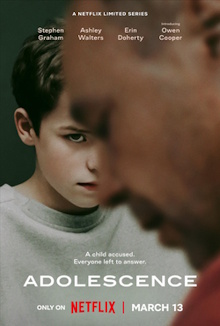
A British miniseries about adolescent male violence that is realistic enough to be shown in schools is a must-watch for us. What’s more, each of the four episodes were shot in a single take, lending it both a powerful sense of urgency and some added authenticity. Unlike other crime shows, there is no question of the perpetrator’s guilt and even details of how the murder itself was carried out aren’t that important. What matters is how the machinery of the state is activated in response to a crime like this and how everyone desperately searches to understand what could have driven a 13-year-old boy to kill.
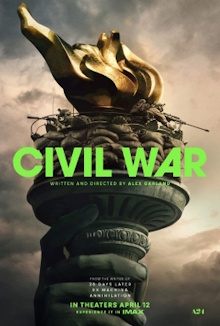
None of Alex Garland’s films have ever really clicked with me. Critics love him however and I’ve read analyses about his work that raise interesting points that I’ve missed, so I’m willing to give him the benefit of the doubt. Yet after watching this, I am left even more disappointed and puzzled. Conceptually, I love this and I’m pretty sure I understood what he was going for. But his execution of the idea is so unserious, so deliberately low brow and over the top that it feels like a waste of a good idea. So I’m still not a fan of his work and I really don’t get what his deal is.
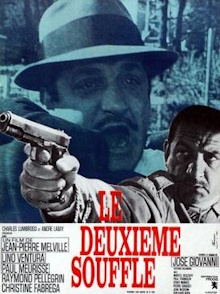
I’m slowly growing to be more of fan of the work of Jean-Pierre Melville. Take this crime thriller for instance which tells the story in a very straightforward way. The story itself is intricate only because of the many characters involved and how they must interact with one another. Events play out so organically and unpredictably that it doesn’t feel much like a movie at all. It’s always a pleasure to watch competence in action but this film makes the point that often pure chance plays its part as well.
Ages and ages ago, I’d imagined how cool it would be if there existed some kind of strategy game about managing a xianxia sect. ‘Lo and behold, one now exists, made naturally by a Chinese company. It has mediocre graphics, very poorly explained mechanics and a bad user interface, but it does more or less let you run your own sect from the beginning up until you manage to nurture your cultivators into god-like beings. So it’s great, right? Well, maybe not. In between the bugs, intricate mechanics, challenge level and tendency to drop gotchas on the player, this can be a very time-consuming and frustrating experience. I already know I won’t be able to persevere all the way to the end but I’m still trying to see as much of the game as I can.
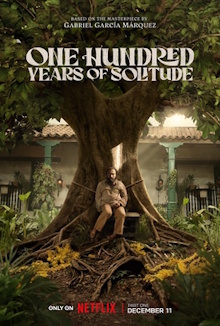
Netflix is getting serious into prestige television with lavish productions like this. Since I’d never read the actual novel by Gabriel García Márquez, this might the closest I can get to knowing its story. With its gorgeous visuals and huge cast of characters, it effortlessly drew me into the lives of the Buendia family and the founding of the town of Macondo. Yet the longer the story goes on the more bored I became. The series is like a very literal retelling of the novel but seems unable to impart any deeper meaning to the many dramatic twists and turns, making it feel like a soap opera. There will be a second part to the series but at this point I’m not terribly enthusiastic.
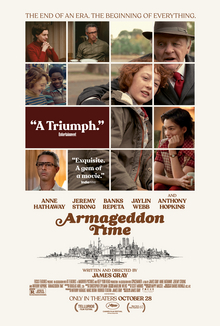
A film about a Jewish-American boy who is rebelliously ungrateful of his own affluent background isn’t something is compelling to me even if it features major talents like Anthony Hopkins and Anne Hathaway. But then I realized that we usually get stories from the opposite side of the divide with the underprivileged kid as the protagonist, so this is indeed a novel trajectory. It seems that this is yet another semi-autobiographical film drawn from its director’s life so it does have the ring of truth but it’s probably still a little underwhelming for me.