It’s time to do the last of these entries for the year.
The first of these highlight how evolution can work faster than you might expect. This article talks about a couple of cases but I’ll only summarize one of them here. It talks about snail kites a bird living in Florida that eats snails. Since a new type of snail arrived from South America, the birds seem to be evolving larger beaks to make it easier for them to feed on these larger snails. The rate of change is astonishing given that the snails only appeared in 2004.
The next article is a follow-up on an earlier announcement of how a team has created a bacterium using a six-letter genetic alphabet instead of the four usual bases. Now they’ve announced that the bacterium can make proteins containing amino acids that are not found in nature, which means that synthetic, tailor-made proteins will soon be available for use for a variety of purposes.
Continuing on with my series of pro-dog propaganda, a recent paper claims that while dogs don’t have the largest brains, they have an unusually high number of cortical neurons. Cats seem to have only about half the neurons of dogs and while bears have large brains, they only have around the same number of neurons as cats. The researchers were further surprised to note that domesticated species don’t have fewer neurons than their wild cousins, which was the prevailing assumption before this.
Next is a paper that attempts to quantify search costs by calculating how much shoppers lose out on if they accept the first price they see when buying common household goods instead of spending effort to shop around. The paper makes the rather surprising claim that the shopper who shops around gains a price advantage of only around 1% on average. This sounds too low to me but if it’s wrong I’m sure plenty of economists will want to challenge this paper.
Finally a paper that seems deliberately timed for the holiday season talks about the size of wine glasses in England over time. Between 1700 to 2017, the average capacity of wine glasses increased seven-fold. Perhaps of greater concern is that the increase was gradual up to the 1990s and then shot up markedly.
Given how lukewarm my own reception was towards The Force Awakens, I decided to base my decision about whether to watch the sequel on its reviews and word-of-mouth. Its high Rotten Tomatoes was a point in its favor but the rabid backlash from the fanbase only made it even more intriguing to me. The audience reaction was so harsh that it made me really curious to see it what’s up with it for myself.
This is another pick from my cinephile friend who definitely has a better eye than me on what is happening in Asian cinema. This one seems to have been a big success in the Chinese market and won some local awards but is probably not notable enough internationally to come to my attention. It feels very hip and contemporary to me being adapted from a written work that was originally published in Chinese magazines.
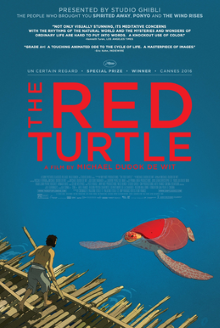
This film ticks all the right boxes for being added to my list: it premiered at the Cannes Film Festival, it was nominated for the Academy Awards, and most intriguingly, it is a cooperative effort by a German company and Studio Ghibli. It was directed by Michaël Dudok de Wit, a Dutch animator, and its artistic sensibilities are distinctly European but I like to think that the Japanese provided their characteristic technical precision.
Illwinter is a game company composed of a Swedish duo that has only ever made multiple iterations of two titles: the more famous Dominions series and the Conquest of Elysium series. As you can tell from these screenshots, their games have only very basic graphics and user interfaces that absolutely require reading the manual to make sense of. Still they have managed to garner quite a fanbase for themselves and in fact it was by playing Dominions 2 that I joined the forum of their then publisher Shrapnel and from there to the Quarter to Three and later Broken Forum discussion boards.
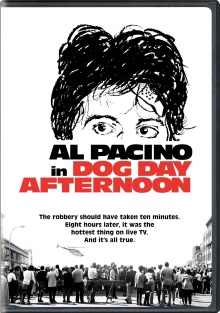
I added this one to our list soon after watching Network because it is another film by Sidney Lumet that was deemed significant enough to be added to the U.S. National Film Registry. It stars a very young Al Pacino, just after he had become famous due to The Godfather and is loosely based on a real bank robbery that took place in 1972.
I do believe that this is the first bona fide Tibetan film I’ve ever watched. It was directed by Pema Tseden, a Tibetan with Chinese citizenship, is based on one of his novels and naturally uses their language. Wikipedia claims that this may indeed be the very first Tibetan black and white feature film but this seems unlikely to me.