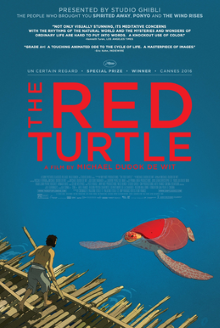
This film ticks all the right boxes for being added to my list: it premiered at the Cannes Film Festival, it was nominated for the Academy Awards, and most intriguingly, it is a cooperative effort by a German company and Studio Ghibli. It was directed by Michaël Dudok de Wit, a Dutch animator, and its artistic sensibilities are distinctly European but I like to think that the Japanese provided their characteristic technical precision.
Illwinter is a game company composed of a Swedish duo that has only ever made multiple iterations of two titles: the more famous Dominions series and the Conquest of Elysium series. As you can tell from these screenshots, their games have only very basic graphics and user interfaces that absolutely require reading the manual to make sense of. Still they have managed to garner quite a fanbase for themselves and in fact it was by playing Dominions 2 that I joined the forum of their then publisher Shrapnel and from there to the Quarter to Three and later Broken Forum discussion boards.
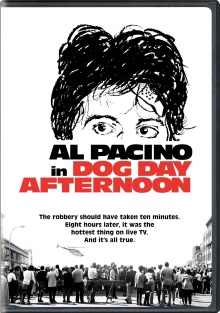
I added this one to our list soon after watching Network because it is another film by Sidney Lumet that was deemed significant enough to be added to the U.S. National Film Registry. It stars a very young Al Pacino, just after he had become famous due to The Godfather and is loosely based on a real bank robbery that took place in 1972.
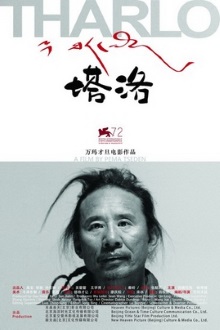
I do believe that this is the first bona fide Tibetan film I’ve ever watched. It was directed by Pema Tseden, a Tibetan with Chinese citizenship, is based on one of his novels and naturally uses their language. Wikipedia claims that this may indeed be the very first Tibetan black and white feature film but this seems unlikely to me.
I’ve been reading this as it was sold in an omnibus volume together with Merchanter’s Luck. This is course another novel by C.J. Cherryh that is set in her Alliance-Union universe. The two novels are however extremely different in tone, scope and complexity. Here the narrative spans hundreds of years and a score of characters. Considering how I disliked how the earlier novel focused almost exclusively on the PTSD of a single character, it’s no surprise that I like this a whole lot more.
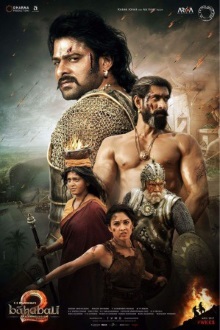
Since this sequel is a direct continuation of the first film I didn’t want to leave off watching it for too long. As usual with such epics, the running time is excessive but given the nature of these films, they’re easy on the eyes and not exactly taxing on the intellect. As with the previous film, it continues the story of both father and son though I was somewhat surprised to note that the portion allotted to the elder Baahubali carries heavier weight.
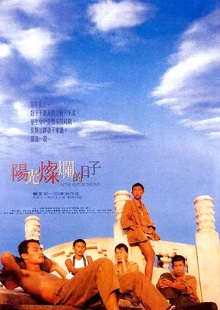
This marks the fourth film we’ve watched by director Jiang Wen but it was his directorial debut back in the day. As I understand it, this film garnered some controversy in its time but in an unusual direction. This film is set during the Cultural Revolution but unlike just about every other film portrayal of the event, it presents it as a mostly positive experience for its main character who seems to be a thinly veiled version of the director himself. This understandably ruffled some feathers of those who have painful memories of the period but contrary to my expectations, it is not in any way a sop to the Communist Party.