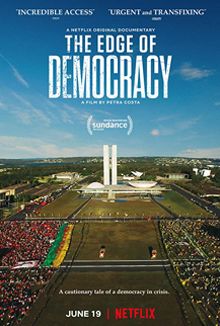
I’d planned on watching this a little earlier but it does seem appropriate to watch this alongside the drama of the 2020 US elections. This is a documentary that tells the story of how Dilma Rousseff was impeached as president of Brazil and how Luiz Inácio Lula da Silva ended up being imprisoned. It is highly relevant to Brazil’s current situation as the eventual victor of the whole kerfuffle is Jair Bolsonaro who remains president today.
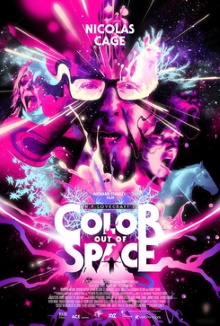
My days of reading H.P. Lovecraft are long behind me and though I’m now innured to the literary tricks that he used to infuse his stories with mystery and horror and I’m wise to the more problematic elements in his characters, reading them is still a treasured childhood memory. Given how pervasive Lovecraft’s influence has been, it’s been mind-boggling that no one has thus far made a good adaptation of his work. Some have tried, but they’ve mostly been low budget, poor quality stuff. This particular film isn’t completely faithful to the short story but I think it’s good enough that we can consider it a success.
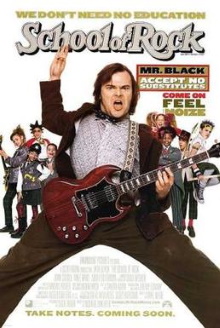
Films about a group being uplifted through the power of music is a genre in of itself, especially when it’s literally a group of children as it is here. Not actually being much of a fan of rock music, I had no real interest in this film save that it was directed by Richard Linklater and because it inspired a stage musical version by Andrew Lloyd Webber. Now that I am much more interested in.
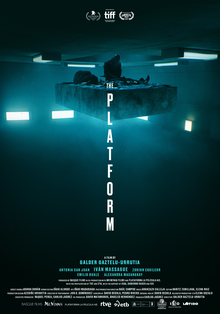
This is a small Spanish science-fiction film that has garnered quite a bit of international attention, especially after most of the world entered lockdown due to the ongoing pandemic. I think it’s more of a horror movie than science-fiction however and is more about slick presentation than meaningful substance. It is after the debut feature of Galder Gaztelu-Urrutia who before this directed commercials.
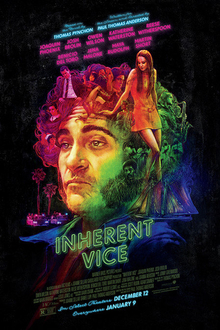
Since every one of Paul Thomas Anderson’s films is probably worth watching, I’m just filling in one of the blanks. Unfortunately in this case, I’m not quite sure what to make of this one. It’s basically something of a drug trip film which I tend to dislike and it has an overly complicated plot which makes things even worse. But from what I understand, it does seem to be rather faithful adaptation of the Thomas Pynchon novel it was based on and it does feature the director’s usual high standard of craftsmanship.
I haven’t been a big fan of director Lars von Trier, perhaps because I have yet to watch his earliest films that solidified his reputation. This one however I found absolutely mesmerizing and not just because it turns out to have a vaguely sci-fi theme. Of course that is not the point and the film has no pretensions about being scientifically accurate but it does make wonderful use of the imagery of stars and planets to illustrate its real object of exploration: individual reactions to the imminent end of the world.
Comedic farces are rarely considered great films and we watch few of them as they usually don’t stand up to the test of time. For that reason, we haven’t really watched much by director Mel Brooks as he is best known for this type of work. This particular film however reached my attention as it is considered one of the few film that make fun of the Western genre, directly aiming at the racism that lies just behind the white-oriented mythmaking of the American West.