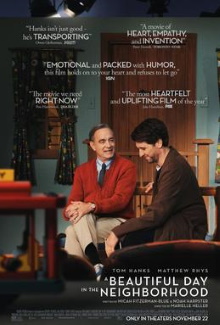
We’d watched Won’t You Be My Neighbor not too long ago and loved it. This one is what would normally be called a biopic starring Tom Hanks as Fred Rogers and was just as well received. However it really isn’t about Rogers at all though one can take it as trying to depict his idealism. It seems that this was loosely based on a real magazine article and the experiences of the journalist therein but this film comes across as entirely too sweet and too fake to be convincing.
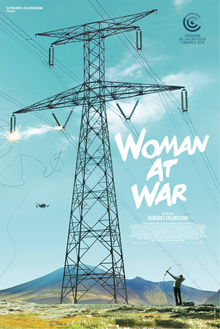
So I had no idea that Icelandic-Ukrainian co-produced films are even a thing but I suppose they must be and this one even has a zany, absurdist twist to it. To be honest, the politics and ideology that this film espouses is completely contrary to my own beliefs. Yet it can’t be denied that this is wonderfully executed on every level and succeeds in forging a kind of mythos of an environmental warrior.
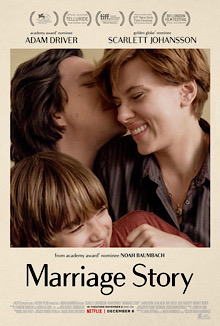
This was one of the most important films of last year and it was made by Noah Baumbach whose work we always like. The title is pure bait however as this film is all about divorce but it is probably one of the best films about divorce that has ever been made. I do feel that it being about people in the entertainment world makes it less relatable for ordinary people and certainly most people would not be able to afford neither the lawyers nor the lifestyle changes that the characters here go through as part of their separation.
This is widely regarded as one of the greatest films ever made and, yes, here I am watching it for the first time. In fact, I believe this is the first time I’ve watching anything by director Yasujirō Ozu and as my wife remarks this means we’ll be in for a string of his other works down the road. This is a minimalist film with a highly traditional story so at first glance it might hard to see what the fuss is all about. But there is a kind of sublime beauty in its simplicity and its understated style helps it convey deep emotion without feeling melodramatic.
After a long, long time of watching this, as our normal habit is to intersperse seasons of different television shows so we’re not just bingeing through one, we’re finally done with all six seasons of The Americans and I can now write about it. I noted the existence of the series since its debut and the rave reviews it quickly garnered but I decided a while back to only start watching it after it had finished aired. It turned out to be the right decision as this is a great series from the beginning to the end.
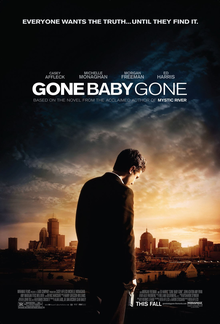
This was Ben Affleck’s directorial debut back in the day and given his celebrity status, it was quite a high profile release. Starring his own younger brother Casey Affleck, it was quite well reviewed and uses the same Boston setting that he seems most familiar with. Unfortunately while it is not a bad film, I didn’t find it to be a good one either due to how it is completely driven by its overly complicated plot that is accompanied by neither good character development nor a coherent theme.
So this was very badly reviewed but it does look slick enough and every once in a while I like to add a standard action movie into our queue because we don’t usually watch enough of them. I have no familiarity with the original source material at all but from what I understand it is supposed to be a lot more philosophically challenging than what we get here. Instead what we get is a retread of tropes we’ve been familiar with since Robocop and it’s not even an effective action movie.