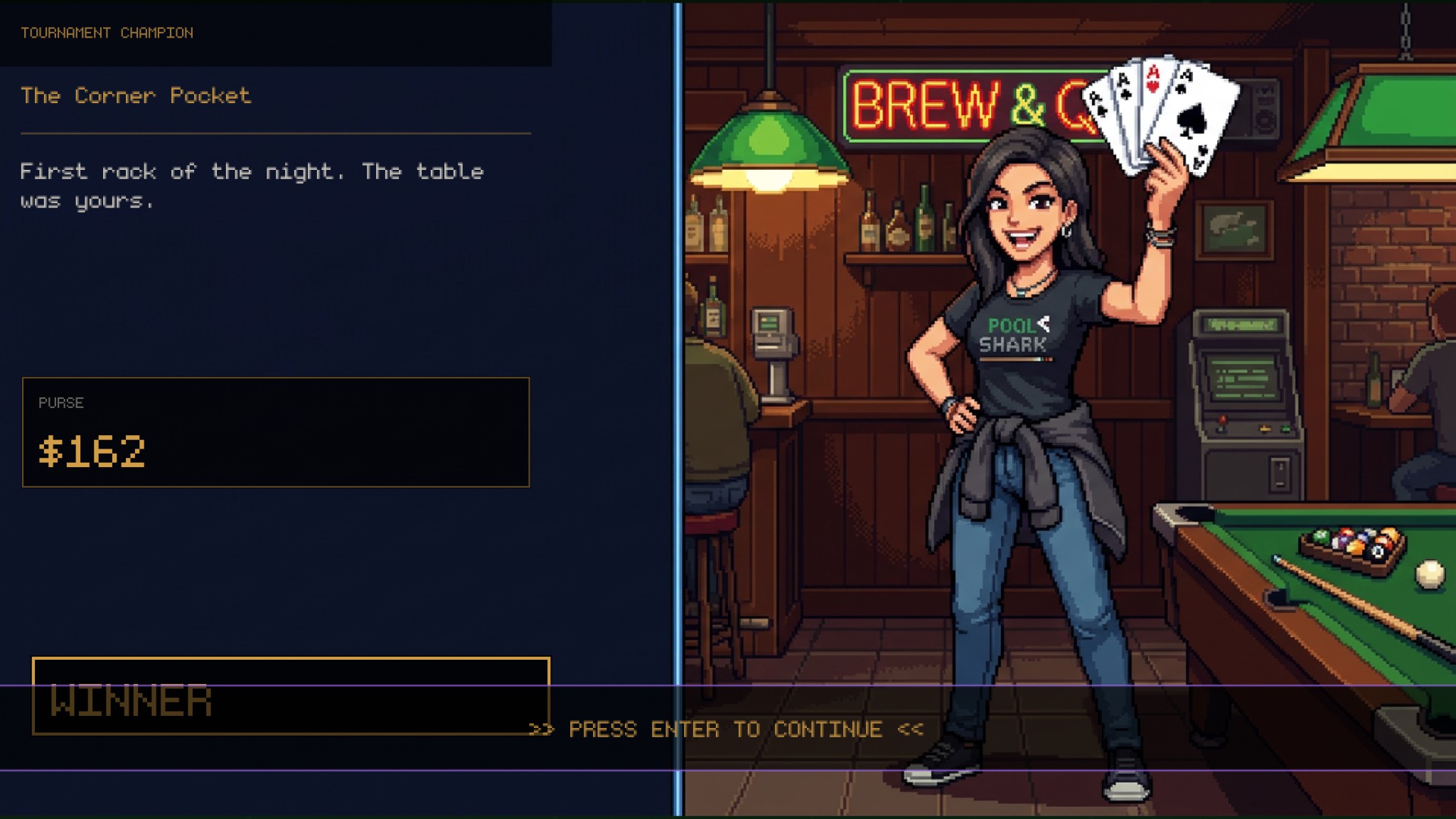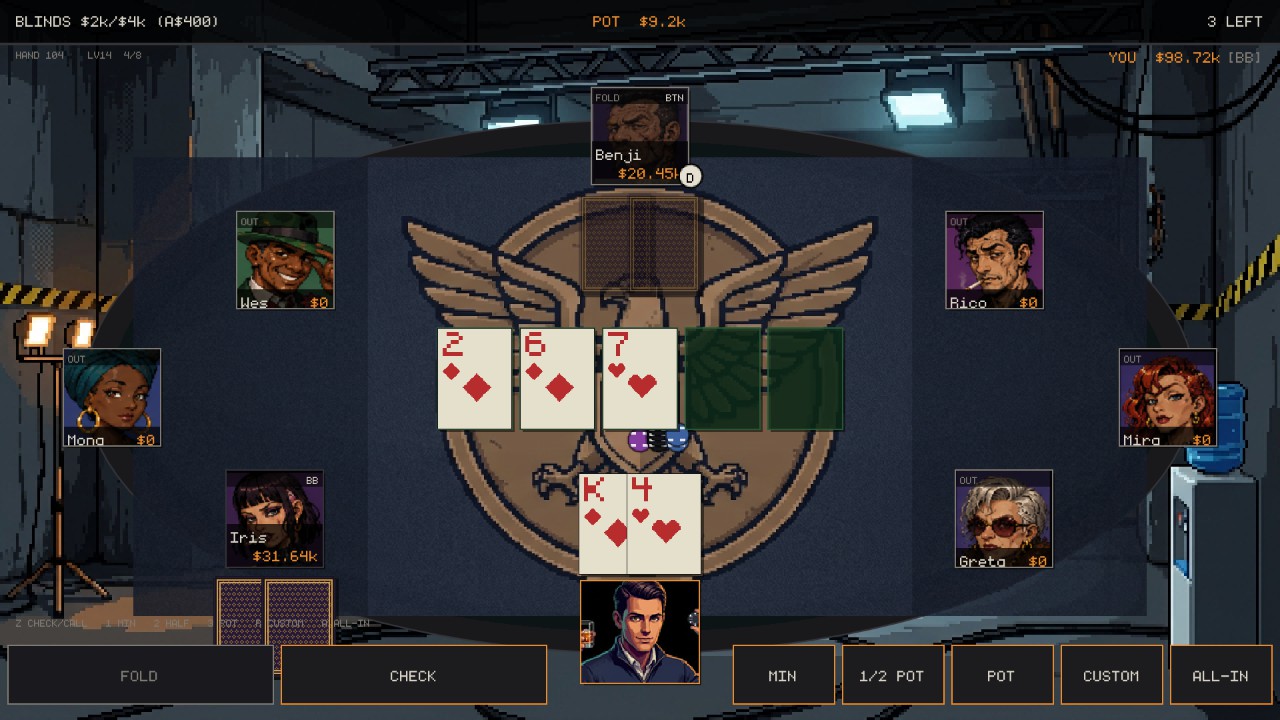
I spent more time on Cyberpunk 2077 than I wanted so I decided to opt for a simpler game to cool off. Obviously I know about poker, but I realized while playing Red Dead Redemption 2 that I’ve never played it seriously. A surprising number of players enjoyed the poker in the Western game including myself but long sessions on it doesn’t seem very feasible. For one thing, Arthur might starve if he spends days and nights at the poker table. So I bought this poker game that seems to have been made by just one person. It does use AI-generated art assets but I don’t much care about that and it seems whoever made it takes poker seriously enough to spend a lot of effort on its AI opponents.
Tilting presents itself as a rogue-like in that you choose a character and start with a bankroll. From there you can try to make more money from cash games in which you face off against an endless series of opponents. Once have enough to afford the buy-in, you can join a tournament. These have a fixed number of opponents and your objective will be to the last person standing after bankrupting them all. Naturally there are many tiers of success. You start with dollar ante games and end with a tournament in which millions are at stake. Become the champion at the very end and you beat the game. At some points a boss pops up to challenge you but it remains the same game of poker throughout, just with higher stakes. Each of the available characters comes from some special advantage such as seeing statistics of the odds based on the visible cards or starting with a larger bankroll. But in the end, none of the twists change the fact that this is purely poker against AI opponents.
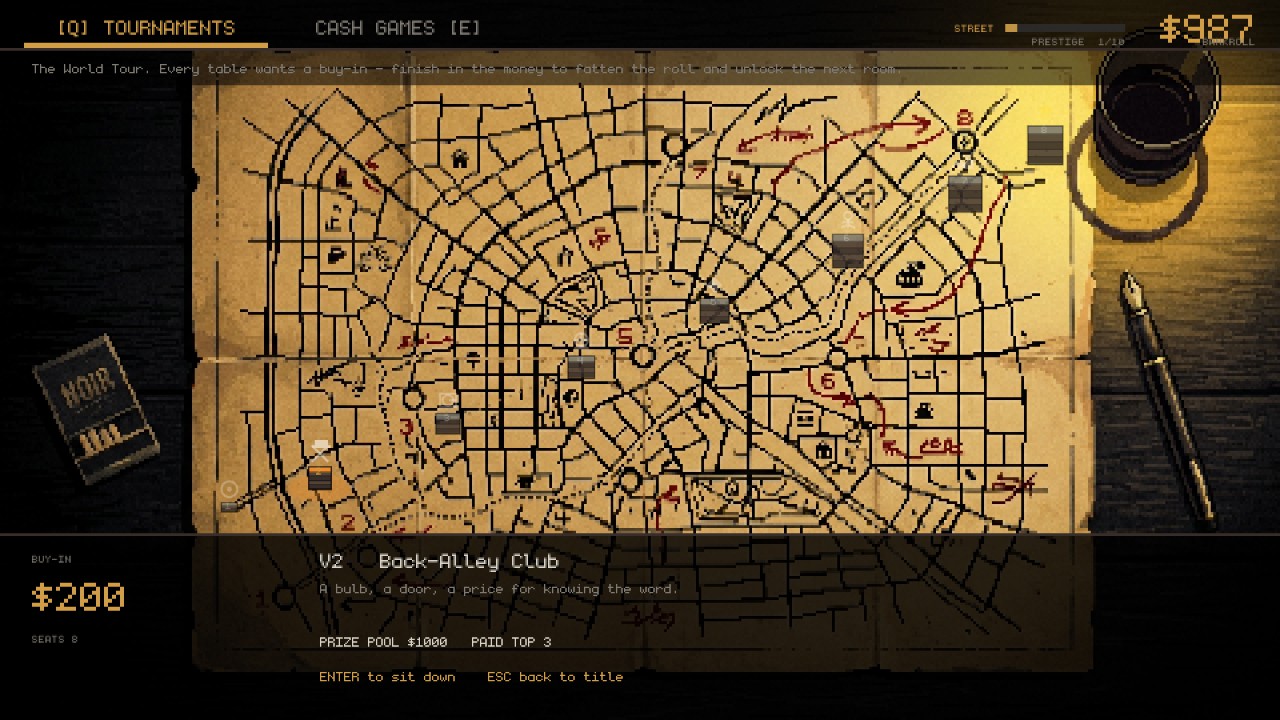
When I started playing this, I was so unused to poker that I had to look up a chart of hand rankings. I failed to regularly consider the possibility of achieving a straight for myself or opponents for example. I also had to learn about big blinds and small blinds and the information advantage of different positions. It’s not surprising that I did terribly for a long time playing this and had to keep restarting after losing all of my starting money. Then ever so slowly I got better until I could reliably win against the AI opponents. That itself can seem like a surprise if the default assumption is that poker is just a matter of luck. It’s still quite a grind and a string of bad luck can still wipe you out, so this calls for a lot of patience. You set it to play as fast as you want and while I’m sure there are patterns to the AI opponents that you can exploit, they’re more than capable of schooling a beginner like me. I didn’t want to grind all the way through to the end since I’m content to just learn the basics of poker so it could be that the game still has surprises to offer later.
Mainly I learned that you need to fold a lot as most hands aren’t worth playing. Contrary to what one often sees in the movies, bluffing isn’t that common. Opponents will call you out if you try to bluff unless you’ve carefully cultivated a history of never bluffing. Even you should do it rarely. Similarly if the opponent is willing to raise, chances are there they have something even if you’re not sure exactly what. This game is good enough that the AI will pay attention to your playstyle and adjust accordingly. Tournaments can be very tense as opponents are eliminated and it’s down to just the last two or three. There’s so much pressure when the opponent has a larger bankroll than you and can afford to take more risks. Even while you need to manage your own risks, in order to score a solid knockout you do need to be bold at times and bet big when you’ve got the cards for it. Anyway I was never going to spend too much time on this so I’m done with it having learned enough poker to my satisfaction. I’m not sure if this is the best way to learn the game but it worked well enough for me.