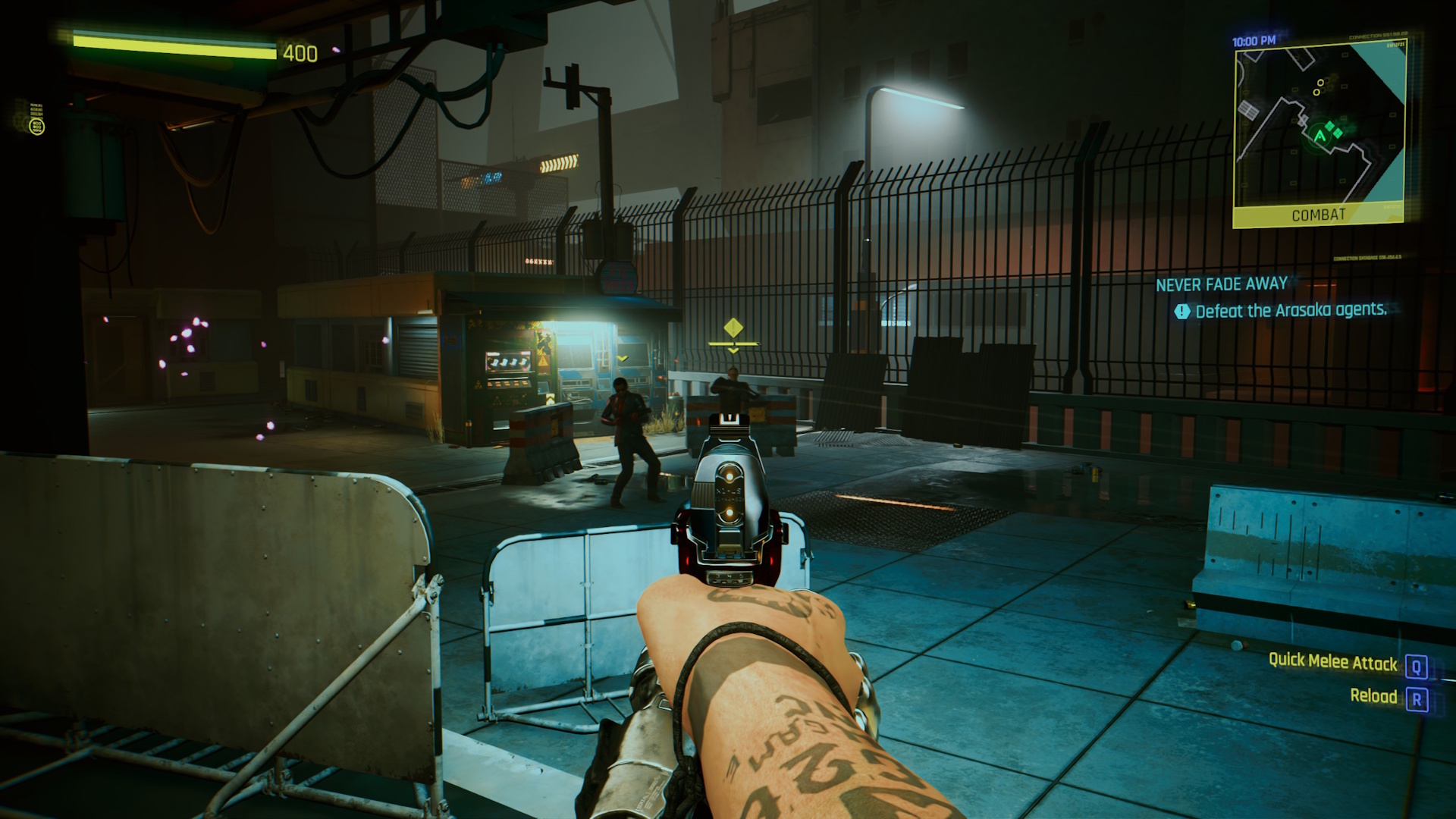
These days most of the game I play have such modest system requirements that they don’t really justify the price I paid for my PC. Cyberpunk 2077 would be the major exception as it most definitely wouldn’t have run well on my old system. The game was notoriously bugged on release so it was just as well that I took my time to get around to it. This is now a far more complete and polished game and though there are still some glitches, it’s absolutely the open-world Cyberpunk game I’ve been hankering for. It even holds special meaning for me since I’ve owned a copy of the original Cyberpunk 2020 pencil-and-paper RPG since my high school days and this game references so much material from it.
The story puts you in the shoes of V, a mercenary active in Night City. Partnered with Jackie Welles, you’re hired to steal a unique biochip known as the Relic from Yorinobu Arasaka. The heist goes wrong when they witness Yorinobu murder his father Saburo Arasaka, the head of the megacorporation. During the escape, Jackie is mortally wounded and you’re forced to slot in the biochip to preserve its integrity. When you attempt to deliver the chip to your fixer Dex DeShawn, he panics as the murder is blamed on the team and betrays you, shooting you in the head. Instead of dying, you wake up in a landfill. The biochip has repaired the gaps in your brain. But it also contains an engram of the legendary rockerboy Johnny Silverhand, believed to have perished while using a nuclear bomb to attack Arasaka Tower fifty years ago. The biochip is slowly replacing your personality with that of Silverhand. In conjuction with Goro Takemura, Saburo’s bodyguard who wants to prove that Yorinobu is the murderer, you must race against time to find a way to safely extract the biochip from your head.
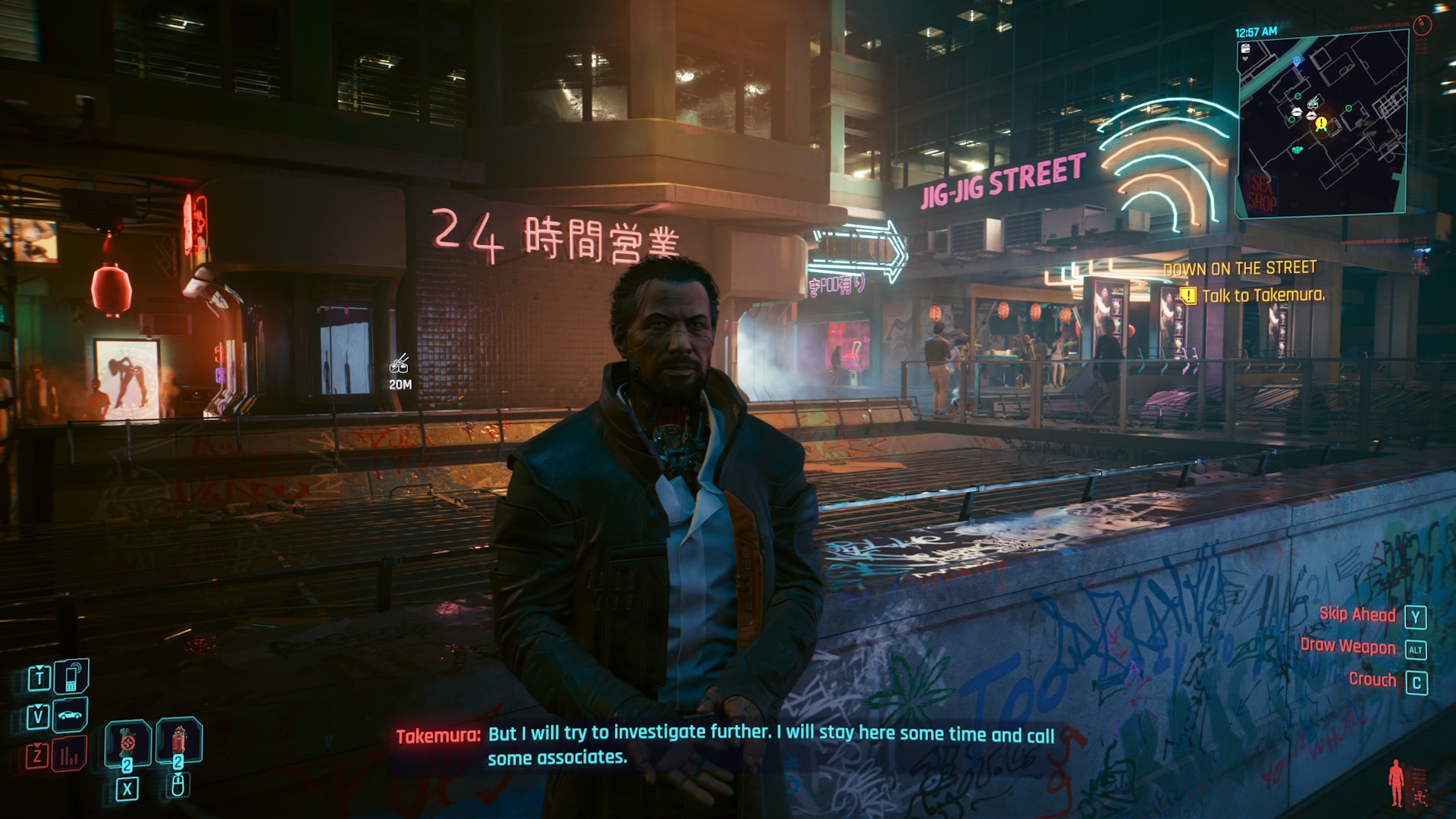
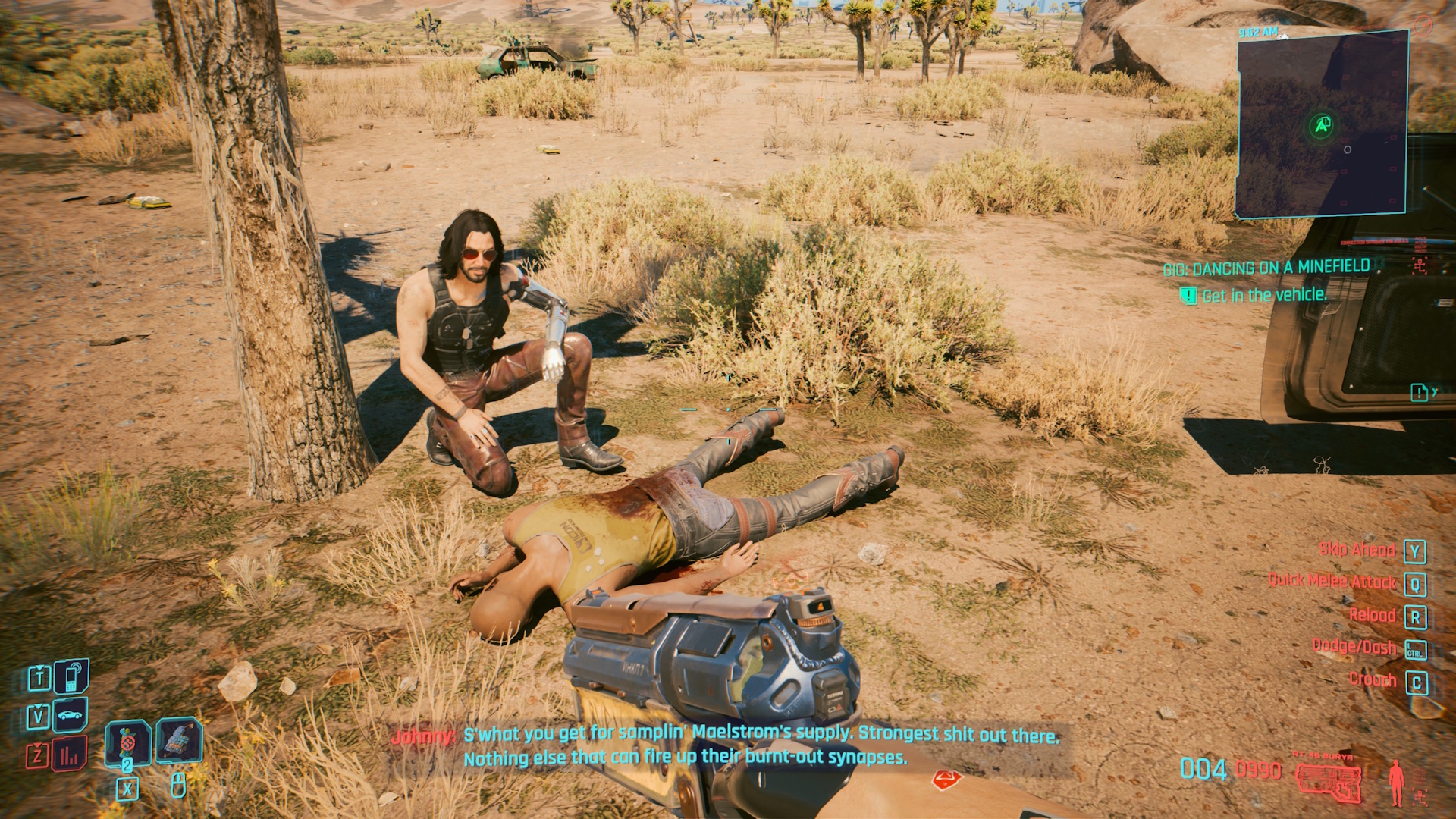
Those are spoilers but the game has been out for long enough that it doesn’t matter and who doesn’t know that Keanu Reeves is in here playing Johnny Silverhand? It’s a fantastic setup and directly continues the story of the starter adventure in Cyberpunk 2020. I’m especially ticked that you even get to play as Silverhand in a reenactment of the Never Fade Away scenario. They even used the art from the book as inspiration for the tech, even though it looks clunky. The main story is surprisingly not that long if you make a direct beeline for the ending. Naturally there are plenty of side paths to take that and enough optional gigs that should more than satisfy any player. The writing is generally solid but I was disappointed by how rigidly scripted most of the side content is. Sure, you might have a whole host of options when it comes to dealing with a roomful of enemies but it’s frustrating that most quests have only a very limited set of outcomes. NPCs are often scripted to die no matter what you do and I was surprised that different stats don’t really offer alternative routes.
The big draw here is the open-world Night City represented in the best graphics modern GPUs can render. As everyone knows, this turned out to be too difficult for CD Projekt at first, resulting in a game riddled with bugs. After many updates, it’s much better now but I’ve still come across oddities like NPCs spawning on top of each other, summoned vehicles falling upside down from the sky, bugged out cyberpsychos and so on. The city looks great and as neon-lit as you could want. The best part is the vertical complexity of its layout, with crisscrossing flyovers, elevated promenades all interlinked by bridges such that you’re never quite sure where the ground actually is. I also loved how filled in the buildings are. Obviously you won’t be able to actually go inside the vast majority of them but there are enough interior spaces modelled to give a reasonable illusion of freedom. Given that V is somewhat mobile, parkouring is possible so you can clamber around rooftops and ledges. It’s pretty good but I do think it doesn’t quite match Rockstar’s fastidiousness in filling nearly every square inch of the space with detail. It could use more incidental dialogue, varied NPC behaviors and the like. As it is, the game mainly uses scattered snippets of readable text as lore drops.
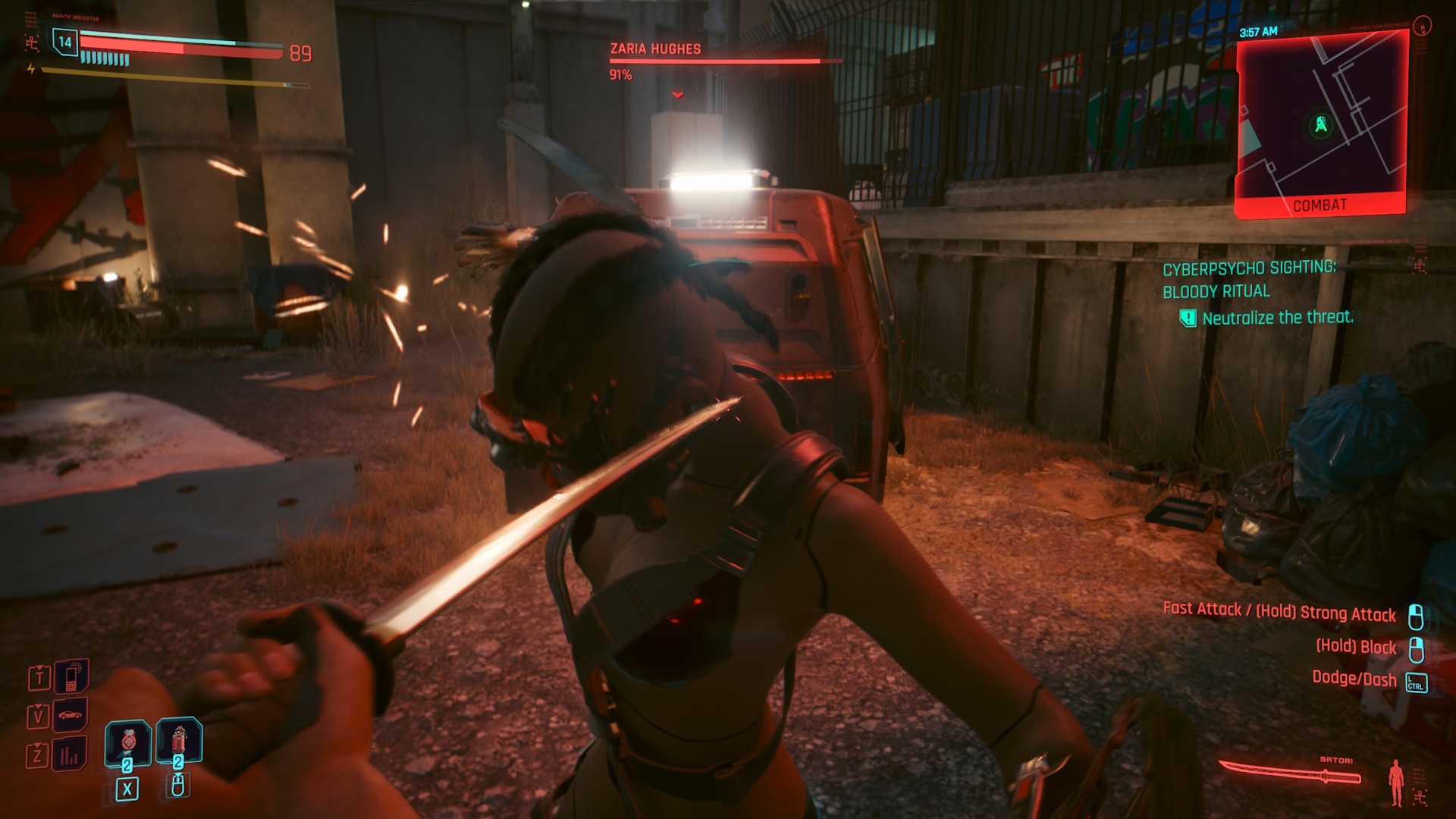
While it has heavy RPG mechanics, this plays mainly like a first-person shooter. You can do plenty more than just shoot guns as one of the most popular playstyles is cutting through mobs with a katana while being boosted by a Sandevistan. Or you could be a wizard casting quickhacks through your cyberdeck. Or a cyberninja ghosting everywhere without being seen. In between the stats, perks, cyberwear and weapons, there are plenty of ways to customize your own version of V. No matter what you pick, V gets very powerful very quickly. Beyond the opening stages of the game, I found combat in this game to not be challenging at all at hard difficulty. There are so many options to deal with enemies so it’s usually more of a question of deciding how I want to constrain myself. Do I want to do it stealthily? Wade in guns blazing? Be funny and kill them through the cameras. I’d also note that the design seems to favor the stealth playstyle more than any other. Fixers will often offer bonuses for performing gigs quietly and you can even deal with many dangerous cyberpsychos by sneaking up behind them.
The wizard part in particular is very real. The pencil-and-paper RPG had special rules for netrunning and combat in cyberspace so I wondered how that would translate over. It turns out that what they implemented is more or less a traditional magic system except that spells are called quickhacks and mana is called RAM. It doesn’t really make much sense but it does mean that a pure netrunner is extremely powerful, much more than you’d expect as a spellcaster in a fantasy game. You can be either a stealth netrunner, quietly taking out enemies while never being seen, or be a battlemage able to cast area-of-effect quickhacks on groups of enemies while tanking their damage.
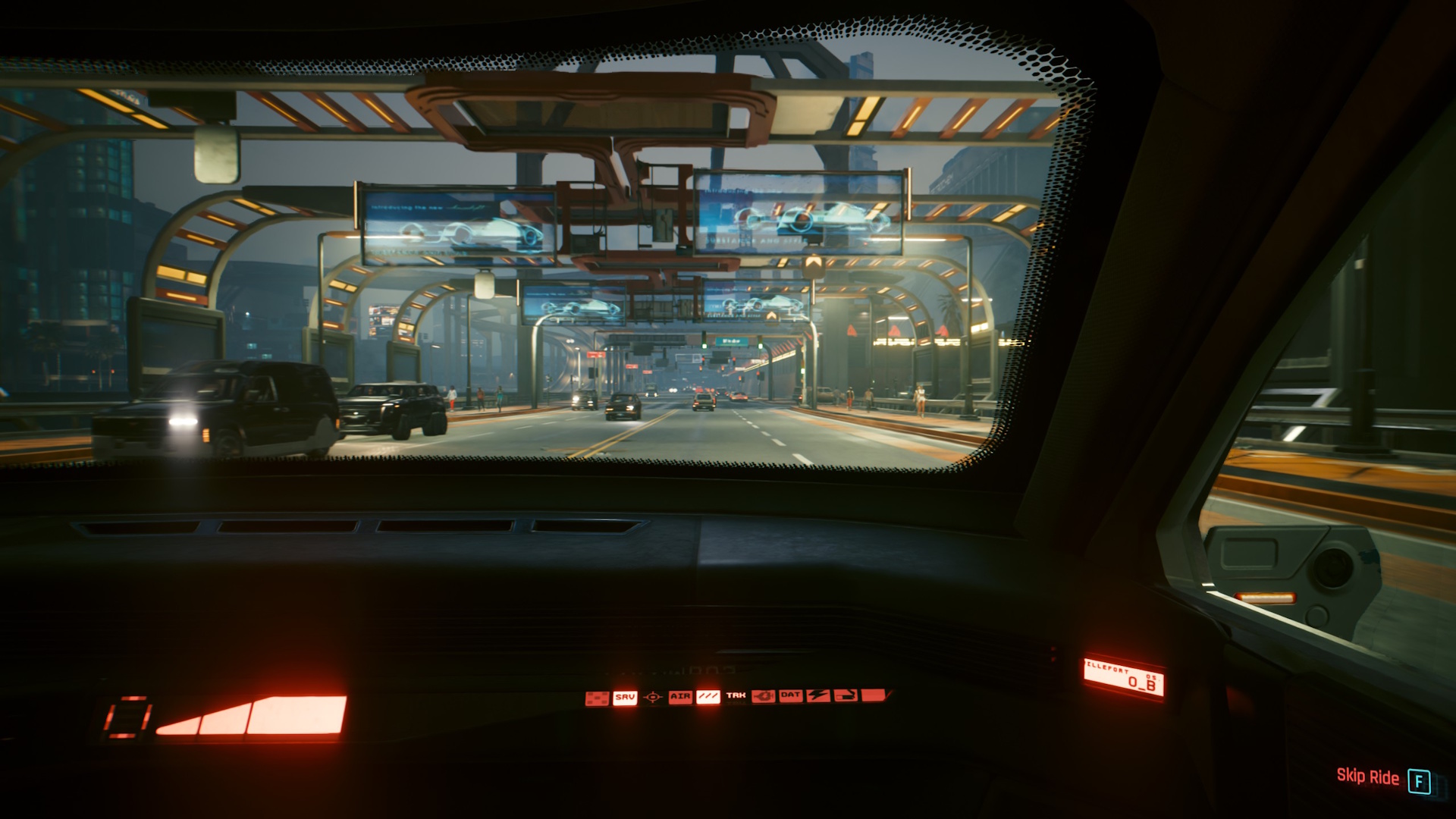
Between the gorgeousness of the city, the gameplay making you feel like the apex predator of Night City and the general excellence of the main storyline, I enjoyed this much more than I expected. There are a lot of side gigs you can do but I love living in the game’s world so much I fear there might not be enough content for me. It’s so immersive to just walk around the streets especially since there’s no real world equivalent. There’s not much point in taking the in-game metro system as it’s so slow but I occasionally sit in it just to see the city from that perspective. I do wish the driving experience was better but the poor AI driving makes this a ways off from being properly relaxing. I’m not as crazy about the actual combat but there is something to be said about being able to order enemies to commit suicide by shooting themselves in the head or to slice them up with monowires. One issue here is that the game seems to push the stealthy approach more than other playstyles. There are some large set-piece battles as part of the main quests where you get to really cut loose against large numbers of enemies. Most of the side gigs however are smaller in scale and quiet, with not much call for heavy combat.
There are plenty of aspects that I think could be better. As noted, I think the quests are too rigidly scripted with too few alternative outcomes. Related to that is that we get plenty of leeway to customize the look and skills of V but little control over V’s personality. The game really wants V to be a do-gooder despite the grimness of the Night City setting. You can’t play a blood-thirsty V, even you can actually kill everyone you meet, and have that reflected in the story. The conversation trees aren’t very deep and you don’t get to make choices that differ significantly. The type of gigs you get could be more varied with bonuses that reward something other than stealth. Some fixers might offer a gig that involves defending a location against active attackers for example, instead of it always being you penetrating a guarded area. There are even too few romance options and that calls for a very specific personality type. I’d also have hoped that the environment was more destructible. You can’t smash through walls like you can in Deux Ex but you can shoot through them. Weird.
I’m not quite done with the game yet because I’m also doing the Phantom Liberty content so there’ll will a separate post on that. Given that I already have something like a 100 hours in it, it’s safe to say that this is my defining game experience of the year. I like it so much I’ve even considering a replay and going for a fully melee-based character but, nah, that would be too much.