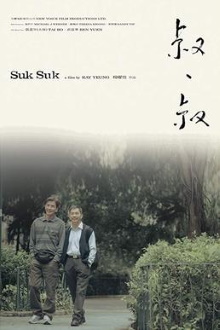
I’m viewing these documentaries as part of the Isle to Isle event on the CloudTheatre platform so I’m sure the organizers must have noticed the thematic similarity between this one and André and His Olive Tree. This one is about Chang Ga-tau, the founder of one of Taiwan’s largest independent record companies Taiwan Colors Music, agonizing over whether to retire after 20 years in the business and selling his company. Once again I think it overdramatizes this decision for the sake of a making a film, and they even lampshade this in the after credits, plus the story of a record label owners probably isn’t as interesting as that of the artistes but it is a decently interesting look into Taiwan’s music scene.
Continue reading Ga-Tau Chang (2019)André and His Olive Tree (2020)
André Chiang is feted as Taiwan’s first and so far only Michelin-starred chef and is apparently considered one of best Chinese-born chefs in the world, making him a great subject for a documentary. Yet the climax that this entire film builds towards is the closure of his famous restaurant in Singapore, apparently quite a shock to everyone at the moment, making the film itself feel rather different from other celebrity biographies. There were times when I felt annoyed by this documentary as it felt too much like a posh advertisement for Chiang but it improves immeasurably after the man lets down his guard a bit in his native Taiwan and allows his more personal side to be shown.
Continue reading André and His Olive Tree (2020)Nobel Prizes 2021
It’s Nobel Prize month and once again I like to highlight the science prizes because of how little mainstream news coverage they get. I don’t think there’s anything too surprising this year except that some people wondered why there’s been no acknowledgment of the mRNA technology that has powered many of the vaccines used to fight the ongoing pandemic. That’s silly of course given the time scales of how the Nobel Prize committee works such that it takes a while for a discovery to be deemed important enough to merit an award.
I suppose the most headline grabbing prize this year is the one for physics because it’s being described as being an award for climate change research. It’s more complicated than that of course as it is really about methods to describe and predict the behavior of large, complex systems with a lot of chaos and the planet’s climate is the best possible use case for such methods. This story begins in the 1960s with Syukuro Manabe for linking increased levels of carbon dioxide in the atmosphere with higher temperatures and developed the first models of the Earth’s climate.
Some ten years later Klaus Hasselmann showed that local weather despite being chaotic and unpredictable could lead to reliable long-term predictions of the climate as a whole. Then in the 1980s Giorgio Parisi, studying complex materials such as spin glass such as a matrix of copper atoms that also contain scatted iron atoms and hence have complicated magnetic orientations, devised mathematical ideas to understand this complexity. Naturally these are also applicable to other fields including climate science.
Hopefully most people still reading this already know what catalysts are and why they are essential in chemical reactions to turn one type of molecule into another. It was thought however that catalysts fall into two types: enzymes, which are large, complicated protein molecules, and transition metals, the elements in the middle of the periodic table. Benjamin List and David MacMillan, working independently but towards the same ends, discovered an entirely new type of catalysts now called organocatalysts, for which they have been awarded the prize for chemistry.
These are relatively small organic molecules that don’t include metal. The latter is a desirable trait because metal compounds are frequently toxic and metal-based catalysts don’t distinguish between different mirror-image versions of molecules and as these have different effects, drugmakers usually want only one specific version. Since about 2000 when these discoveries were made, organocatalysts have become widely used in many industrial processes.
The prize for medicine may not seem so exciting but it is a natural extension of the realization that our senses work through incredibly specialized organs and channels and we still don’t know all of them, including elementary ones like how we sense temperature. David Julius beginning in the 1990s studied capsaicin, the active ingredient that makes chili peppers hot, and worked out which protein in heat-receptor cells are sensitive to capsaicin. In doing so, he discovered the ion channel protein now called TRV1 and worked out it is triggered when heat rises to painful levels. This led to other discoveries of other temperature sensing receptors including work by both Julius and Ardem Patapoutian to use menthol to identify cold sensitive receptors.
Patapoutian also found touch sensitive receptors, beginning with Piezo1 which is actually found in organs like the bladder. This sensitivity to mechanical pressure is what causes people to feel the need to urinate. Through its similarity to Piezo1, he also found Piezo2 which is responsible for our more familiar sense of touch and proprioception, which lets us know the position and movement of our body.
Unlike the physical sciences, it is extremely difficult to perform experiments in the social sciences or economics. David Card however realized that one could identify natural experiments such as when the state of New Jersey passed a minimum wage law in 1992 but nearby Pennsylvania didn’t. Reasoning that the two states are similar enough, Pennsylvania could serve as the control group to work out the effects of the minimum wage law. This seems obvious today but apparently it was quite novel back then.
Often however such differences between two groups aren’t so neat as that, and it may be necessary to tease them out in clever ways. Joshua Angrist was one of those who realized that the date of birth of each school student makes a small but measurable difference in how much schooling that student gets in the US. Effectively those were born earlier in the year gets slightly less schooling than one born late in the year. This makes it possible to work how the length of schooling a person receives impacts lifetime earnings. Guido Imbens is also included as one of the winners for working out the theoretical framework to analyze the causal relationships in these empirical phenomena.
Shanghai Express (1932)
There ordinarily wouldn’t be much reason to watch this very old pre-Hays Code American film except it is set in China at the height of the Chinese Civil War. We have plenty of Chinese films and television shows set during this tumultuous period but this is an American film made while those events were still ongoing in China. This I had to see. The film was entirely shot in the US but the sets look convincing enough that it had us wondering. The Chinese extras in it all speak Cantonese which we all know to be wrong for the location but I’m still impressed that they managed to get enough Chinese and realistic enough props to pull off this fake China.
Continue reading Shanghai Express (1932)Minari (2020)
Earlier I talked about the wave of Asian-American cinema we’re seeing and here’s one about the Korean-American experience and it’s even set in the 1980s. This one seems at least partly autobiographical on the part of its director Lee Isaac Chung who indeed was born of a South Korean immigrant family and grew up on a farm in Arkansas. It’s so specific in its detail that it feels authentic. At the same time it’s the kind of slice-of-life that doesn’t really lead anywhere and so didn’t leave a particularly deep impression on me. It’s still a strong film that deserves its many award nominations and wins.
Continue reading Minari (2020)My Octopus Teacher (2020)
This is a tremendously successful and well known documentary, having won an Oscar for its category last year. I held off on watching this for a while however as its title seems incredibly presumptuous and having read a little of its premise, it seems likely to be a just-so story made up in the editing. Now that I’ve seen it, I’m pleased to say that it doesn’t go so far as to say that the main character tamed an octopus while the images they captured are absolutely amazing. I could have done with less dramatizing but this is a truly impressive documentary.
Continue reading My Octopus Teacher (2020)Iron Harvest

I think most people on the Internet would have by now seen the art by Polish artist Jakub Różalski that inserts giant mechs into late 19th-century or early 20-century settings. This art inspired a board game set in its own fictional universe and it was apparently successful enough to make this RTS game viable. Unfortunately I don’t think this game did too well. I bought for pretty cheap a while ago as I too was intrigued by the art of Różalski and wanted to know more about the world it inspired. Plus I have fond memories of playing Company of Heroes and thought that this might be somewhat similar.
Continue reading Iron Harvest