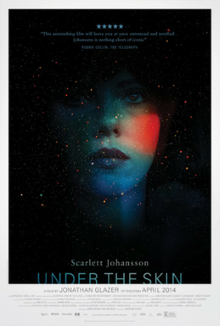
Is it just me or is Scarlett Johansson in a surprising number of sci-fi films? Of course, not all of them are of the same level of quality. For example, I refuse to watch Lucy. When I first heard about Under the Skin and the critical acclaim it garnered, I thought it would easily fall into the “great” category. After watching it however, I find that I have reservations about giving uncritical praise. Since this puts me at odds with people who know a lot about movies, such as the posters on Broken Forum, the onus is on me to explain why.
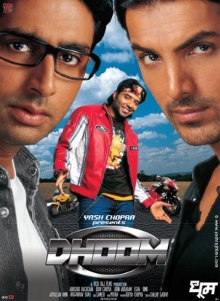
Like everyone else on the Internet, I’ve seen my share of gifs lifted from hilariously exaggerated scenes from Indian action movies and have invariably been amused. Earlier this year, I’d read an article about how Dhoom 3 was the most expensive film ever made by Bollywood and how it is chock full of ridiculous errors and loopholes. I also noticed that all arguments about artistic merit aside, the series as a whole has earned a tremendous amount of money, both domestically in India and internationally. Since I’d like to think that I give films of all countries and all genres a fair shake, I thought I’ll take a look at this franchise for myself, starting with the first one.
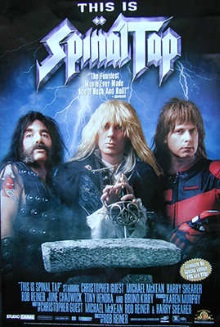
This is Spinal Tap must be one of the strangest successes in cinematic history. It’s a mockumentary about a fictional band that has met with so much success that it has effectively become a real band. It is widely lauded as one of the best comedies ever made and unquestionably one of the greatest rock music movies. It was even the source of the “these go to 11” meme before the Internet was invented.
Wes Anderson’s films have always essentially been cartoons for adults but it has never been clearer for me than here in The Grand Budapest Hotel. It is gorgeous, with lush colours from Anderson’s usual palette. The sumptuously appointed yet endearingly retro hotel of the title is as important a character as any played by its star-studded cast. The overt use of miniatures reinforce its child-like playfulness. Most of all, while it holds both grief and death, it is undeniably first and foremost a fairy tale.
Only three articles this month including one that could be a pretty big deal but will more likely than not be debunked in due course.
The big news is of course the announcement of a viable fusion reactor design by Lockheed Martin. There are many articles about it but here is the original one from Aviation Week. It’s a big deal because fusion energy have for many decades been heralded as bringing about the end of the fossil fuel age if and when it ever becomes viable but successive designs have never been able to get the technology to generate much, if any, excess energy beyond that needed to maintain the self sustaining fusion reaction. This news of a new design that is supposedly more efficient than the best current alternatives by a factor of 10 gains credibility because it was developed by the highly regarded Skunk Works of Lockheed Marton. But it is all too likely that it is just another plea for more research funds for negligible benefit.
No summarizing article for this next one, just a link to the paper itself. It examines correlations between how long a marriage lasts and various data points. The headliner is that the more money is spent on the wedding ceremony and the ring, the shorter the marriage lasts. On the other hand, positive correlations are the number of guests invited to the wedding and whether or not there was a honeymoon.
Finally, this one is an article from Modern Farmer which talks about how plants are actually aware that they are being eaten and actively takes steps against it. The experiment involved the thale cress and recording the vibrations of a caterpillar eating a plant. They found that when that specific recording is played back, the plant would produce extra mustard oil to help deter predators and doesn’t react in the same way to other, non-threatening vibrations.
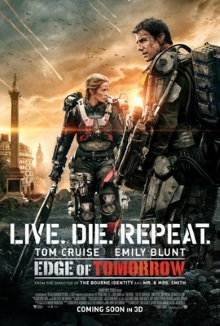
The trailer for Edge of Tomorrow popped up during one of our irregular cinema outings. I mentally dismissed it as a generic sci-fi Hollywood movie starring generic sci-fi action star Tom Cruise and thought nothing more of it. But months after its release, I started hearing about how this is way better than it has any reason to be, even from cinephile friends whose tastes I trust. Since this is sci-fi after all and I am a fan of time loops as a plot device, as in Groundhog Day and to a lesser extent Source Code and even Next, this meant I just had to put it onto my watch queue.
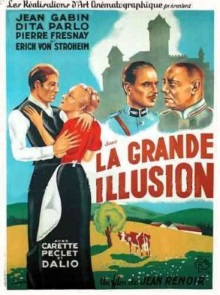
Continuing with our tour of the great classics of cinema is Jean Renoir’s La Grande Illusion. We’d previously watched his La Règle du Jeu which I found to be a complex and wickedly funny dissection of the European upper classes and their social structures. So I was really looking forward to this film that is set during the First World War.