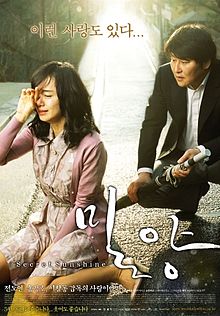
 It often feels like mentally disturbed people are a recurring trope in Korean dramas. It may not be seem front-and-center in Secret Sunshine but Jeon Do-yeon’s Lee Shin-ae does spend most of the film in a fugue state that leads her to make an escalating series of questionable decisions.
Planetes (2003 – 2004)
I’m always looking for interesting shows to watch and this anime series came to my attention on Broken Forum when someone called it practically the inspiration for Gravity. Combined with how it’s a self-contained, close-ended story and how long it has been since we’ve watched an anime, I put this on our “to watch” list.
Nobel Prizes 2014
Every year at around this time, I make a summary post about the winners of the scientific Nobel Prizes because I feel that insufficient attention is paid to them. I always ignore the Peace Prize and the Literature Prize. Here are the winners for Physics, Chemistry, Physiology / Medicine and Economics categories.
The physics prize seems unexciting to me but I guess it is practical and useful. It goes to Isamu Akasaki, Hiroshi Amano and Shuji Nakamura for discovering how to produce blue light beams from semi-conductors. This is what enabled modern LED lamps to be a reality as it is not possible to create white lamps without blue light.
The chemistry prize goes for to Eric Betzig, Stefan W. Hell and William E. Moerner for the invention of nanoscopy. Previously, optical microscopes were limited to a resolution of about half the wavelength of light, or about 200 nanometres. This prize is awarded for two separate developments: STED microscopy which uses two laser beams, one to stimulate fluorescent molecules to glow and another to cancel out all fluorescence except for that within a nanometre-sized volume, and single-molecule microscopy which relies on turning the fluorescence of individual molecules on and off and superimposing all of the images thereby gained into a single super-image. Both techniques bring microscopy into the nano-scale.
The physiology / medicine prize goes to John O´Keefe, May-Britt Moser and Edvard I. Moser for research into the positioning system in the brain. As would be obvious, many animals have a sense of location and an internal map of the locations that they know and how paths lead from one place to another. O´Keefe realized that a specific type of nerve cell in the brain of a rat always activated when in a specific location. The two others discovered another type of nerve cell that together generate a coordinate system that allows for positioning and pathfinding. Together these constitute the essential elements of what is effectively an internal GPS.
The economics prize goes to Jean Tirole. This is for a body of work rather than any single significant discovery so it’s harder to summarize. Apparently his most important work lies in clarifying how to understand and regulate industries that are dominated by a few powerful firms. He also showed that regulation needs to be adapted to the conditions specific to each industry.
The Fisher King (1991)
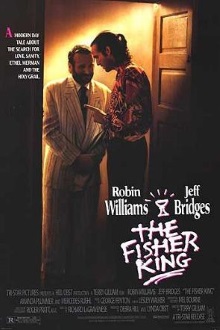
This one was put on my list when Robin Williams’ death reminded me that I’d always wanted to watch The Fisher King. I’ve seen snippets of it over the years, most memorably scenes of a monstrous red knight bearing down on a terrified Williams in New York city, but have never actually watched the whole thing. Given its title, I was also curious about how the storyline ties in with the Arthurian legend.
Nymphomaniac Volume 1 (2013)
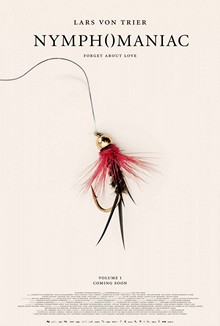
Like most people, the first I heard about this film was the shocking news, certainly spread for publicity reasons, that it would feature big name actors and actresses having unsimulated sex. As it turned out, professional pornography performers were actually used and the faces of the familiar actors and actresses digitally composited onto the naked bodies. Combine this with the famous posters of the well known actors and actresses making orgasm faces, and it’s clear that the producers were going for maximum shock value. For this reason, I chose to watch only the first volume of the film for fear that it might turn out to be terrible.
Recent Interesting Science Articles (September 2014)
I’m massively late this month due to having to make an extended stay in Kuala Lumpur to handle some personal issues and hence having no access to my regular computer. I’m now back however, so here are the five articles for this month:
- The first article I have isn’t an announcement of a new discovery as most of my posts tend to be. Instead, it’s an exploration, published in The New Yorker, about what it is like for a person who is blind from birth to be able to see for the first time. In particular, if a blind person can differentiate shapes using touch, can he or she tend recognize the same objects upon seeing them for the first time? It turns out that it is incredibly difficult to make sense of what you see when you are doing it for the first time, so it is a skill that needs to be developed over time based on building up an internal database of “visual memories”.
- The coolest bit of news all month is easily the discovery of the largest dinosaur yet found, and hence the largest terrestrial animal known. Newly named as the “dreadnoughtus”, it is calculated to weight about 65 tons, heavier than a Boeing 737 jet. Its size was extrapolated based on fossil remains found in Argentina, as reported in this Washington Post article.
- This next article from Scientific American isn’t about a new discovery either but it is highly topical. Instead, it talks about using a tried and true method to attempt to treat victims of the current outbreak of ebola. Since new drugs for the disease are still largely unavailable, doctors are proposing to transfuse patients with the blood of survivors of the disease in the hopes that the blood already contains effective antibodies. This is in fact vaccination in its oldest form.
- The next article is for coffee lovers, including my wife. Publishes in The New York Times, it’s a cool look into how caffeine evolved in coffee plants. Some highlights include how coffee plants evolved the molecule differently from other plants that also contain coffee like cacao and how the plant uses it as a toxin to prevent other plants from germinating in the soil near it.
- Finally this article from The Guardian talks about how the nerve endings on finger tips actually process the touch sensations it receives before sending the results to the brain. It’s a finding that lends extra credence to theories that state that the mind is effectively what the entire body, or at least the nervous system distributed throughout the entire body, does as opposed to merely the brain.
Tokyo Drifter (1966)
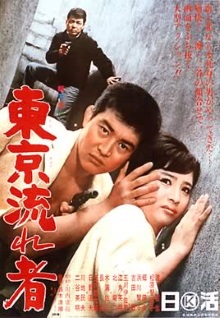
Once again this is a pick that originally came to my attention from a Broken Forum post and subsequently reaffirmed when I realized that it is in the Criterion Collection. At first glance it is nothing special, just a generic Japanese gangster film with a bog standard plot out of hundreds that were produced in the 1960s. But as you watch it, it becomes increasingly obvious how this is a film that must have been far ahead of its time nearly 50 years ago.